

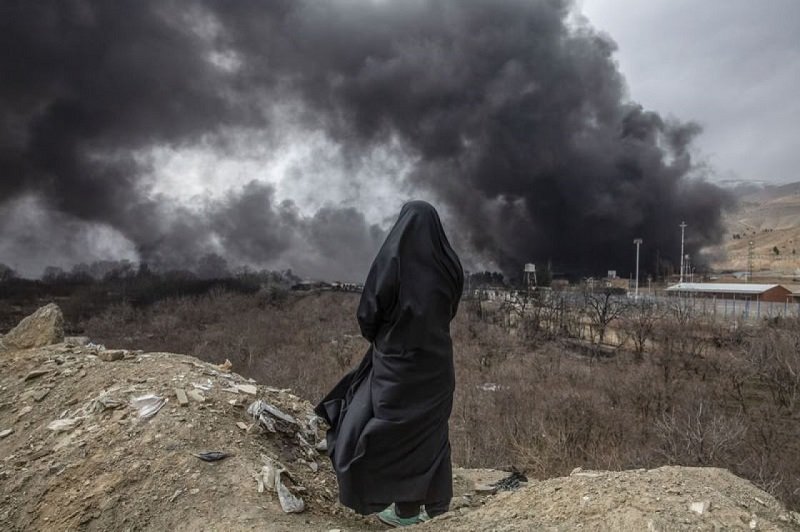
In a highly tense regional context, the war in the Middle East is no longer limited to redrawing military maps; it is reshaping the entire Arab economy. This is the conclusion of a recent study published by the United Nations Economic and Social Commission for Western Asia (ESCWA), which presents striking figures: the cost could reach $150 billion in just one month, equivalent to 3.7% of the regional GDP. This amount not only reflects financial loss but also highlights the structural vulnerability of Arab economies to geopolitical shocks.
In the first two weeks of the conflict alone, the study estimates initial losses at around $63 billion, signaling that the region can no longer absorb shocks as it once could. The impact does not spread linearly; it propagates like an “economic contagion” through energy networks, trade routes, transportation, and financial systems. The conflict has thus evolved from a geographically limited security event into a multidimensional crisis striking at the economic core of the region.
A clear manifestation of this shift is observed at the Strait of Hormuz. The drastic decline in shipping traffic by as much as 97% signifies not only a halt in oil flows but a near-total strangulation of trade. Daily losses estimated at $2.4 billion accumulate to about $30 billion over two weeks, raising serious questions about the capacity of logistical alternatives to compensate and the dependence of Arab economies on limited geostrategic chokepoints.
In the skies, the picture is no less grim. The cancellation of around 19,000 flights between February 28 and March 12 across nine major regional airports represents not merely a disruption of schedules but a temporary collapse of air transport as an economic and tourism lever. The estimated $1.9 billion in losses for airlines is only one aspect, while indirect consequences—tourism decline, supply chain disruptions—remain profound and enduring.
In this context, the statement by ESCWA Acting Executive Secretary Murad Wahba carries particular weight when he notes that what began as a security escalation “has now spread to the regional economy through trade, energy, transport, and finance.” This transformation underscores a central truth: the Arab economy is no longer separate from geopolitics—it is a direct extension, instantly and simultaneously affected.
Yet behind the numbers lies an even greater danger. Beyond financial losses, complex pressures emerge on growth, threats to financial stability, and humanitarian consequences that could worsen if the conflict continues. The question is no longer: how much will the region lose? Rather: do Arab states possess the tools to respond collectively and mitigate damage, or will each economy face the storm alone?
In this sense, the ESCWA study does more than provide numerical estimates; it outlines a deep structural crisis, revealing the limits of Arab economic integration and challenging the region’s capacity to move from a reactive to a proactive stance. War is no longer measured solely in casualties or destruction but also in its ability to redefine the economy as a parallel front in the conflict.


