

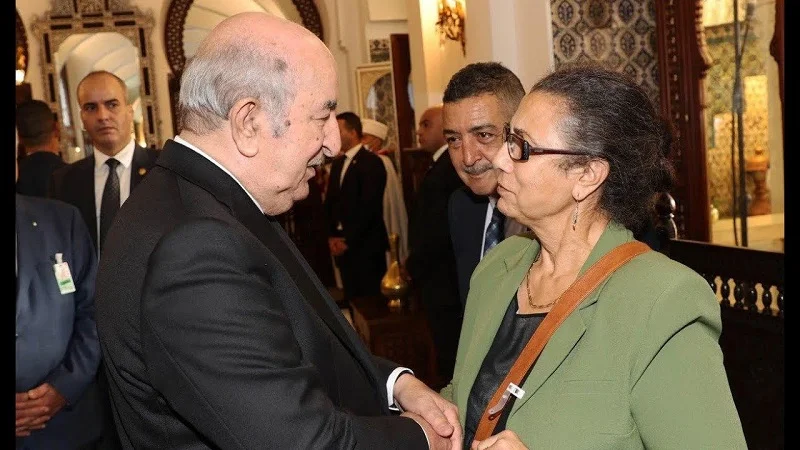
The statements of Louisa Hanoune, Secretary-General of the Algerian Workers’ Party, go beyond mere political remarks; they highlight a structural crisis in the management of information within Algeria’s state institutions. During a press conference last Friday, Hanoune drew attention to a critical issue: the inaccurate data reaching President Abdelmadjid Tebboune from various sectors, reportedly causing the president’s frustration during their meeting three days earlier.
Hanoune did not stop at pointing out numerical errors; she scrutinized the mechanisms of data collection and reporting, revealing the unreliability of sources and the frequent use of unverified information. This situation directly impacts the quality of decisions made at the highest level of power, exposing an institutional crisis that goes far beyond mere statistical mistakes. The core problem lies in the independence of sources from pressures exerted by political and security apparatuses controlling decision-making centers.
The consequences of these misinformation flows extend beyond current dossiers; they affect long-term development strategies and policies that will shape future generations, highlighting the urgent need to reform the communication channels within Algerian power structures.
The credibility of Hanoune’s statements is further reinforced by her political background and direct confrontation with the Algerian state. She spent nine months in prison, accused of “conspiring against state and army authority,” before being acquitted by the appeals court and serving a reduced sentence. This experience gives her a unique perspective: she speaks from firsthand knowledge of state machinery and the limits of its judicial and security systems.
Therefore, Hanoune’s observations are not merely criticisms of information management; they constitute an urgent call to restructure data collection channels, ensure accuracy, and protect independence, so that errors do not escalate into political, economic, and social crises.
In conclusion, her statements reveal that the information crisis in Algeria reflects the structural fragility of the state, raising profound questions about its ability to make informed decisions in an environment where reliable data is scarce.


