

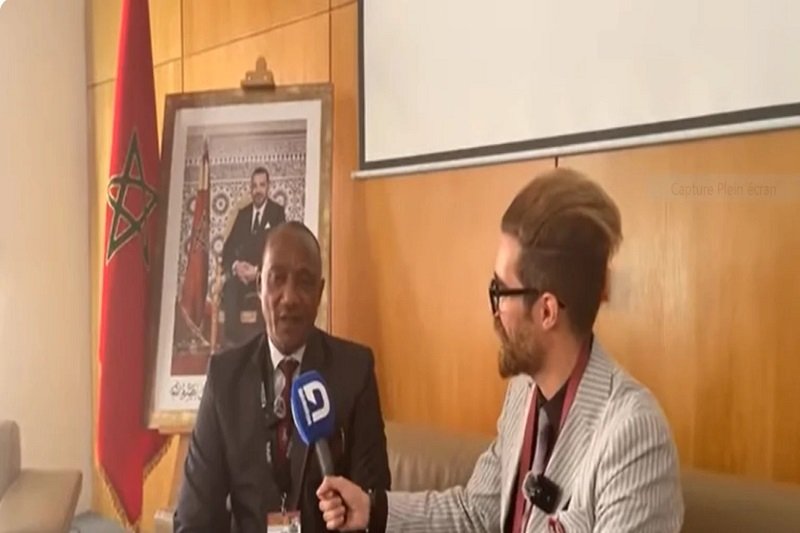
An analytical reading of the Cultural Diplomacy Magazine interview with Dr. Donatius Fai Tandem, Director of Cinema and Audiovisual Production of Cameroon, on the sidelines of the 25th National Film Festival
Dr. Donatius Fai Tandem’s participation in the 25th National Film Festival in Tangier was far from a ceremonial appearance. It marked a revealing moment in which Morocco emerged not merely as a host country, but as a continental platform for rethinking the future of Sub-Saharan African cinema—cinema understood not only as art, but as a strategic instrument of culture, economy, and diplomacy.
From the very first moments of the interview conducted by Cultural Diplomacy Magazine, it became clear that the Cameroonian official was not speaking out of courtesy. What he encountered in Tangier was a structured cinematic ecosystem, driven by a clear state vision, in which the Moroccan Cinematographic Center (CCM) plays a pivotal role in shaping the sector’s architecture—from funding and training to distribution and international partnerships.
Morocco: From Film-Producing Country to Continental Hub
Morocco has moved beyond the role of a simple festival host. It is now exporting a model—one based on cultural governance, long-term public investment, and the integration of cinema into the Kingdom’s African foreign policy.
This transformation positions Morocco as a point of attraction for African filmmakers seeking not only visibility, but also access to professional networks, platforms, and sustainable production mechanisms.
African Cinema: A Distribution Crisis, Not a Creativity Deficit
Speaking about the state of Cameroonian cinema, Dr. Fai was keen to dismantle a persistent misconception: African cinema does not suffer from a lack of imagination or talent. Its primary challenge lies in the value chain, particularly in distribution and exhibition.
This reality is shared by many African countries. Morocco, however, has been addressing this structural weakness for years through:
-
co-production incentives,
-
the development of screening networks,
-
opening its festivals to African films,
-
and encouraging South–South cultural partnerships.
In this sense, the Moroccan experience functions as a living laboratory, offering adaptable solutions rather than rigid templates.
When the State Speaks the Language of Culture
One of the most telling moments of the interview was Dr. Fai’s reference to a statement by Morocco’s Minister of Youth, Culture and Communication:
“It is time for us to tell our own stories.”
Analytically, this phrase goes beyond symbolism. It encapsulates a state philosophy that recognizes cultural sovereignty as a strategic pillar, no less important than economic or security sovereignty.
This vision is concretely reflected in:
-
the strengthening of the CCM,
-
a deliberate openness toward Sub-Saharan Africa,
-
and the integration of cinema into Morocco’s broader cultural diplomacy.
From Tangier, Partnerships Begin—By Vision, Not by Chance
Dr. Fai emphasized his discussions with officials from the Moroccan Cinematographic Center and ISPAC, noting that co-production is no longer a distant ambition but an emerging reality.
Morocco’s strength lies precisely here: not in asking “why now?”, but in creating the conditions that make now the right moment.
A Message to Young Filmmakers: Cinema Is Not a Shortcut
Addressing young people aspiring to careers in cinema, Dr. Fai delivered a clear message: cinema is not a fast track to fame. It is a demanding field that requires training, discipline, and long-term commitment.
This perspective resonates strongly with Morocco’s own approach to cinema, where public support is built on the understanding that film is simultaneously a cultural expression and an economic industry.
Conclusion: Morocco as the Engine of African Cinema
Beyond the testimony of an African guest, this interview reveals a deeper strategic reality: Morocco is steadily positioning itself as a cinematic capital of Africa.
Through effective institutions, coherent public policies, and a long-term cultural vision, the Kingdom demonstrates that in an era of soft power competition, cinema—when wisely governed—becomes a true policy of state.


