

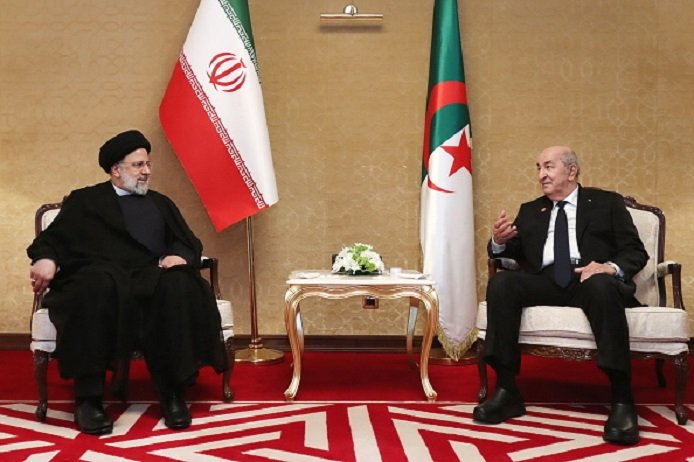
Over the decades, certain regional conflicts have held symbolic value in the relations between Rabat and Algiers, more than being mere geopolitical disputes. These tensions have served as a stage for deeper struggles concerning political identity, historical memory, and strategic positioning within the international system. With recent geopolitical shifts, it has become clear that these conflicts cannot be separated from a rapidly changing global landscape, where alliances can be as fragile as they are strategic.
Morocco’s Rise and the Decline of Algeria’s Allies: End of an Era, Beginning of Another
In recent years, Morocco has successfully strengthened its international position and consolidated its political initiatives in global forums, including proposals for autonomous governance as a realistic solution to regional tensions, gaining support from key global powers. This demonstrates Rabat’s ability to read international shifts and align its interests accordingly.
Conversely, Algeria, which has long relied on allies to broaden support for its regional positions, appears weakened, marked more by silence than by effective action. The sudden collapse of Nicolás Maduro’s regime in Venezuela, a longstanding supporter of Algeria’s positions in Latin America, is not an isolated event; it symbolizes the end of a set of alliances once considered reliable in international forums, revealing the vulnerability of strategies based on consistent external backing.
This silence can be understood in a broader context: it is not merely an absence of official comment, but a reflection of the fragility of alliances Algeria built beyond its regional sphere, amid rapid shifts in influence and international power dynamics.
Iran and the Reorganization of Influence in the Middle East and North Africa
Further afield, the Iranian dossier highlights broader dynamics in the international system. Washington, prepared for potential military escalation, sees Iran not just as a distant adversary but as an influential actor across multiple arenas, from Iraq to Syria and among its regional allies. The recent U.S. discourse aligns with a strategy to reduce Iran’s regional influence, with direct and indirect repercussions on its allied countries.
In this context, traditional alliances, once interpreted through a post–Cold War lens, are no longer as solid. The relationship between Algeria and Iran, which shaped many policy positions on sensitive matters, is increasingly fragile amid fluctuating international politics and divergent priorities of major powers.
Algeria’s Silence: Retreat or Strategic Reassessment?
Algeria’s silence in the face of what observers call the “fall of its allies” is not empty of meaning. It can be read as an implicit signal of reassessing the effectiveness of its traditional rhetoric, long centered on anti-intervention and defense of certain regional causes.
This silence contrasts with the official narrative, which consistently links regional conflicts to peoples’ right to self-determination. It raises a central question: does Algeria realize that its diplomatic weight no longer depends solely on traditional support, but on its ability to understand and adapt to major international transformations?
The International System and Morocco’s Strategic Choices
Meanwhile, Morocco is presented with opportunities to strengthen its regional and international position, not only by rallying support for its governance initiatives but also by building strategic alliances with powers capable of reshaping international relations structures. The backing of certain global powers reflects Morocco’s capacity to convert international changes into tangible diplomatic gains.
This historical moment — which makes autonomous governance proposals more widely applicable in international forums — is comparable to key milestones in the region’s political history, representing an opportunity to redefine power balances and leverage international transformations wisely.
Conclusion: Between History and Political Realism
Regional conflicts are not merely border disputes or endless historical legacies; they constitute a field of confrontation between different visions of sovereignty, the state, and international roles. In this sensitive context, regional actors must be capable of understanding major international transformations and aligning them with their domestic and regional interests.
Ultimately, these territories are not just geographical spaces but a laboratory for realistic policies and the formation of new alliances, in a world where forces and coalitions evolve at an accelerating pace.


