

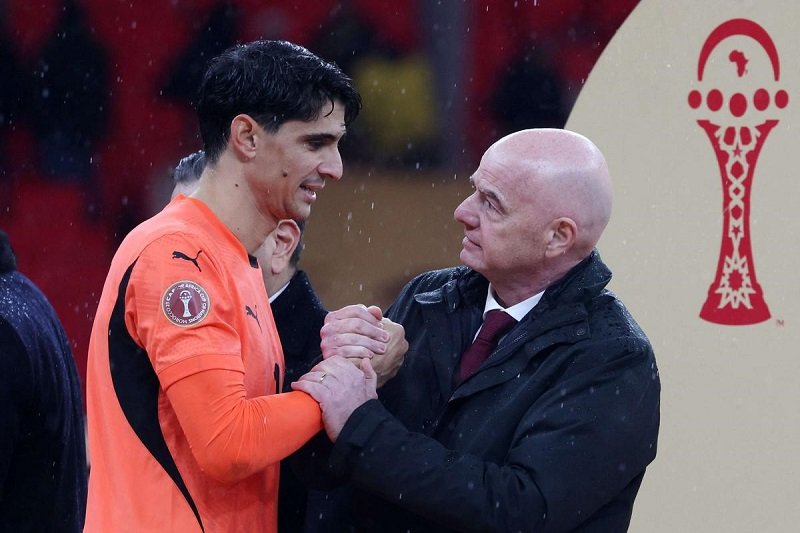
The 2025 Africa Cup of Nations in Morocco was not merely a successful tournament; it was a fully-fledged demonstration of soft power.
A demonstration that told the world — through the language of stadiums, airports, hotels and television broadcasting — that this country is no longer knocking on the door of the great powers, but has become part of their club.
Rabat, Casablanca, Tangier, Marrakech, Agadir and Fez were not just host cities, but stages of a state that decided to turn sport into a discourse of sovereignty and a tool of international positioning.
Every match was a message, every train journey between two cities was proof, and every modern stadium was an argument.
The question here was not: did the organization succeed?
But rather: what does Morocco want to say through this organization?
From a tournament to a system: Morocco presents itself as an organized state
The Moroccan edition of the AFCON was not built on a logic of catching up, but on a logic of planning.
The projects launched since Morocco won the hosting rights were not emergency measures, but part of a broader vision: road networks, railways, airports, stadiums, hotel capacity, smart security systems — all designed according to a post-2025 logic, that is, a 2030 logic.
Here lies the great paradox: Morocco did not host the AFCON to make a tournament succeed, but to test a state.
And the test was passed.
When the market recognizes before politics
The figures announced by the Confederation of African Football are not technical details, but a market certificate: revenues up by more than 90 percent, 23 sponsors instead of 9, entry into new markets in Asia, an unprecedented expansion of broadcasting rights.
This means one thing: the world does not invest in emotions, but in trust.
And here, trust was not only in African football, but in the country that chose to manage it by global standards. Sponsors did not bet on players, but on the Moroccan platform that offered them a clean, organized, marketable and repeatable product.
The African coach returns… and the continent regains its voice
Even at the technical level, the tournament was a soft political statement.
The arrival of teams led by African coaches in the semi-finals for the first time in six decades was not a coincidence. It reflected a shift in confidence: Africa’s confidence in itself, when it is managed in a professional environment.
And 127 goals were not a random figure, but a sign of a football freeing itself from its complexes and playing without fear, in stadiums that do not betray it.
The royal vision: when sport becomes public policy
In the background, none of this would have been possible without a clear strategic choice: King Mohammed VI has made sport a lever of the state, not an ornament of the state.
Investment in stadiums was not merely sporting.
Trains were not built only for fans.
Hotels were not upgraded only for teams.
But for a Morocco that wants to be:
a destination,
a platform,
a bridge between Africa and Europe,
and an unavoidable partner on the map of major global events.
From AFCON 2025 to World Cup 2030: the road is now visible
With this edition of the AFCON, the 2030 bid is no longer a political promise, but an operational reality:
the state worked,
the cities worked,
the systems worked,
the market responded,
and CAF validated.
The deeper meaning is this: Morocco no longer asks the world for trust — it offers it a model.
Conclusion
Morocco’s AFCON was not a sporting event, but a moment of soft sovereignty.
A moment in which an African country said, through achievement rather than slogans:
we do not sell our image, and we do not buy recognition — we build both through work.
And in a world where weight is measured by the ability to organize, not by the number of speeches, Morocco succeeded in making football the mirror of a state that knows where it is going.


