

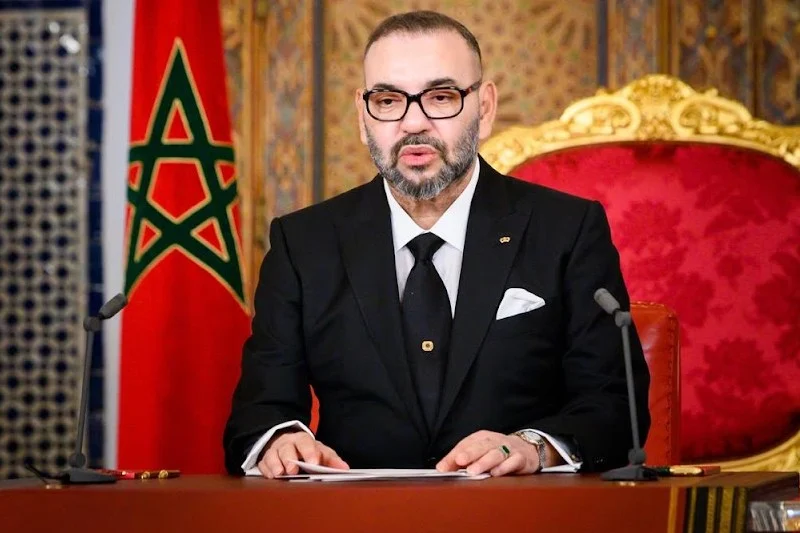
When Football Becomes a Platform for African Brotherhood: King Mohammed VI’s Message After the CAN Final
Rabat – At a moment when the African Cup of Nations final risked turning into a symbolic crisis, King Mohammed VI intervened, not as a sports commentator but as an African statesman aware of the political and symbolic weight of sport. The Morocco–Senegal match was not just a game; it was a moment of political, popular, and media intensity, capable of creating a lasting fracture in African consciousness.
An African Vision Beyond the Scoreline
In his message regarding the 35th edition of the CAN, the King did not focus on refereeing decisions or moments of tension. His goal was to reframe the meaning of the event. What happened in the final minutes between Morocco and Senegal was not the true story, but a mere side episode in a larger narrative: the Africa Morocco envisions… a continent of partnership, not confrontation.
“Nothing can affect the closeness woven over centuries between our African peoples,”
he stated.
This statement is not emotional; it is a clear political and moral signal, drawing a red line against any attempt to turn a moment of sporting emotion into a rift between peoples.
The Absence of Direct Congratulations to Senegal: A Deliberate Choice
The King did not congratulate Senegal directly. This was not a protocol oversight but a deliberate symbolic choice. Morocco does not want its message reduced to a simple “winner-loser” narrative: African brotherhood is a historic path that transcends any single match.
The King acknowledged that “unfortunate facts and behaviors” occurred but refused to let them define the event. The royal message prevented attempts to turn a referee’s decision into a conspiracy narrative or to interpret Senegal’s success as hostility toward Morocco.
“Once passions and emotions subside, African brotherhood ties will naturally triumph,”
he added.
This is a precise political diagnosis: emotion is temporary, brotherhood is enduring. Most strikingly, he stated:
“This Moroccan success is also a success for all of Africa.”
Moroccan Success as an African Achievement
In this sense, the King was not “scoring against Senegal” but affirming Morocco’s ability to lead the continent through organizational, economic, and sporting achievements, without undermining anyone. The increase in commercial partners from 9 to 23 and the international recognition of the CAN hosted by Morocco demonstrate that this success is economic, political, and symbolic for Africa as a whole.
On the field, the match saw controversy over a Moroccan penalty after VAR consultation, leading to a temporary withdrawal of Senegalese players before Sadio Mané intervened. These details, however, are not the core: the essential point is that African ties remain stronger than any temporary emotion.
CAN as a Symbolic Stage
In this context, the absence of congratulations to Senegal is not a sporting deficit but a refusal to reduce African brotherhood to a match result. The CAN in Morocco is therefore more than a game: it is a lesson on the true meaning of victory. Morocco’s success is not merely over Senegal—it is over history, stature, and for all of Africa.


