

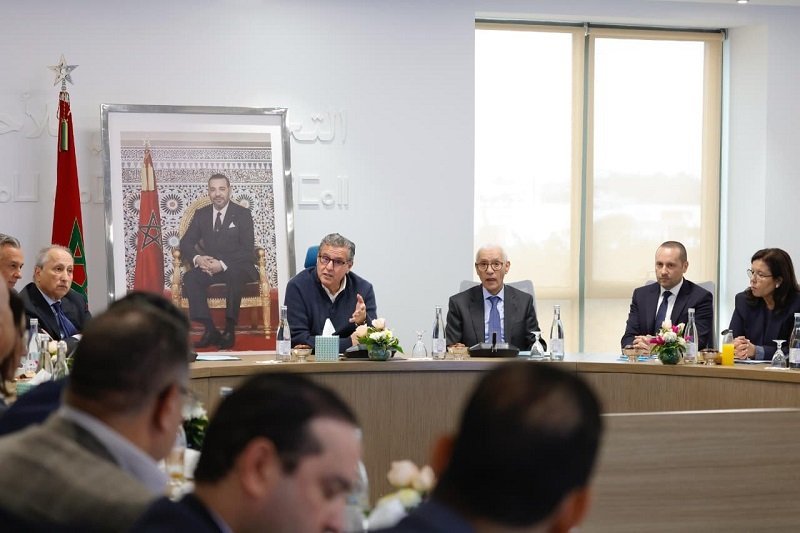
The question of who would succeed Aziz Akhannouch as president of Morocco’s National Rally of Independents (RNI) has now been decisively settled. The announcement made by the party’s political bureau on Wednesday, January 28, 2026, confirming Mohamed Chouki as the sole candidate, effectively closes a period of internal uncertainty and signals the start of a carefully managed transition.
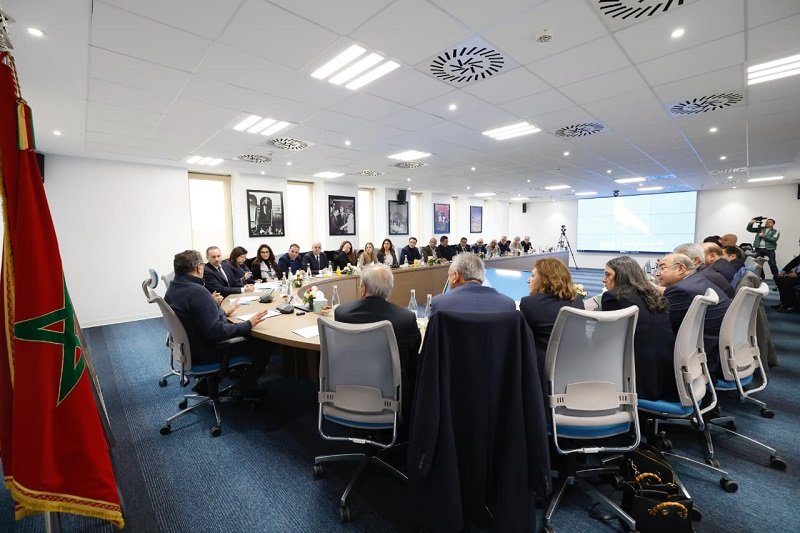
Behind the neutral tone of the official statement lies a more complex political reality. The decision does more than name a successor; it puts an end to weeks of silent maneuvering, marked by competing ambitions and discreet attempts to influence the succession process from within.
In this light, the recent moves attributed to Mohamed Oujjar take on renewed significance. Active behind the scenes, he was reportedly engaged in internal discussions aimed at challenging certain potential candidacies on legal and procedural grounds. However, the formal closure of nominations—without his candidacy—confirms that his strategy failed to translate into institutional momentum.
The choice of a single candidate reflects a deliberate effort by the RNI to avoid an open leadership contest that could expose internal divisions at a time when the party leads the government amid economic and social pressures. Mohamed Chouki’s candidacy appears less as a disruptive alternative and more as a figure of controlled continuity, ensuring stability rather than transformation.
This rapid consolidation of the succession process also suggests the presence of strong internal regulatory mechanisms, designed to contain personal ambitions and preserve party cohesion. Signals sent in recent weeks—some described as firm and decisive—clearly redefined the boundaries of acceptable political maneuvering.
As a result, the extraordinary congress scheduled for February 7, 2026, in El Jadida is unlikely to be a battleground. Instead, it will serve as a formal ratification of a decision already made. The real question lies beyond that date: will Chouki merely oversee a smooth transition, or will he eventually preside over deeper internal realignments once the immediate phase of consolidation is complete?
Ultimately, the RNI has opted for short-term stability over open competition. Whether this strategy will successfully neutralize internal tensions—or merely postpone them—remains one of the key political questions in the post-Akhannouch era.


