

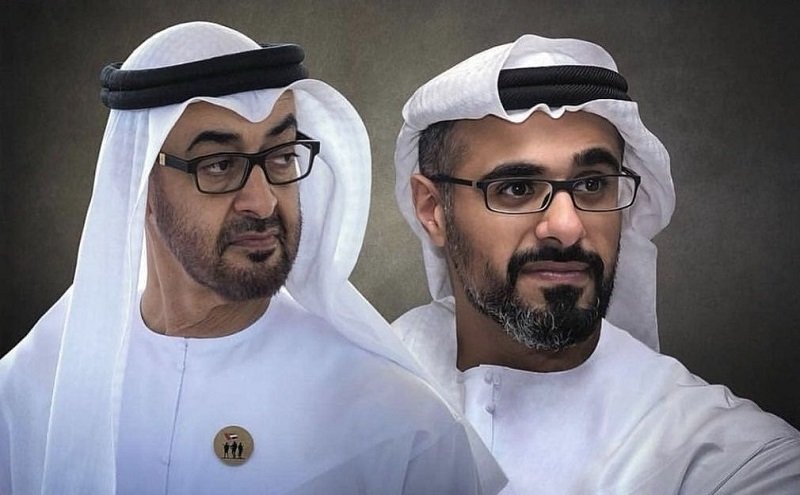
At a time of heightened regional sensitivity, the United Arab Emirates found itself unexpectedly in the spotlight, not because of a diplomatic initiative or a strategic move, but due to unprecedented ambiguity surrounding the health of its president, Mohammed bin Zayed Al Nahyan, following a controversial message published and then deleted by the Turkish presidency.
The episode began with the sudden cancellation of an official visit by Turkish President Recep Tayyip Erdogan to Abu Dhabi. While diplomatic postponements are not unusual, what shocked observers was the content of Ankara’s message on X, which explicitly referred to a “health issue” affecting the Emirati leader and expressed wishes for his recovery.
Even more striking was the rapid deletion of this message, without any clarification, and the subsequent silence of Turkish public media, including TRT, which had initially echoed the information. This sequence — disclosure, erasure, silence — triggered widespread speculation: was it a simple communication error, or an unintended revelation of sensitive information?
On the Emirati side, official communication remained strictly controlled. The state news agency WAM only mentioned a phone call between Mohammed bin Zayed and Erdogan, avoiding any reference to health concerns. This contrast between Ankara’s initial transparency and Abu Dhabi’s silence deepened the sense that crucial facts were being deliberately withheld.
The last public appearance of the Emirati president took place a few days earlier, when he received the Emir of Qatar, Tamim bin Hamad Al Thani, in a highly publicized meeting. Since then, no official images, speeches, or public engagements have been reported — an unusual absence for a leader known for his active regional role.
Beyond the immediate health question lies a more structural issue: succession. Mohammed bin Zayed became president in May 2022 after the death of his brother Khalifa, but had already been exercising real power for years due to Khalifa’s illness. This precedent makes the current situation particularly sensitive, as it revives memories of a system where leadership continuity is managed behind closed doors.
In this context, attention has turned to the Crown Prince of Abu Dhabi, Khaled bin Mohammed bin Zayed. At 44, he represents the new generation of leadership, with a strong security background and control over key strategic institutions. His appointment in 2023 was widely seen as a clear signal of a carefully prepared succession plan.
Ultimately, the central issue is not only who might succeed Mohammed bin Zayed, but how information about power is controlled and filtered. The contrast between the fleeting Turkish disclosure and the Emirati silence highlights a broader reality: in many political systems, the health of leaders remains a state secret, shielded in the name of stability.
Today, there is no official confirmation of any serious illness. Yet the media sequence — leak, deletion, silence — reveals how fragile the balance of power can appear when transparency is absent, and how leadership in the UAE has become not just a domestic matter, but a regional concern watched closely by diplomats, analysts, and public opinion alike.


