

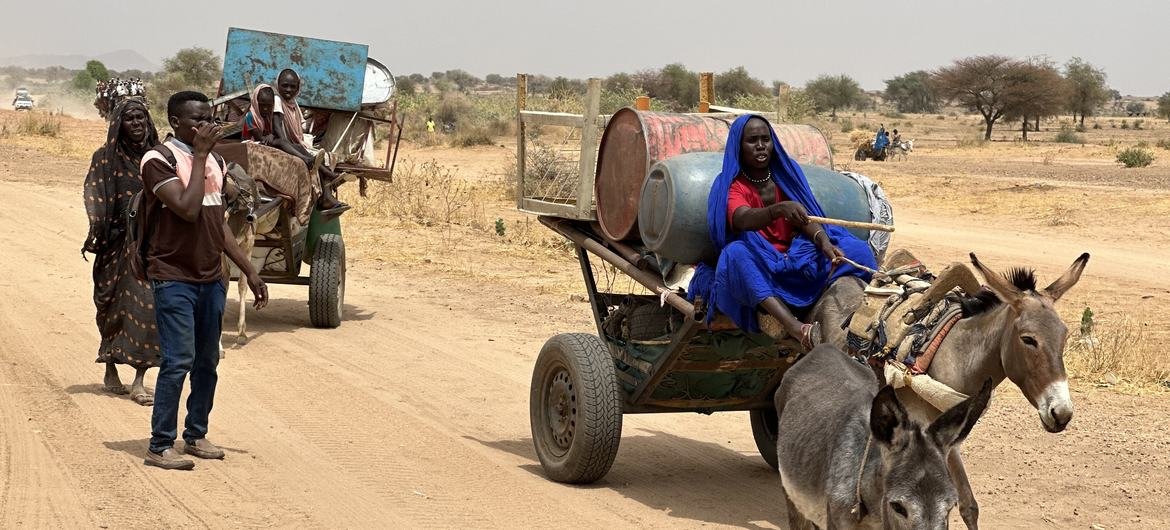
In El Fasher (the capital of North Darfur State in western Sudan), the humanitarian and security situation continues to deteriorate sharply, with developments on two fronts: what has been revealed by recent international investigations and the ongoing direct repercussions on civilians and livelihoods in the city and the surrounding area.
UN investigation reveals potential genocide
The Independent International Fact-Finding Mission in Sudan issued a report strongly criticizing the events in El Fasher, stating that the actions of the Rapid Support Forces during their takeover and the subsequent military operations amount to genocide against non-Arab communities in and around the city.
The following are the most important points mentioned in the international report:
Prolonged siege:
The Rapid Support Forces imposed a siege on El Fasher for approximately 18 months before its fall in late October 2025, resulting in severe shortages of food, water, and medicine, and depriving the population of basic humanitarian aid.
Killings, torture, and rape:
Following the fall of the city, investigations documented mass killings and the direct targeting of civilians, particularly from non-Arab communities such as the Zaghawa and Fur, in addition to reports of sexual violence, torture, and arbitrary arrests.
Evidence of genocidal intent:
The investigation concluded that the patterns of systematic targeting meet the elements of a crime against humanity and may amount to genocide under international law.
International demands:
The report called for a comprehensive international investigation, accountability for the leaders involved, and referral of the matter to international courts. It also warned of the continued risk of a recurrence of similar violence in Darfur.
According to the Associated Press, news reports from multiple sources confirmed that thousands of civilians were killed or disappeared during the initial attack on the city, with estimates indicating that many of the victims were women and children.
The Humanitarian and Living Conditions
Widespread Displacement and Suffering of the Population
Since the Rapid Support Forces (RSF) seized control of El Fasher in October 2015, thousands of civilians have been displaced both within and outside the city. Large numbers of families are now crammed into makeshift camps within and outside Darfur, living in dire humanitarian conditions.
Prior to the city’s fall, the United Nations estimated that approximately 260,000 people were living under siege, including a significant number of children suffering from malnutrition and illnesses related to food and water shortages.
Collapse of basic services
Health facilities, schools, and infrastructure were largely destroyed or completely disrupted as a result of the siege and repeated attacks.
The shortage of medicines and medical supplies exacerbated the suffering of the sick and wounded who remained in the city or attempted to return after being displaced.
The Military and Security Background of the Conflict
The war in Sudan, which erupted in April 2023 between the Sudanese Armed Forces and the Rapid Support Forces (RSF), has expanded over the past years, encompassing Darfur as one of the major battlefronts.
El Fasher was the last stronghold of the Sudanese Armed Forces in North Darfur. Following its capture, the RSF effectively controlled the entire state, exacerbating ethnic and regional tensions.
The ongoing tensions and insecurity surrounding the city prevent the return of effective control by either the rival civilian or military authorities and hinder the regular delivery of aid.
Today, El Fasher stands as a symbol of Darfur’s suffering after years of war that devastated the population and led to a severe humanitarian crisis. While international investigations have established what happened in the city as one of the worst incidents of the Sudanese conflict—with a UN report indicating that the crimes committed may amount to genocide—the humanitarian tragedy continues, requiring urgent international action to protect civilians, provide essential aid, and ensure accountability for those responsible for the documented crimes.


