

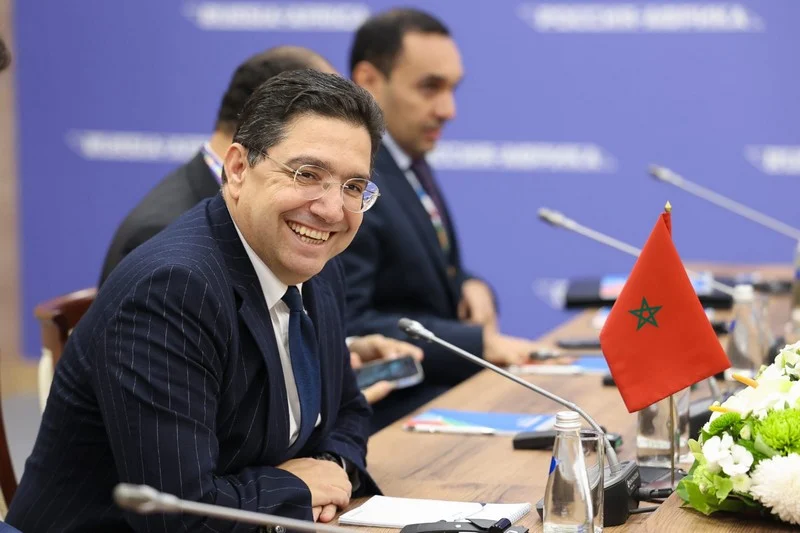
In a significant diplomatic move reflecting a shift in the United States’ approach to the Sahara dispute, Washington is hosting a new round of talks bringing together the foreign ministers of Morocco, Algeria, and Mauritania, with the participation of a representative of the Polisario. Beyond protocol, the meeting signals an attempt to move the process into a decisive phase under direct American engagement and within a timeline aimed at reaching tangible progress before next summer.
This development marks a structural change. For years, the file remained confined to the UN framework characterized by procedural delays and political stalemate. Today, it appears increasingly guided by a more proactive American oversight, seeking to transform the Moroccan autonomy proposal into an operational framework capable of forming the basis of a final political agreement.
Direct American Involvement and Diplomatic Pressure
The process is steered by key figures within the U.S. administration, including advisors responsible for African affairs and national security coordination, reinforcing its executive dimension. This direct engagement signals Washington’s intention to move beyond observation toward shaping a practical settlement mechanism grounded in realism and negotiation.
At the same time, political signals are being conveyed to Algeria to encourage a more constructive role. Among these signals is discussion about potential adjustments to diplomatic representation levels — interpreted as strategic pressure. In parallel, debates within the U.S. Congress suggest stricter legal scrutiny toward armed groups that reject political solutions and contribute to regional instability.
Washington also appears inclined to link economic cooperation and international assistance more closely to tangible commitment from the concerned parties to a compromise-based process.
Autonomy as the Central Framework
At the heart of the negotiations lies Morocco’s autonomy initiative under national sovereignty, updated to clarify the distribution of powers. The revised proposal expands local authority over economic, social, and cultural affairs while preserving exclusive central competences over defense, national security, and foreign policy.
National symbols — the flag and currency — remain embedded within the framework, reaffirming sovereignty while enabling broad self-governance.
Internationally, the proposal benefits from growing support, notably from France and Spain. The referendum option, once central to diplomatic discourse, has gradually receded from mainstream discussions. The legal anchor referenced by Washington also includes UN Security Council Resolution 2797 (October 2025), which calls for a realistic, practical, and mutually acceptable political solution — wording aligned with the Moroccan initiative.
From Development on the Ground to Practical Recognition
Beyond diplomacy, developments on the ground significantly shape perceptions. Laâyoune and Dakhla have evolved into economic and diplomatic hubs hosting more than thirty foreign consulates — a figure interpreted as practical recognition of institutional reality.
Morocco has allocated over 80 billion dirhams to major infrastructure projects, including the 1,100 km Tiznit–Dakhla highway and the strategic Dakhla Atlantic Port, designed to strengthen Africa–Atlantic connectivity and regional integration.
In the energy sector, the region is emerging as a key investment destination for renewable energy and green hydrogen projects, attracting international companies operating under Moroccan sovereignty. These structural investments reinforce the irreversibility of development dynamics and add weight to the political argument.
Political Participation and Institutional Legitimacy
Active participation of local populations in regional elections and governance bodies further strengthens Morocco’s position. Through elected councils managing local affairs, the model is presented as a concrete embodiment of self-determination within the framework of territorial integrity.
A Decisive Phase?
The Washington round represents more than a diplomatic meeting; it reflects an attempt to structure a negotiated settlement around autonomy within a defined timeframe. While its outcome depends on political will, the evolving trajectory shows that the center of gravity of the dossier is gradually shifting toward pragmatism, linking sovereignty, development, and regional stability.


