

At a particularly sensitive diplomatic juncture, the United Nations has brought the Sahara file back to the center of international attention by announcing that the ongoing talks in Washington are being co-chaired by the UN and the United States, with the explicit objective of implementing Security Council Resolution 2797. The announcement, delivered during the UN’s daily press briefing, goes beyond procedural detail; it signals a recalibration of both momentum and political sponsorship.
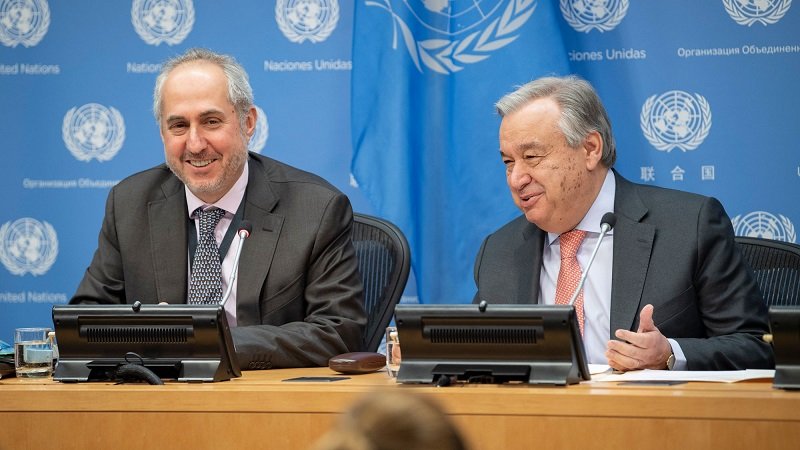
UN spokesperson Stéphane Dujarric confirmed that the Secretary-General’s Personal Envoy for the Sahara, Staffan de Mistura, is jointly chairing the negotiations alongside the U.S. Ambassador to the United Nations, Michael Waltz. This joint chairmanship is more than symbolic. It reflects direct institutional engagement by Washington in steering the process, rather than remaining a supportive actor from the sidelines.
The UN further clarified that the same participants who attended the previous round in Madrid are present in Washington—namely Morocco, Algeria, Mauritania, and the Polisario Front. The reaffirmed presence of Algeria consolidates the four-party framework endorsed in recent Security Council resolutions and underscores the regional dimension of the dispute.
Adopted on 31 October 2025, Resolution 2797 calls on the parties to negotiate on the basis of Morocco’s 2007 autonomy initiative. By emphasizing “implementation,” the UN is not reopening talks from scratch; it is anchoring the current round within an established framework in which the autonomy proposal stands as the central reference point.
De Mistura’s decision to maintain silence “to give these negotiations the best chance of success” reflects the delicacy of the moment. Fewer public statements, more quiet diplomacy—this appears to be the prevailing strategy. Washington thus becomes a decisive political test: either the parties convert years of Security Council language into tangible progress, or the process risks sliding back into another cycle of prolonged stalemate.


