

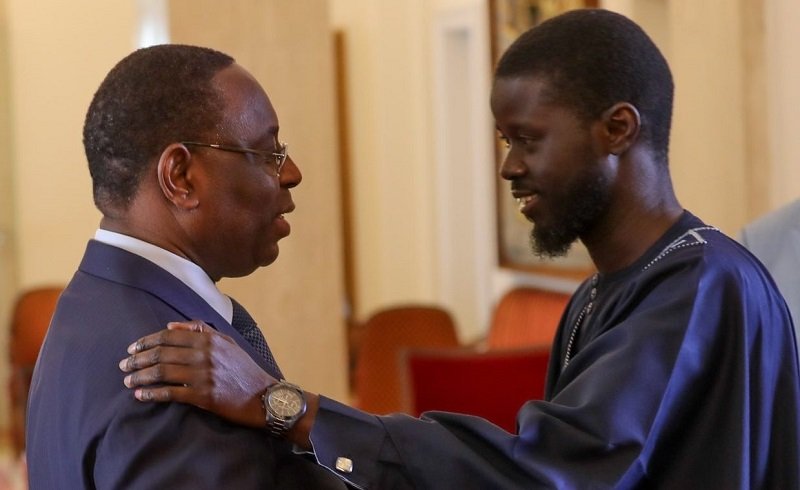
In an unprecedented diplomatic turn in the history of the African continent, the refusal to support former Senegalese President Macky Sall’s candidacy for UN Secretary-General caused a shock in both domestic and foreign political circles. A step that many observers considered a clear departure from traditional diplomatic norms, which dictate that the state whose person was previously president provides full support to that individual in international forums, especially for a post of such magnitude and international symbolism.
This decision comes in the context of political and social cracks within Senegal, where the current government, led by President Béchir Dioumaï Faye and Prime Minister Ousmane Sonko, has taken a firm stance toward Macky Sall, considering that his candidacy for the international position comes at a time when internal debates persist regarding his period of rule, which was marked by accusations of corruption, mismanagement, and hidden debts, accusations that had already stirred wide debate in Senegalese political and human rights circles.
From the perspective of the current authorities, full support for Macky Sall in the UN Secretary-General race would undermine the principle of accountability and transitional justice adopted by the new government, making his candidacy not a mere diplomatic matter, but a process directly linked to internal political and human rights dossiers that cannot be bypassed or marginalized.
It is notable that this stance was not limited to a mere difference in political viewpoints within Dakar, but extended its impact to the African Union itself. In a session held in late March, it was announced that the Union failed to adopt Macky Sall’s candidacy, as the mechanism required consensus or at least sufficient support from member states, which was not achieved due to objections from more than 14 countries and six other countries expressing a desire to postpone the decision, thus derailing the official continental support.
This division in continental positions forced the former president to resort to an alternative country (Burundi) to submit his candidacy, a move which in turn sparked a wide debate about the legitimacy of bypassing official continental support channels and the extent to which African states respect the sovereignty of certain Union members in their external decisions.
This dispute goes beyond the issue of supporting a specific individual to a broader debate about Africa’s position in the international system; the absence of African consensus on a candidate to succeed the current Secretary-General makes African ambition to lead the United Nations a fragmented issue and a victim of internal conflicts, rather than a unified project reflecting the continent’s strength and cohesion on the international stage.
On the other hand, analysts see what happened as a shift in understanding diplomatic support post-presidency; an international position is no longer an automatic immunity or tribute to a former president regardless of experience or achievements, but is now linked to maintaining internal legitimacy and respecting good governance and justice rules. In this context, Macky Sall’s case sends a clear message to African leaders: domestic national support is a fundamental basis for any international candidacy, and political and human rights conflicts within the country can directly affect its international prospects.
Globally, this refusal has placed the United Nations before complex legal and procedural considerations; a candidacy for a post of such significance must rely on support from the candidate’s home country, which Sall’s file lacks, potentially weakening his chances in subsequent stages before the Security Council and General Assembly. This reopens the debate on Africa’s cohesion and its ability to present a unified candidate and reclaim the Secretary-General position, which has been a strategic demand of African organizations for decades.
In conclusion, the incident of refusing to support Macky Sall cannot be read in isolation from the current political and social context in Senegal and Africa; it is more than a mere diplomatic step, it is a redefinition of the state’s relationship with its former leaders and its national priorities before international ambitions, and a clear message that internal considerations cannot be ignored in building an external influence project.


