

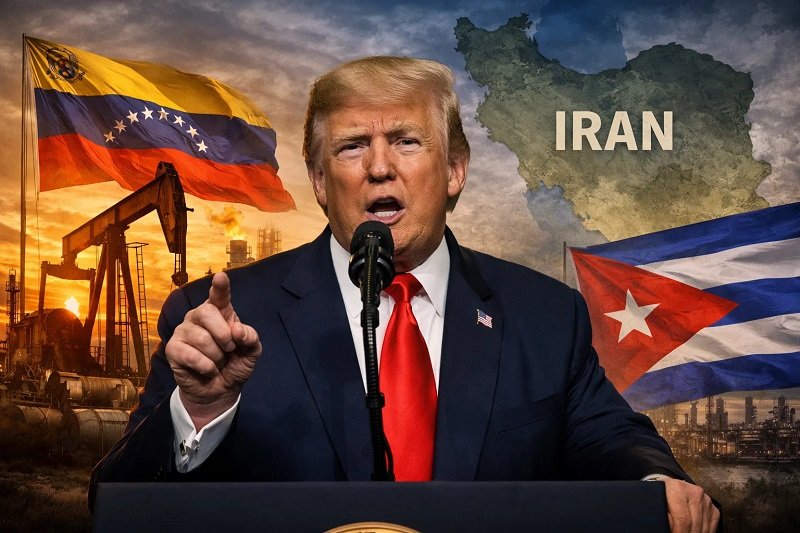
Trump and the Threat to Iranian Oil: An Analytical Reading in the Heart of Middle East Confrontation
At a pivotal moment in the escalation between Washington and Tehran in the Middle East, statements by U.S. President Donald Trump mark a new chapter in the regional and international conflict over oil, power, and geostrategic interests. As events on the ground accelerate, Washington’s messages of economic and political strength become increasingly evident.
First: Direct Threats to Iranian Oil
In an interview with the Financial Times, Trump expressed an unprecedented position: his desire to “seize Iranian oil” and key facilities, particularly Kharg Island, the core of Iran’s oil exports. He stated that U.S. forces have “multiple options” to control these facilities if Tehran does not comply with conditions to end the war and reopen the Strait of Hormuz.
These statements shift the conflict from a purely military confrontation to a geo-economic struggle over oil resources, echoing historical scenarios where force was used to secure energy supplies, but in the current context aiming to redefine American influence in the Gulf.
Second: The Paradox of Escalation and Negotiation
Trump did not limit himself to military threats; he also mentioned direct and indirect negotiations with Tehran, through regional intermediaries, notably Pakistan, which is preparing to host discussions aimed at ending the conflict. This dual approach—military pressure alongside diplomatic engagement—reflects a mixed U.S. strategy, combining force and dialogue.
Yet Tehran remains firm on its conditions and warns it will respond to any provocation, signaling that the chances for a swift political settlement remain limited.
Third: Strait of Hormuz and Global Economy Under Pressure
Trump also stressed that the Strait of Hormuz, a crucial maritime passage for energy exports, must remain open and not be closed by Iran. In response, Tehran warned that a complete blockade would be its reaction to any excessive U.S. action.
These tensions have caused immediate volatility in oil prices, underscoring that the global economy is not just a backdrop but a central actor in the conflict.
Fourth: Map of Regional Powers
Trump’s statements about controlling oil must be seen in a broader context: the U.S.-Israeli conflict with Iran has extended across several countries in the region, with Israel continuing strikes on Iranian infrastructure. This complicates negotiations and makes a regional settlement more difficult.
Some allies, such as Australia, are demanding greater clarity on the objectives of the war and are calling for de-escalation, revealing real divisions within the international alliance regarding the strategy being pursued.
Fifth: Analytical Reading and Conclusion
The current situation demonstrates that:
- U.S. policy is no longer limited to diplomatic or military pressure but includes control of strategic economic resources.
- Escalation in the Middle East combines military, diplomatic, and economic dimensions.
- Leaders’ statements serve as strategic messages as much as reflections of reality on the ground.
Between Trump’s threats to seize oil and Iran’s refusal to accept humiliation, the conflict has entered a phase where redefining the rules of the game in the Middle East has become inevitable.


