

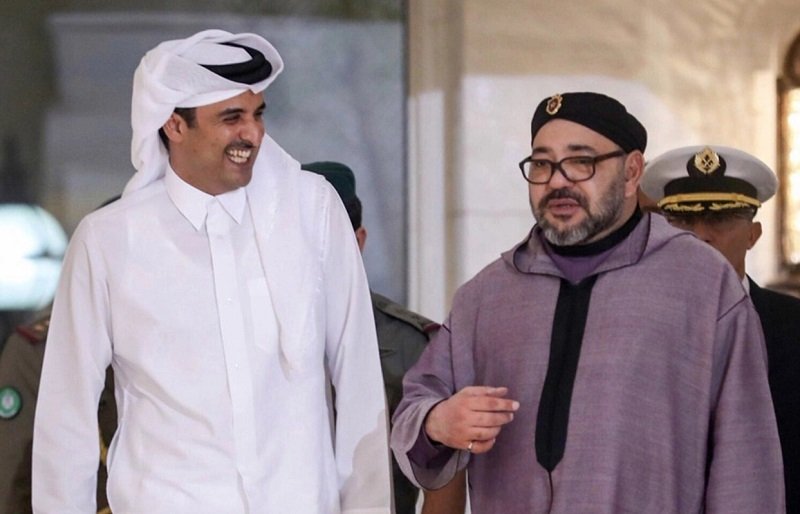
In diplomacy, not all messages carry the same weight, and not every statement should be read at face value. The congratulatory message sent by King Mohammed VI to the Emir of the State of Qatar, Sheikh Tamim bin Hamad Al Thani, on the occasion of Qatar’s National Day, falls into the category of carefully calibrated diplomatic communication where form and substance are closely intertwined.
The language chosen by the Moroccan monarch reflects a deliberate approach: restrained, respectful, and rooted in continuity. Beyond ceremonial courtesy, the message reaffirms a relationship shaped by mutual recognition and long-term perspective rather than by momentary political calculations or rhetorical excess.
The emphasis on bonds of brotherhood and reciprocal esteem highlights a relationship that has endured despite differing positions on certain regional issues. Morocco and Qatar have not always shared identical strategic readings of Middle Eastern crises, yet they have consistently avoided public friction, opting instead for dialogue and diplomatic discretion.
The reference to the aspiration to “continue working together to further enrich and strengthen bilateral cooperation at all levels” signals both the existence of an ongoing partnership and an acknowledgment that its full potential has yet to be realized. This formulation suggests a broad understanding of cooperation—one that extends beyond economic ties to include political coordination, cultural exchange, and people-to-people relations.
Placed within a regional environment marked by uncertainty and shifting alliances, the message reflects Morocco’s broader diplomatic posture: that of a stable actor seeking balanced partnerships without entanglement in polarizing blocs. Qatar, with its growing diplomatic reach and international visibility, remains a significant partner whose engagement is approached with realism rather than idealization.
Finally, the reference to the interests of both brotherly peoples underscores an important shift in contemporary diplomacy. It signals an awareness that the credibility of interstate relations increasingly depends on their tangible and symbolic benefits for societies themselves, at a time when social expectations and demands for inclusive development are becoming central across the Arab world.


