

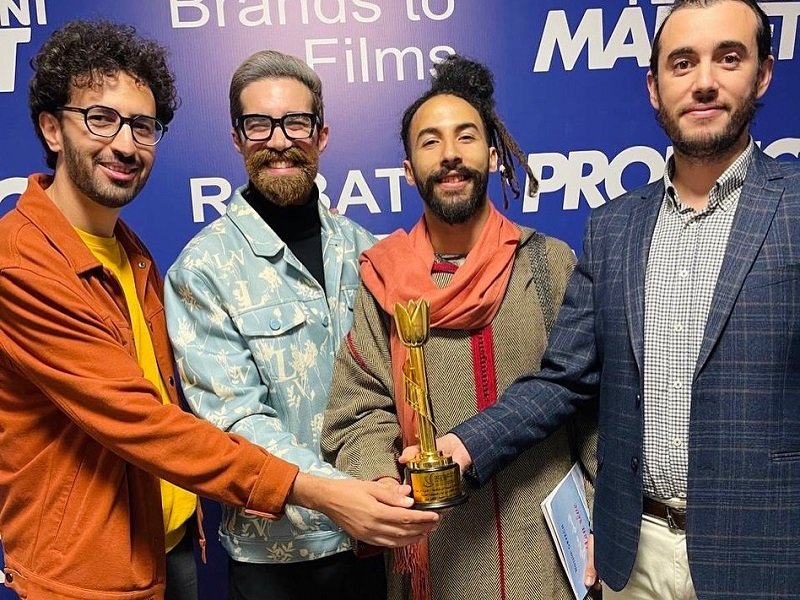
The conversation with Karim Tajouaout, Fouad Sahraoui, and Mohamed Rida Gueznai was far more than a routine festival encounter at the Rabat International Author’s Film Festival.
It was a collective reflection, revealing the deep dynamics shaping Moroccan cinema today and in the future.
Three different journeys, three generations, yet a shared commitment: redefining cinema’s role in society—not merely as entertainment, but as a space for questioning, exploration, and meaning-making.
Karim Tajouaout: turning artistic vision into existential inquiry
Karim Tajouaout stands out for his ability to make every frame a reflection, every screenplay a probe into the human condition.
His strength lies not in gratuitous provocation, but in turning everyday realities into profound reflection, exposing the tensions and contradictions of contemporary Moroccan life through storytelling.
Fouad Sahraoui: the producer who builds cultural bridges
In a still-fragile cinematic ecosystem, Fouad Sahraoui embodies the rare role of a visionary producer.
He goes beyond funding: he invests in stories that endure, filmmakers who make a difference, and initiatives that open doors for emerging talents.
For him, cinema is not just a screen—it is a dynamic cultural architecture that requires commitment, vision, and care.
Mohamed Rida Gueznai: a rising talent reshaping performance
Gueznai’s recognition at the Cairo Film Festival is more than an accolade—it signals the rise of a new generation of actors capable of handling complex roles with depth and sensitivity.
He does not merely interpret; he reinvents his characters from within, offering a contemporary vision of Moroccan acting in the Arab world.
A meeting point of creativity, experience, and national ambition
This dialogue reveals a synergy between three cinematic levels: artistic vision, structuring production, and embodied performance.
It reflects not only professional maturity but also a generational consciousness: Moroccan cinema refusing marginality, striving to write its own language, navigating a rapidly changing world, and reclaiming audience trust through meaningful, truthful storytelling.
Conclusion
This conversation was more than a cultural exchange.
It marks Morocco’s entry into a phase of cinematic maturation, guided by creators who move beyond technique to make cinema a tool of understanding, innovation, and social reflection.
Karim Tajouaout, Fouad Sahraoui, and Mohamed Rida Gueznai shine today as beacons illuminating this ambitious path.


