

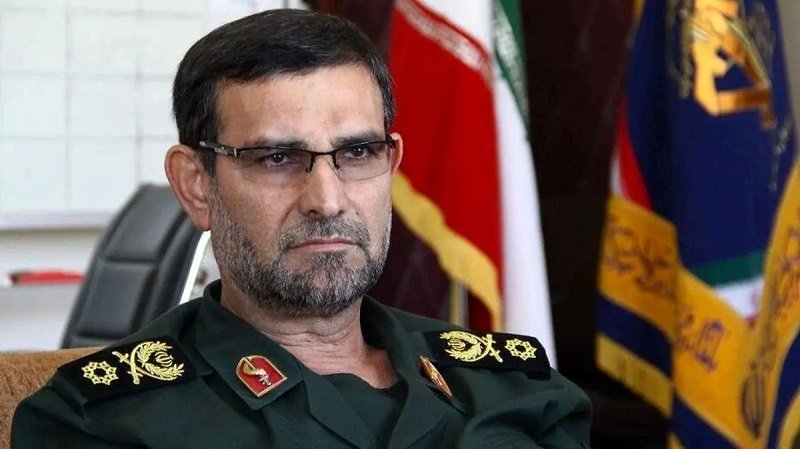
On Thursday, March 26, 2026, Israeli Defense Minister Yisrael Katz announced that the Israeli military had carried out an airstrike targeting Brigadier General Alireza Tangsiri, commander of the Islamic Revolutionary Guard Corps (IRGC) Navy, in the coastal city of Bandar Abbas. The operation reportedly also struck several senior naval officers. The official statement described the strike as a “precise and decisive blow” aimed at neutralizing Iran’s threat in the Gulf.
🚨 عاجل |
قال بنيامين نتنياهو في أحدث تصريحاته إن إسرائيل قضت على قائد سلاح البحرية في الحرس الثوري الإيراني المسؤول عن إغلاق مضيق هرمز، مؤكداً أن هذه العملية تعكس التعاون مع الولايات المتحدة لتحقيق أهداف مشتركة. pic.twitter.com/1j6wc3SGyx
— Diplomatique.ma الدبلوماسية (@diplomatique_ma) March 26, 2026
According to Israeli media, Tangsiri was one of the most influential Iranian military leaders, particularly in shaping Tehran’s naval strategy and overseeing the potential closure of the Strait of Hormuz, through which about one-fifth of global oil consumption passes. Analysts note that eliminating such a high-profile figure carries a political message that goes beyond a purely military operation, potentially reshaping the regional balance of power.
Tangsiri and the Iranian Navy
Brigadier General Alireza Tangsiri was not just a naval commander but a central figure in developing the IRGC’s maritime capabilities. Over the past years, he oversaw fast-attack boat tactics, coastal missile deployments, and maritime drones, focusing on deterring foreign naval presence in the Gulf. His targeting aims to disable Iran’s ability to threaten free navigation through the Strait of Hormuz, a vital artery for global trade and energy.
Tangsiri was also a symbol of Iranian military influence in the Gulf. His assassination exposes a potential gap in the IRGC’s command structure, which could affect Iran’s operational response in the near term.
The Implications: Messages and Motives
From Israel and the United States’ perspective, Tangsiri’s assassination is part of a strategy to rebalance naval power in the Gulf and prevent Tehran from using the Strait of Hormuz as leverage. The operation also sends a direct deterrence message to Iran: senior IRGC leaders are not immune, even on home territory.
Yet military analysts warn that while the strike may be precise, it will not entirely eliminate Iran’s naval capabilities. The IRGC maintains a broad, resilient command network, making Iranian retaliation likely through maritime attacks, drone operations, or regional proxies.
Regional and International Context
The latest development comes amid ongoing escalation between Iran, Israel, and the United States, intertwining military operations with economic pressure and international alliances. Tel Aviv seeks to prevent Iran from controlling maritime traffic, while Tehran views enhanced naval power as a critical tool to resist what it considers foreign dominance in the region.
In this context, each strike is more than a military act—it is a political and strategic message with implications for global markets, energy prices, Gulf stability, and international power dynamics in the Middle East.
Conclusion: Between Military Escalation and International Politics
The assassination of Alireza Tangsiri, if confirmed, marks a new chapter in the long-standing conflict between Iran and Israel. The coming hours will reveal the extent of Iran’s immediate response, the potential widening of the conflict, and its impact on global shipping and energy prices. What is certain is that this operation is not just a military strike but a strategic move reflecting the major power struggle in the region and the world, reshaping naval and political balances in the Gulf.


