

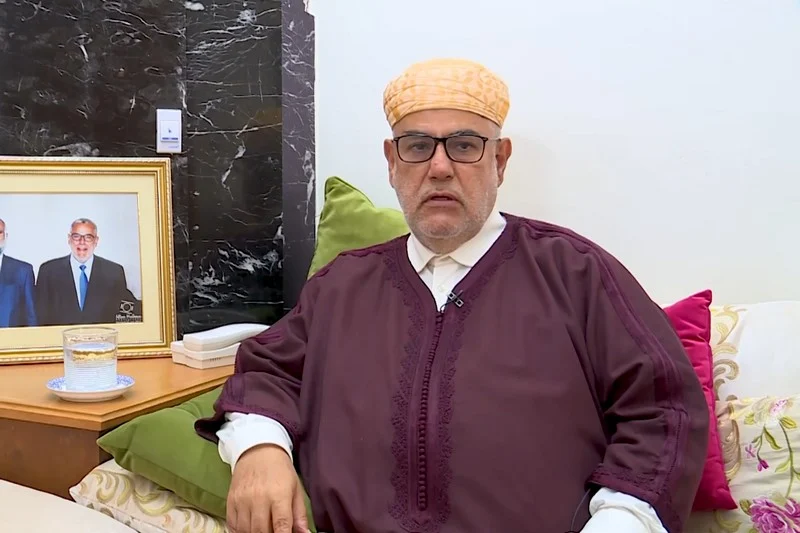
At a time of heightened regional and international tension, Abdelilah Benkirane, Secretary-General of Morocco’s Justice and Development Party (PJD), has publicly criticised Foreign Minister Nasser Bourita over remarks attributed to him concerning Morocco’s reported leadership of an anti–hate speech programme in Gaza under the US-backed “Peace Council.” What may appear as a routine political disagreement in fact opens a broader debate about diplomatic language, national positioning, and the sensitivities surrounding the Palestinian issue.
In a video posted on his official Facebook page, Benkirane questioned not only the timing but also the implications of the minister’s statements, warning that they could be interpreted in ways that might undermine Morocco’s image and its longstanding stance on Palestine. His intervention reflects both partisan positioning and a deeper concern about symbolic consistency in foreign policy discourse.
Central to his criticism is the concept of “coexistence” under conditions of occupation. Benkirane argued that promoting coexistence in the current context risks being understood as an appeal directed at Palestinians—implicitly urging them not to regard Israel as an adversary. In his view, any discourse on coexistence should instead address the occupying power rather than the population living under occupation. The issue thus becomes both semantic and political: who is being asked to adjust their posture?
He further maintained that the conflict cannot be reduced to a temporary political dispute but remains fundamentally rooted in land, displacement, and historical rights. From this perspective, initiatives focused on combating hate speech may appear to treat the symptoms rather than the structural causes of the conflict.
While acknowledging that foreign policy ultimately falls under the sovereign authority of King Mohammed VI, Benkirane stressed that this does not preclude political parties or public opinion from expressing views on international affairs. The remark signals a careful balancing act between institutional legitimacy and democratic expression.
By reiterating the longstanding opposition of the Justice and Development Party to normalisation with Israel, Benkirane situates his position within an established ideological framework. He concluded by arguing that lasting peace can only emerge through the restoration of Palestinian rights, calling for efforts to persuade the US administration to adopt a fair approach rather than exert pressure on Palestinians.
Ultimately, the controversy extends beyond a single programme or statement. It raises deeper questions about Morocco’s diplomatic messaging, its historical commitments, and the internal political dynamics shaping how sensitive international issues are framed and debated.


