

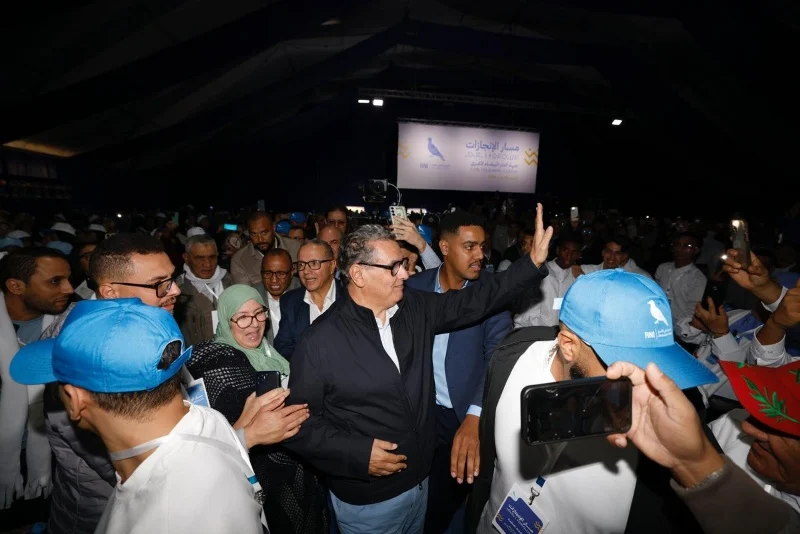
Morocco: Aziz Akhannouch Declines Third Term as RNI Leader… Political and Institutional Implications
A personal decision at the heart of politics
On Sunday, January 12, 2026, Moroccan Prime Minister Aziz Akhannouch announced that he would not lead the National Rally of Independents (RNI) in the upcoming 2026 elections, confirming that he would not seek a third term as party leader. During a press briefing, he noted that the decision had been made at the start of the year, despite initial opposition from the party’s political bureau, emphasizing that it was a personal and final choice.
Prolonged structures to ensure continuity
Simultaneously, the political bureau decided to hold an extraordinary congress on February 7 to elect a new leadership. The party also announced the extension of its governing bodies, including the presidency, citing the “specificity of the period” and the need to maintain operational continuity. This action relies on Article 34 of the party statutes, allowing Akhannouch to remain temporarily at the helm of the RNI despite the official end of his mandate.
Political trajectory under scrutiny
Since first assuming leadership of the RNI in 2016 and being re-elected in 2022, Akhannouch’s decision has attracted widespread attention. The extraordinary congress will determine the new leadership and the party’s strategy for the 2026 elections, opening debates on leadership renewal and the RNI’s political vision.
Divergent reactions and interpretations
MP Fatima Tamani argued that Akhannouch’s departure should not be seen as a voluntary retirement or an honorable exit, but rather as a matter for political accountability, assessing the results of his mandates and the social and economic impact of his decisions.
Journalist Al-Meskini described the events as a form of early ousting, suggesting that the Prime Minister was compelled by state pressures rather than a purely personal choice, highlighting an unprecedented dynamic in Moroccan political practice.
Implications and outlook
Beyond a mere leadership change, Akhannouch’s decision reflects a pivotal moment in Morocco’s political landscape, intertwining electoral preparation, internal party stability, and indirect political pressures. Attention now turns to the individual who will lead the RNI and how the party will translate this transition into effective action ahead of the 2026 elections.


