

Media Misinformation During the Africa Cup of Nations in Morocco: A Critical Analysis of Divergent Coverage
With the kickoff of the Africa Cup of Nations in Morocco, a wave of contrasting media coverage has emerged, particularly from some Arab channels, sparking widespread debate and engagement on social media. While Morocco’s organization of “CAN 2025” has received international praise, especially following the opening ceremony attended by hundreds of accredited journalists, some Arab correspondents have fallen into clear professional errors, ranging from spreading false information to relying on unverified personal impressions.
"أول مرة تمطر من 14 سنة".. حسام حسن: "خير"#منتخب_الفراعنة pic.twitter.com/pHx5US2zpw
— ON Sport (@ONTimeSports) December 24, 2025
Rain and False Claims: From Reality to Exaggeration
An Egyptian correspondent claimed, during an interview with Egypt’s national team coach Hossam Hassan, that the team’s presence in Agadir had caused rainfall in a city that had not seen precipitation for 14 years. This claim, widely circulated on social media, is not a minor mistake but a completely false report, revealing a lack of verification before broadcasting. It exemplifies how misinformation can spread rapidly when basic journalistic standards are ignored.
Tunisian Coverage: Between Apology and Correction
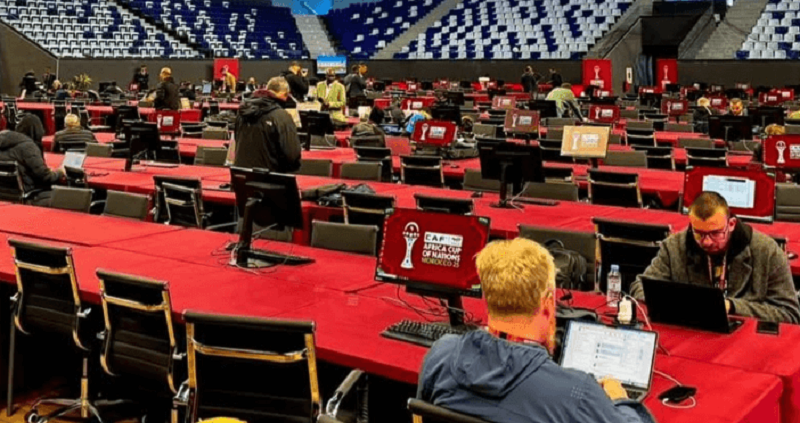
In another incident, during the live broadcast of the program “Les Nuits du CAN” on Tunisia’s Al Hiwar channel, correspondent Hamza Taïchi publicly apologized after reporting inaccurate information about a power outage in the media center of Rabat’s Olympic Stadium. Field investigation revealed that the reporter had deliberately chosen a dark angle for the broadcast, while other journalists were working under normal conditions. This incident highlights that some media errors stem more from unacceptable professional behavior than from actual organizational constraints.
على ذمة الصحفي التونسي ٫ فشل ذريع و عجز حتى على توفير التيار الكهربائي و ظروف مناسبة لعمل الصحفيين ٫ لما نقولو المغرب فاشل نحن لانكذب.#CAN2025 pic.twitter.com/tPatJn1Lho
— Jamrah 🇩🇿🇨🇦 (@jamrah_dz) December 24, 2025
A source within Al Hiwar’s delegation confirmed that Taïchi expressed frustration over certain field conditions, such as walking in the rain to reach journalists’ gates. However, such procedures are standard in major sporting events. Additionally, the African Football Confederation had organized shuttle buses to transport journalists to stadiums according to a precise schedule, facilitating coverage without the need for private vehicles.
⛔ الصحفي التونسي قالك الضو مقطوع والظروف غير مريحة.
لكن ربي من يبغي يفضح الكذاب كيجيب لي يصورو وهو يكذب pic.twitter.com/5dQHTOh0Rd— عصام العزيزي (@IssamElazizi) December 24, 2025
Geographical and Professional Inaccuracies
Another incident involved a correspondent from Tunisia’s national channel, who claimed that the Olympic Stadium was 25 km from central Rabat, whereas maps show the distance is approximately 9 km. Such discrepancies raise an important question: is this ignorance of facts or an implicit attempt to present a distorted view of the event? In any case, relying on personal impressions or social media instead of factual verification presents the public with a misleading image of reality.
The same journalist also described the stadium as a “black spot” due to incomplete coverage, overlooking the fact that Morocco provided five fully covered stadiums out of nine—an exceptional figure compared to previous Africa Cup editions and even some American stadiums hosting the 2026 World Cup.
⛔️ قناة الحوار التونسي تقدّم اعتذارها للمغرب بعد خبر كاذب لموفدها إلى الرباط يدعى حمزة الطياشي ، زعم فيه على الهواء مباشرة انقطاع الكهرباء في ملعب الأمير مولاي عبد الله و داخل المركز الإعلامي مع تعمد الظهور من زاوية مظلمة مع إضاءة كاميرا خافتة .
التحقيقات كشفت أن الكهرباء كانت… pic.twitter.com/MpLFXnDM6j
— ⛔️ محمد واموسي (@ouamoussi) December 24, 2025
Reality vs. Media Image
What some Arab journalists failed to convey is that Morocco has equipped its facilities with comprehensive infrastructure for fans and journalists, including modern train stations and pedestrian bridges connecting neighborhoods to stadiums. Moreover, the Rabat Olympic Stadium, accredited by FIFA, had previously hosted U17 Women’s World Cup finals without any negative observations from international media. Yet, certain Arab correspondents chose dark angles and unflattering backgrounds, giving the audience a distorted impression of the organization.
✅ لم تسأل نفسك يا تونسي ياحمار هل تونس لديها ملعب أولمبي مثل هذا الذي في الرباط ، هل لديها ملآعب مغطات ، جئتم إلى المغرب لتفتروا وتنتقدوا بالكذب ، الملعب لآ يبعد عن مقر البرلمان سوى ب 4 كيلو وهو في قلب الرباط ، لعنة الله عليكم ياحساد يامفترين …
.
. pic.twitter.com/XzQCCP4kxz— Ali Terrass (@1terrass) December 24, 2025
Preliminary Conclusion
The contrast between Arab coverage and international reports reveals a significant professional gap: on one side, journalists relying on precise observation and verification, and on the other, those reducing coverage to personal impressions or selectively chosen scenes that confirm preconceived notions. While “CAN 2025” receives widespread acclaim, these cases underscore the urgent need to remind Arab journalists that credibility and fact-checking are the backbone of professional reporting, especially for a large and attentive audience.


