

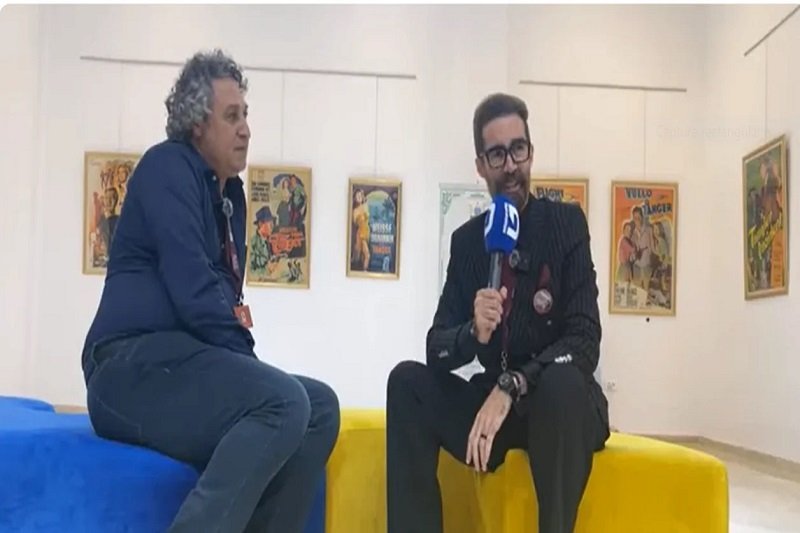
At the 25th National Film Festival of Tangier, director Hicham Haidar emerged as a distinctive voice in Moroccan cinema. His presence stands out not merely through the films he directs, but through a continually evolving vision and a mature cinematic sensibility, shaped by extensive technical experience.
Contextual Analysis:
Haidar is not an isolated artist; he operates within an integrated cinematic ecosystem, encompassing festivals, technicians, producers, and training workshops. According to his reflections, Moroccan cinema’s growth is measured not only by the number of productions but also by the quality of technical and artistic expertise, positioning Morocco as a reliable partner for international productions and enabling Moroccan technicians to gain global recognition. Implicitly, this underscores a clear message: Moroccan cinema is ready to compete on the world stage through its national talent.
Future Prospects:
Haidar emphasizes the importance of continuous professional training and the integration of modern technologies, including artificial intelligence, to align Moroccan filmmaking with global standards. He also highlights the need for specialized educational pathways, such as artistic high schools and institutes for cinema, music, and theater, allowing young talent to enter the profession early. Here, cinema is not only an art form but also a strategic economic and diplomatic tool, enhancing Morocco’s image internationally.
Engagement with Audiences:
A key aspect of Haidar’s philosophy is valuing audience interaction and recognizing the creative effort behind each work, rather than focusing solely on awards. Festival participation, in his view, provides constructive feedback loops that elevate both individual films and the maturity of the Moroccan cinematic landscape.
Critical Questions:
-
How can Moroccan cinema balance artistic authenticity with technical professionalism?
-
Will investment in youth training genuinely lead to a qualitative shift in the industry?
-
To what extent can cinema serve as both an economic lever and a diplomatic instrument, while maintaining creative independence?
Conclusion:
Hicham Haidar represents today a bridge between technical mastery and creative vision, and between local production and international standards. His journey illustrates that, despite challenges, Moroccan cinema is moving toward artistic and professional maturity, and that nurturing young talent and continuous training are essential to maintain its global presence.


