

Nador West Med: A Strategic Port for Morocco and Global Trade Integration
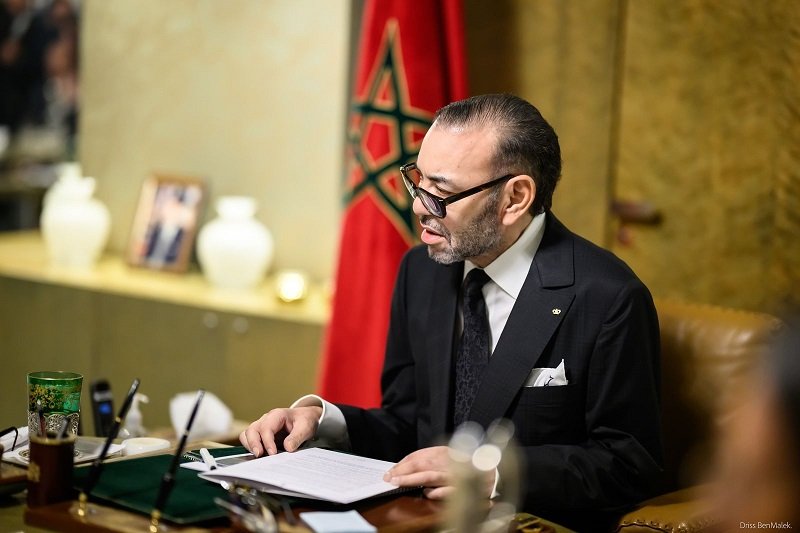
In a move of strategic significance, His Majesty King Mohammed VI presided over a working meeting on the Nador West Med port project on Wednesday, January 28, 2026, at the Royal Palace in Casablanca. This project is not merely an infrastructure endeavor but a pivotal step in redefining Morocco’s role in global trade networks, continuing the success story of Tanger Med, which has become a major international hub in Africa and the Mediterranean.
The meeting, aimed at preparing the operational launch of the port in the last quarter of this year, highlighted more than just technical progress. It marked the transition of the project into a decisive phase: economic viability, territorial integration, energy sovereignty, and investment attractiveness. Nador West Med is not designed as an additional port, but as a key element of an integrated national port system, capable of distributing flows between the Mediterranean and Atlantic fronts and linking Morocco’s northeastern region directly to global markets.
During the meeting, Mr. Fouad El Brini, Chairman of the Nador West Med Board, presented the project’s progress, which has already attracted public and private investments totaling 51 billion dirhams, reflecting the political and economic confidence in the project. On the port infrastructure side, essential works are completed, including 5.4 km of breakwaters, 4 km of berths, and four energy centers. Concession contracts for two container terminals have been signed and will gradually enter service this year.
The project’s strategic dimension lies in its energy component. The port will host Morocco’s first liquefied natural gas (LNG) terminal, with an annual capacity of 5 billion cubic meters, along with a fuel station. This component positions Nador as a direct lever for national energy sovereignty, reducing dependency on global supply fluctuations.
At launch, the port will handle 5 million TEUs and 35 million tons of solid and liquid cargo annually, with potential expansion to 12 million TEUs and 15 million additional tons of liquids, placing Nador among the Mediterranean’s major ports.
The project also includes industrial and logistics zones initially covering 700 hectares, already attracting international investors, with confirmed private investments of 20 billion dirhams. These areas are not only a technical extension of the port but also a social and economic lever, transforming the historically marginalized Oriental region into a productive hub capable of generating employment and rebalancing territorial development.
Royal directives emphasized accompanying the project with specialized training programs, facilitating youth integration into the labor market and ensuring that all regions within the port’s influence benefit from its development, through urban improvement, better living conditions, and a multidimensional sustainable development plan.
In this sense, Nador West Med is not just a construction site but a strategic transition: success is measured not only in kilometers of quays or handling capacity but in the ability to reshape the link between economy and territory, investment and development, geo-economic ambition and territorial equity. The port represents less an infrastructure than a national vision, aiming to make Morocco an actor, not just a transit point.


