

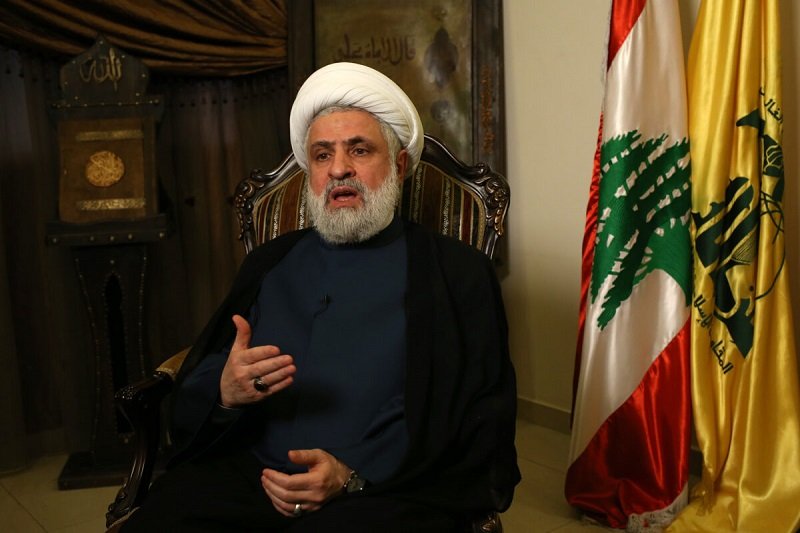
The statement by Israel’s Defense Minister, Israel Katz, declaring that Naïm Qassem, Secretary-General of Hezbollah, is now “a target for elimination,” signals a significant strategic shift in the unfolding regional confrontation. The announcement follows Hezbollah rocket and drone attacks against Israel, reportedly carried out in retaliation for the killing of Iran’s Supreme Leader, Ali Khamenei.
Beyond its immediate shock value, the declaration reflects a transformation in Israeli military doctrine—from indirect deterrence to openly articulated targeted elimination at the highest political level. By publicly designating Hezbollah’s leader as a legitimate military objective, Israel is broadening the scope of confrontation and sending a calculated message to Iran and its regional allies.
A Multi-Front Confrontation
Simultaneously, the United States has conducted hundreds of strikes across Iranian territory, widening the operational theater. U.S. President Donald Trump pledged to avenge the deaths of American soldiers, warning that further casualties may occur before the conflict subsides. His address combined military resolve with a direct appeal to the Iranian people to rise against the Islamic Republic—an indication that Washington’s strategy extends beyond battlefield retaliation to political pressure on Tehran’s internal stability.
This dual-track approach—kinetic escalation coupled with regime-focused rhetoric—repositions the United States as a decisive actor in what is rapidly evolving into a structured regional confrontation.
Hezbollah Between Strategic Loyalty and Domestic Risk
For Hezbollah, entering this intensified phase of conflict is not merely an ideological act of solidarity with Tehran. It represents a calculated move to reaffirm its central role within the so-called “Axis of Resistance.” By framing its attacks as retaliation for Khamenei’s death, the group reinforces symbolic continuity while risking broader consequences for Lebanon.
The public targeting of Naïm Qassem introduces a new strategic equation: any direct strike against him would represent a qualitative escalation, potentially triggering a full-scale conflict along Israel’s northern front.
Strategic Outlook: Red Lines Redefined
What is unfolding goes beyond episodic retaliation. It reflects a redefinition of red lines. Israel appears intent on testing the resilience of Iran’s regional network, while Iran seeks to demonstrate that the loss of its supreme leader does not dismantle its strategic depth.
Lebanon, in this context, risks becoming a primary projection arena, while Gulf states remain exposed to indirect strikes and retaliatory spillover. The emerging architecture of confrontation is one in which each actor is striving to restore deterrence credibility without crossing into uncontrollable war.
Ultimately, the threat against Hezbollah’s leader is not solely a military warning; it is part of a broader contest of wills in which symbolism carries as much weight as operational capability. The Middle East is thus entering a prolonged phase of heightened instability, where the decisive question is whether escalation can still be managed—or whether the region is drifting toward a wider war.


