

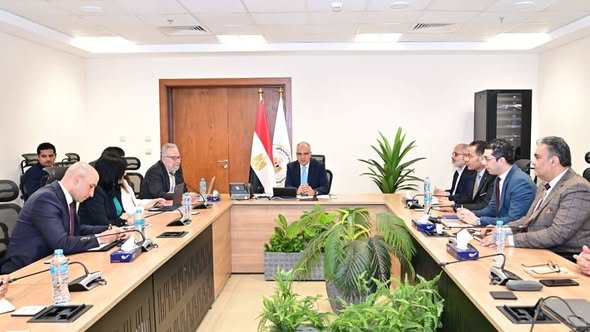
Pedro Araujo-Agudo, the UN Special Rapporteur on the human rights to drinking water and sanitation, has concluded his 10-day official visit to Egypt.
During the visit, Araujo-Agudo held meetings with government officials, representatives of civil society organizations, and experts in the water and sanitation sector, in addition to field visits to a number of drinking water projects and treatment plants, to assess the reality of the services and their compliance with international human rights standards.
In his closing remarks, the UN official stressed that ensuring equitable water distribution, particularly in rural areas and the most vulnerable communities, is a cornerstone of achieving sustainable development. He also highlighted the importance of environmental sustainability in water resource management, especially in countries facing structural water scarcity, such as Egypt.
Egypt and the Challenge of Water Scarcity
Egypt is classified as a water-scarce country, relying almost entirely on the Nile River as its primary source of fresh water. With a continuously growing population exceeding 105 million, the pressure on water infrastructure is increasing.
According to statements made by the Egyptian Minister of Irrigation during his meeting with the UN official, as published on the website of the Egyptian State Information Service, in recent years the Egyptian government has invested billions of pounds in developing water and sewage networks, expanding desalination plants, and reusing treated wastewater in agriculture.
Cairo asserts that these projects aim to achieve water security and improve the quality of life, especially in villages and remote areas.
Treatment and desalination plants take center stage
One of the most prominent issues discussed by the UN Special Rapporteur was the agricultural and sanitary wastewater treatment projects, which are among the largest in the region. The visit also included a review of expansion plans for desalination plants along the Red Sea and Mediterranean coasts, as part of a long-term strategy to address water scarcity.
Experts believe that these moves reflect a strategic shift in water management in Egypt, from traditional reliance on the Nile River to diversifying water supply sources, in line with the Sustainable Development Goals 2030.
From a human rights perspective, the Special Rapporteur’s reports usually focus on several key criteria, most notably: the availability of sufficient water, water quality and safety, physical and economic access to the service, non-discrimination in service provision, community participation and transparency.
Araujo-Agudo is expected to issue a detailed report on the results of his visit in the coming period, including recommendations to the Egyptian government on strengthening the legislative framework, improving oversight mechanisms, and ensuring access to services for the most vulnerable groups.
Egypt’s reception of the Special Rapporteur reflects its keenness to highlight its efforts in the field of water management before the international community.
The visit also represents an opportunity for Cairo to reaffirm its commitment to international human rights agreements and to highlight the huge investments the state has made in the water and sanitation infrastructure sector over the past decade.
Observers expect that the results of this visit will form an important reference in assessing the status of the right to water and sanitation in Egypt, and may also open the door to further technical cooperation between Egypt and the United Nations human rights mechanisms.
In light of climate challenges and rapid population growth, the water file remains one of the most important strategic files for the Egyptian state, not only as a development issue, but as a file directly related to national security and social stability.


