

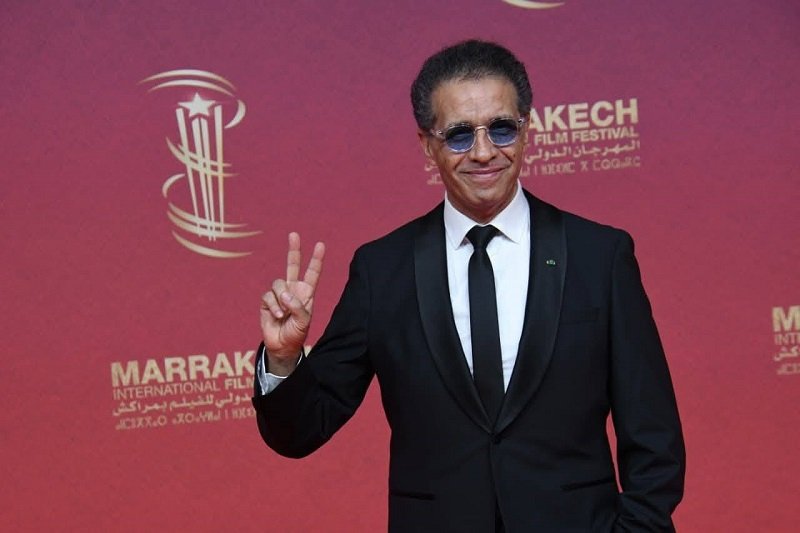
There are moments in a filmmaker’s journey that feel like what philosophers call a return to origins — not a nostalgic return, but a rediscovery. With Mira, Nour-Eddine Lakhmari seems to reclaim a language he had momentarily forgotten:
the language of the image when it thinks on its own, free from explanatory narration and industrial constraints.
From Nadira to Casanegra to Burn Out, Lakhmari has consistently explored one central question:
how does the individual negotiate a social environment that observes, constrains, and reshapes them?
But Mira does not revisit that question.
It rebuilds it.
Here, cinema stops telling a story and becomes an act of seeing — a meditative gesture where light turns into thought and where silence becomes a fully formed syntax. The film is built on the intuition that the eye can be more radical than action, and that the world is sometimes best understood before it is explained.
Its Moroccan premiere at the 22nd Marrakech International Film Festival, following a world premiere at the prestigious Tallinn Black Nights Festival, confirms this ambition. Mira speaks not only to Moroccan audiences, but to any viewer capable of reading what unfolds between appearance and disappearance.
The past as a condition for interpreting the present
Mira is not a film about a child; it is a film that adopts the vantage point of childhood to rethink perception, freedom, and identity.
Casting a young girl (Safae Khatami) is a deeply conceptual choice.
As Deleuze writes:
“The child is the body most capable of receiving pure images.”
The child does not see through the social filters that train adults to interpret before they look.
Thus, Mira becomes less a character and more a visual instrument — a prism through which the film dissects the relationship between the body and authority, between silence and meaning.
The cage: not a metaphor, but a visual device
In Mira, the cage is not symbolic décor. It is a structural element.
-
In framing: the image tightens around Mira whenever social control tightens around her.
-
In gesture: her hand opening the cage is not compassion, but micro-resistance — the hand thinking in place of the silenced voice.
-
In social logic: every attempt at emancipation leads to a new cage, as if society sustains itself by reproducing its boundaries.
-
In sound: the flutter of wings carries more truth than the moralizing human voices.
The cage becomes a parallel text, echoing Durkheim and Bourdieu’s ideas of symbolic violence:
violence that does not strike, but shapes;
that does not wound, but organizes.
Three women, three ways of confronting power
Safae Khatami, Fatima Ataf, and Zineb Anjil together draw a map of resistance.
-
Mira: minimal movement, a gaze loaded with unspoken questions, a presence that communicates beyond words.
-
The grandmother: the lucid witness, embodying wisdom without agency.
-
Teacher Lamia: a voice of change trapped inside rules that deny her legitimacy.
Mira thus ceases to be the lone heroine.
The film creates a triad of femininities, three negotiations with authority, three distinct visions of freedom.
The village as a micro-laboratory of the world
Though set in the Moroccan Middle Atlas, Mira refuses folkloric representation.
The village is not a picturesque setting; it is a sociological matrix, a controlled environment where the tension between the individual and the institution can be studied in miniature.
This is what grants the film its universal resonance:
freedom is not portrayed as a legal right but as an existential experiment, a fragile interior movement fueled by imagination.
The release of the pigeons — a revolution that happens in the eye, not in the action
When Mira opens the cage, Lakhmari keeps the camera still.
The birds fly off.
Then the frame returns to her face.
The liberation is not in the wings.
It is in the gaze discovering the possibility of liberation.
A thoroughly Deleuzian moment, where the event does not lie in the movement, but in the shift of perception.
A film that does not search for freedom… but produces it
Mira is not a manifesto.
It is an invitation to retrain the eye.
Lakhmari does not return to his past.
He returns to his most intimate cinematic impulse — where cinema is not industry, not ornament, not discourse, but a tool for thinking the world.
Between Tallinn and Marrakech, Mira emerges as one of the most daring propositions in contemporary Moroccan cinema:
a cinema that opens itself to the world without erasing its soil,
that questions freedom without sacrificing poetry,
that reimagines identity without sliding into intellectual exhibitionism.
Mira is not merely a film.
It is a method for thinking with the eyes.


