

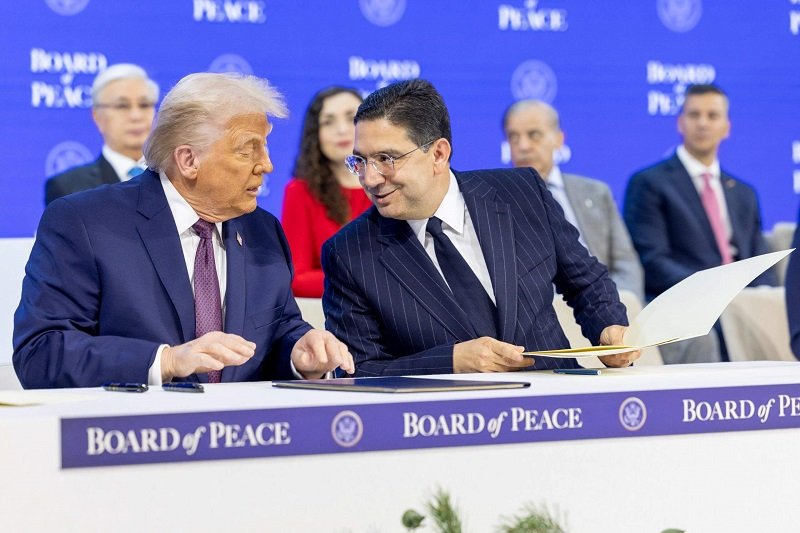
In an international scene where diplomatic prestige meets strategic stakes, Morocco has once again asserted its leadership on the global stage. On Thursday, the Swiss city of Davos hosted the signing ceremony of the founding charter of the “Board of Peace”, marking the Kingdom’s entry as a founding member of an international initiative aimed at supporting global peace and stability.
Morocco, represented by its Foreign Minister Nasser Bourita, signed the document on behalf of King Mohammed VI at an event that brought together top international leaders, including U.S. President Donald Trump, who personally invited the Moroccan monarch to join the Council. According to Morocco’s Ministry of Foreign Affairs, this invitation goes beyond protocol: it is a clear recognition of the Kingdom’s central role, under the King’s leadership, in supporting peace and resolving conflicts.
Morocco at the Heart of Davos: Signing the "Board of Peace" Reaffirms the Kingdom’s Strategic Role
المغرب في قلب دافوس: توقيع ميثاق "مجلس السلام" يعيد رسم موقع المملكة على خريطة النفوذ الدولي pic.twitter.com/dVVC5ydqoI
— Diplomatique.ma الدبلوماسية (@diplomatique_ma) January 22, 2026
The significance of the Board of Peace lies in its strategic design: a limited-membership body reserved for active international leaders, aimed at promoting stability, good governance, and sustainable peace in conflict-affected areas. Morocco’s participation reflects international appreciation for its role in the Palestinian issue and its commitment to a just solution, based on the establishment of an independent Palestinian state within the 1967 borders, with East Jerusalem as its capital, living peacefully alongside Israel.
At the forum, Trump highlighted “an opportunity to end suffering, hatred, and bloodshed,” emphasizing the Council’s potential to become “the most important international body ever created.” He cited initial successes in the Middle East and Gaza and ambitions to resolve other major conflicts, including the Renaissance Dam dispute between Egypt and Ethiopia. This model of international cooperation is designed to complement the UN, addressing the limitations of traditional institutions in resolving entrenched conflicts.
The list of signatories illustrates the scale of the initiative: Saudi Arabia, the UAE, Qatar, Bahrain, Turkey, Pakistan, Kazakhstan… and Morocco, reinforcing its role as a strategic bridge between continents and a reliable ally on the global stage.
Morocco’s participation as a founding and limited member reflects what could be described as the Kingdom’s “attractive leadership strength”: the ability to assert independent diplomatic presence and leverage international alliances to highlight its historical role in promoting peace, beyond regional blocs or political pressures.
The crucial question remains: to what extent can Morocco translate this symbolic and diplomatic influence into tangible results on the ground, whether in supporting regional stability or strengthening its role as a mediator in major conflicts? The coming steps of the Board of Peace will be a key indicator of the Kingdom’s ability to combine ethical leadership with strategic ambition.


