

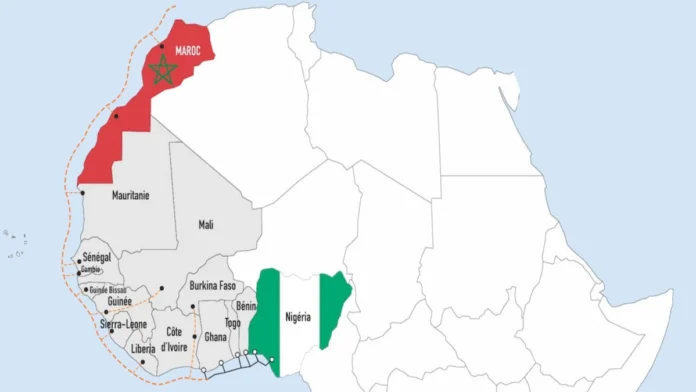
As the war in the Middle East enters its second week, the risks to global energy security are becoming increasingly apparent. Military operations have spread from Iran to Israel, from Gulf countries to Turkey and Azerbaijan, and through Jordan and Iraq. This escalation underscores the urgent question: how can the world ensure stable energy supplies amid no signs of lasting pacification?
The war, which began on February 28, 2026 after the U.S.-Israeli strike on Iran, exposed the fragility of reliance on traditional Middle Eastern energy supplies. Military operations disrupted oil and gas supply chains, particularly after Qatar announced a temporary halt in production following the closure of the “Ras Laffan” facility, the largest of its kind worldwide, exacerbating the liquefied natural gas (LNG) crisis in Europe.
Simultaneously, the closure of the Strait of Hormuz, a vital corridor for approximately 21 million barrels of crude oil per day and 20% of LNG shipments, triggered a surge in energy prices exceeding 50% in Europe, according to the European Commission. These developments have renewed the focus on alternative energy solutions, particularly the Africa-Atlantic pipeline project between Morocco and Nigeria.
Africa-Atlantic Pipeline: A Strategic Alternative
Since 2016, when the contractual framework was signed, the project has demonstrated its potential as a key alternative to Middle Eastern gas flows to Europe, while ensuring energy security for West Africa. The pipeline spans 5,660 kilometers, transporting approximately 40 billion cubic meters of natural gas per year, serving an estimated 400 million people.
After more than a decade, progress remains slow due to political complexities and transnational agreements, alongside the need to secure financing, estimated between $25–30 billion. The current energy market disruption has increased interest from new investors, including the European Investment Bank, Islamic Development Bank, OPEC Development Fund, and the United Arab Emirates, as per the agreement signed with Morocco on December 8, 2023.
The pipeline traverses Nigeria, Benin, Togo, Ghana, Côte d’Ivoire, Liberia, Sierra Leone, Guinea, Guinea-Bissau, Senegal, The Gambia, and Mauritania, before reaching Morocco and Europe via the Strait of Gibraltar to Spain, with potential extensions to other African countries such as Cape Verde, Mali, and Niger.
Europe Facing Complex Choices
According to European Commission President Ursula von der Leyen, natural gas prices have risen by 50% and oil by 27% since the conflict began, costing European citizens an additional €3 billion.
Europe now faces two options:
-
Absorb price increases domestically through caps and government subsidies, or
-
Return to importing Russian gas, despite political constraints due to the ongoing war in Ukraine, which the President described as a “strategic mistake.”
Data from Bloomberg shows that at least eight shipments have been redirected to Asia, intensifying pressure on European markets.
The Project as a Strategic Opportunity
The Africa-Atlantic pipeline, set to start in 2027 and finish by 2031, could serve as a strategic gateway for the European Union to reduce dependence on the Middle East and Russia. It is not only an economic option but also a political tool to secure Europe’s energy autonomy, reinforced by UN Security Council Resolution 2797 and the EU’s support for Morocco’s Sahara autonomy initiative.
Amid this crisis, the world appears to be entering a phase of global energy chain re-engineering, where transcontinental projects evolve from mere investments into strategic security instruments, potentially reshaping the energy landscape of Europe and Africa alike.


