

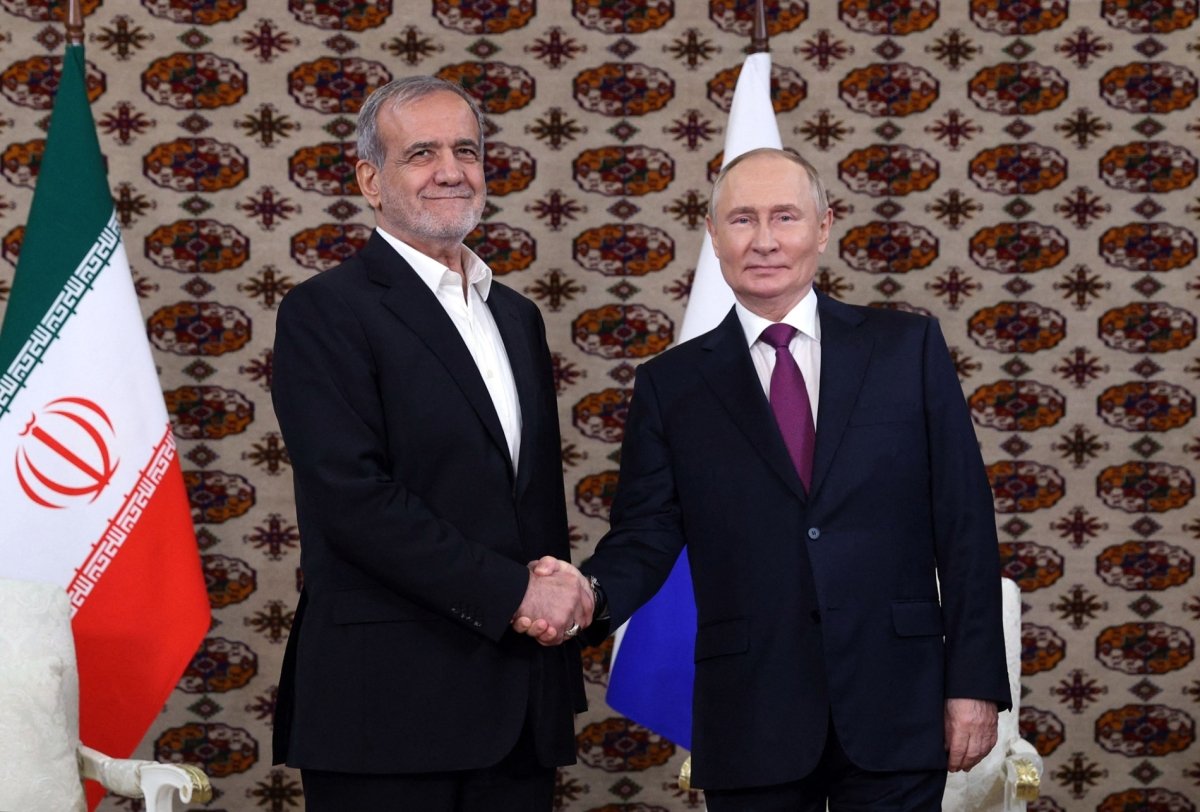
The British newspaper The Telegraph published an opinion piece by Ivana Stradner entitled “Suddenly, Putin is ready to sacrifice Iran,” which begins by pointing out that the United States must seize the opportunity to highlight the fragility of what is known as the “Kremlin friendship” to Russia’s other allies.
The writer says that US President Donald Trump recently issued a warning to Iran that a US naval fleet is heading towards the Gulf region, and with Washington hinting that the option of launching strikes against Iran is still on the table, and in light of the escalating protests against the Iranian regime, the current crisis has revealed the limits of Russian-Iranian relations.
She adds that despite the long-standing partnership between Moscow and Tehran in opposing the West, “Russia is not willing to take on the risk of defending Iran,” and the writer believes that the United States “must seize the opportunity to demonstrate the fragility of the Kremlin’s so-called friendship with Putin’s other allies”.
Past relationships despite a legacy of mistrust
The writer points out that Iran and Russia have sought in recent years to establish a strategic relationship between them, and despite a legacy of mutual distrust, their partnership has become more robust since the Russian invasion of Ukraine in 2022, after Iran supplied Russia with weapons that it used in the invasion, including a large number of long-range suicide drones of the Shahed type, They were used to bomb Ukrainian infrastructure. In return, Moscow offered Tehran an unprecedented level of defense cooperation, including the sale of Su-35 fighter jets, which would represent a qualitative leap for the outdated Iranian air force.
The author says that although Iran remains important as a partner, “Moscow’s dependence on Tehran has diminished, and the Russian-Iranian partnership suffered a setback in December 2014 after the overthrow of former Syrian President Bashar al-Assad, whom Moscow and Tehran had kept in power since 2015″.
The author adds that in January 2025, Russia and Iran concluded a “comprehensive strategic partnership treaty,” which included various aspects of bilateral relations, including cooperation to counter Western sanctions. However, this treaty, despite including multiple forms of military cooperation, did not reach the level of a commitment to joint defense, Russia seeks to avoid providing full support to Iran, and does not appear willing to risk a conflict that does not affect its core interests, while Moscow maintains a balanced relationship in the Middle East.
Putin fears regime change in Iran
The writer believes that Putin fears the scenario of regime change in Iran, due to the potential for instability within Russia. Therefore, his position did not exceed the limits of offering mediation, as Putin’s priority at the moment is to maintain a good relationship with Trump, in light of peace talks related to Ukraine, which prompted him to distance himself from escalation and leave his foreign ministry at the forefront.
The writer points out that the most Moscow can offer Tehran is to supply it with weapons, but even this unlikely option will make a difference, even if Iran resorts to requesting Russian support to rebuild its air defense capabilities, because this path requires time, and Moscow is focusing its military efforts on the Ukrainian front.
The writer Ivana Strander concludes her article by pointing out that Washington now has an opportunity to present a counter-narrative, and the US administration should consider using its influence to show the rest of Russia’s allies that Putin, when put to the test, might abandon them without hesitation.


