

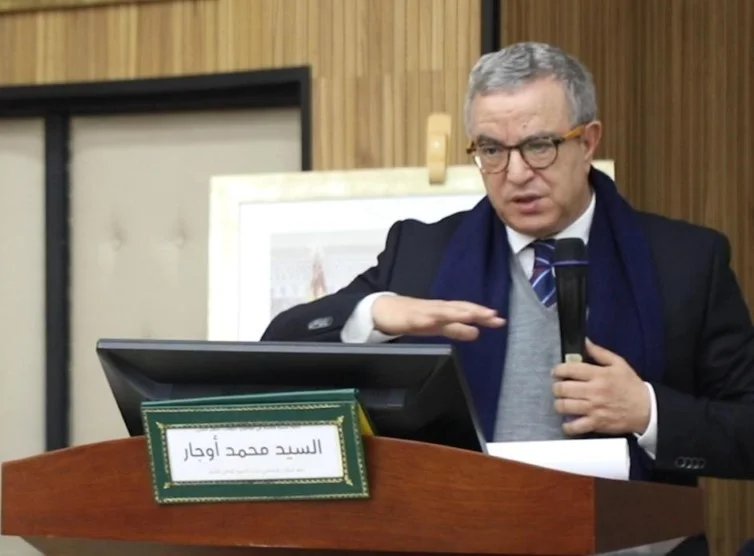
In rare and revealing statements, Mr. Oujar, former minister and executive member of the ruling party, detailed sensitive aspects of the Moroccan state, political parties, and bureaucracy, which pose daily challenges for both ministers and citizens.
The Deep State and Political Parties
Oujar emphasized that the Moroccan state leaves little room for parties, and senior appointees “are not accountable”, while ministers struggle with the heavy bureaucracy of the deep state. Any reform efforts face persistent administrative resistance.
Historical Political Balance
He recalled the 1970s, when King Hussein II sought to create political balance by supporting new parties to counter traditional blocs dominant in the streets, media, and universities. These parties were state-driven rather than popular initiatives, and traditional party leaders did not confront them with political violence.
Societal Transformations and Citizen Participation
Oujar expressed concern over declining voter participation and the rise of social networks as key political actors, alongside a shift in social values toward individualism and self-reliance. Parties must rethink their role to adapt to these changes.
Public Listening and Citizens’ Programs
He revealed extensive public listening sessions in villages and cities to understand citizens’ priorities. The results showed that youth prioritize employment, education, and health, with English and French preferred over Amazigh, highlighting profound social and cultural shifts.
Future Challenges and Major Transformations
Oujar linked the international success on Southern Provinces autonomy to the need for constitutional reforms, enhanced governance, and involvement of elites, youth, and women in politics. He warned that some new elites, particularly businessmen, do not engage in parliamentary affairs, challenging the rebuilding of strong institutions.
Analytical Conclusion
Oujar’s statements reveal a complex issue between the deep state, traditional parties, and modern societal transformations. They call for comprehensive reforms, citizen engagement, and rebuilding trust between institutions and the people.
Open Questions:
How can parties overcome deep state constraints?
What role can youth and women play in reshaping politics?
Will new elites genuinely engage in parliamentary life, or prioritize economic interests?


