

In the political arena, leadership is not measured solely by the importance of the responsibilities held, but by the leader’s ability to transform these responsibilities into an effective presence on the ground. Presence in politics is not merely a formal or ceremonial matter: it is a symbolic message confirming the actor’s position within the balances of power and influence.
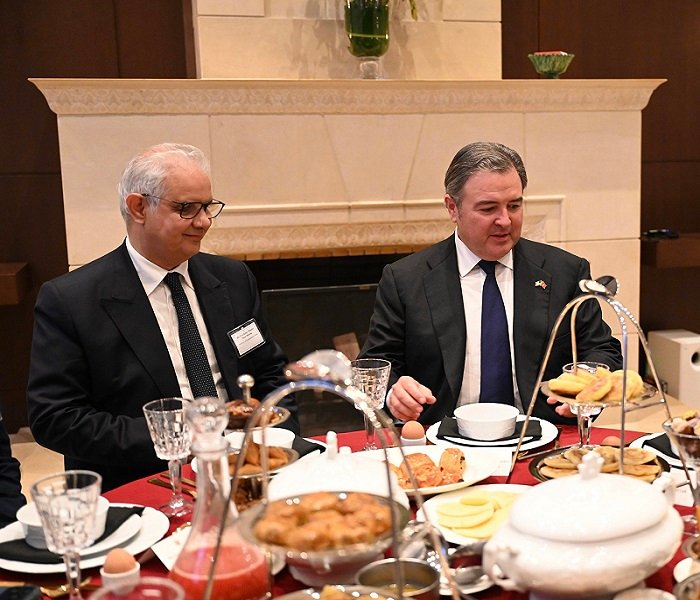
It is from this perspective that a diplomatic event organized by the United States Embassy in Rabat, on the occasion of the 250th anniversary of historical relations between the Kingdom of Morocco and the United States of America, became revealing for understanding the dynamics of presence and absence within the Moroccan political scene. The residence of the U.S. Ambassador to Morocco, Duke Buchan III, hosted this ceremony, recalling the longevity and depth of bilateral relations, established as early as 1777, making it one of the oldest diplomatic relationships in the world.
However, this diplomatic event, which was attended by several ministers and political and economic actors, also highlighted the absence of a major political figure: Fatima Zahra Mansouri, Minister of Territorial Planning, Urbanism, Housing, and City Policy, and National Coordinator of the Authenticity and Modernity Party. This absence was not a mere ceremonial detail, but a political signal likely to raise questions about the dynamics of presence within the government and the ruling coalition. Indeed, such diplomatic meetings are often politically leveraged to assert the actors’ positions on the public stage and demonstrate their ability to build relationships and exercise influence, especially when it involves personalities whose names are mentioned among future political ambitions.
This absence takes on even greater significance in a broader context related to the general image of political performance. While public opinion expects ministers to communicate with citizens, explain public policies, and lead national debates, some officials sometimes appear content with an institutional presence tied to their office, without it translating into tangible political presence on the ground. This is where the paradox discussed behind political scenes emerges: ministers holding influential positions whose public visibility remains limited or sporadic.
Conversely, a different model emerges within the government, embodied by Nizar Baraka, Minister of Equipment and Water and Secretary-General of the Istiqlal Party, who continues to strengthen his presence on the ground through project visits, meetings with elected officials, and public actions. This sustained presence, widely covered by the media, helps consolidate the image of an active politician, seeking to reinforce his position both within the government and his party.
The contradiction between sustained presence and repeated absences does not only reflect differences in political style; it also reveals a silent struggle over who truly manages to build the most influential political image. Modern politics is no longer played only in offices and institutions; it relies on the capacity to appear continuously in the public sphere and convince public opinion of the legitimacy and commitment of the political actor.
These questions become even more pressing in a political context preparing for a sensitive stage tied to major international deadlines, notably the organization of the 2030 World Cup, which will bring together Morocco, Spain, and Portugal. This phase requires not only technical project management but also political leadership capable of convincing both domestically and internationally of the state’s ability to meet this historic challenge.
Thus, the question resonating in political and media circles becomes clearer: who truly succeeds in accumulating points in this undeclared race toward political leadership? Experience shows that leadership is not built by titles or positions alone, but gradually through a constant presence on the ground and the ability to transform governmental responsibility into tangible political influence. In the political world, absence can sometimes speak louder than presence, as it leaves a void quickly filled by competitors.


