

UN Security Council emergency session on Israel’s recognition of “Somaliland”: diplomatic move or a quiet redrawing of fragile regional fault lines?
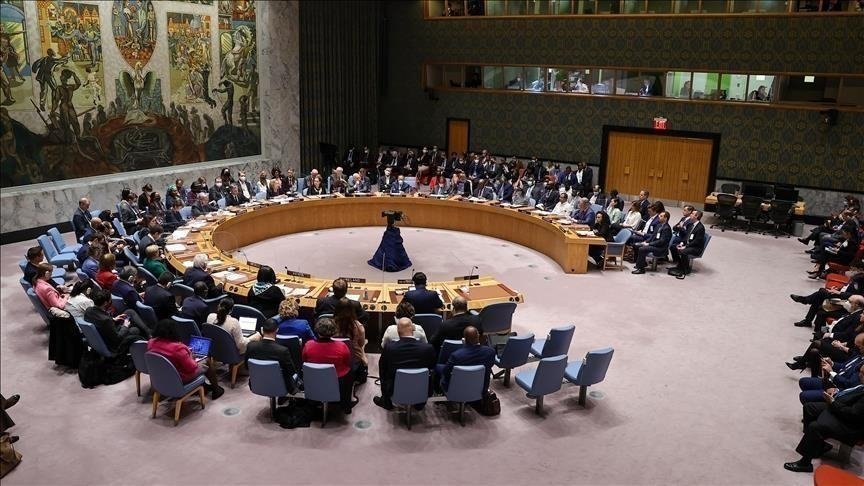
The United Nations Security Council convenes an emergency session this Monday in New York, at the formal request of the Somali government, to examine the implications of Israel’s announcement recognizing Somaliland as an “independent and sovereign state.” The unprecedented move has triggered widespread regional and international rejection, while raising deeper questions about its motivations, timing, and legal and geopolitical ramifications.
By taking this step, Israel becomes the first UN member state to break with a long-standing international consensus that has, for more than three decades, regarded Somaliland as an integral part of the Federal Republic of Somalia, despite the de facto self-administration established since its unilateral declaration of independence in 1991.
Addressing the UN, Israel’s permanent representative, Danny Danon, stated that his country would continue to act “responsibly” within the international system, emphasizing cooperation with partners it views as contributors to regional stability. Yet this reassuring language has done little to dispel concerns over the legal basis of the recognition and its potential impact on an already fragile regional order.
Prime Minister Benjamin Netanyahu framed the decision as being in line with what he described as the “spirit of the Abraham Accords,” attempting to situate it within a broader normalization dynamic. The comparison, however, raises questions, given the markedly different context of the Horn of Africa, where sovereignty disputes and state fragmentation present challenges distinct from those of the Middle East. The official invitation extended to Somaliland’s president, Abdirahman Mohamed Abdullahi, to visit Israel further underscores efforts to translate the announcement into tangible political engagement.
In contrast, the United States adopted a more cautious stance. President Donald Trump indicated that Washington does not intend to follow Israel’s lead, expressing skepticism about Somaliland’s geographic and political realities, and signaling strategic restraint despite the close US-Israeli alliance.
The issue gained additional sensitivity following reports in Israeli media, including Channel 14, suggesting that the recognition might be linked to speculative scenarios involving the resettlement of Palestinians from Gaza in the region. Although no official confirmation has been provided, the mere circulation of such narratives has sparked strong regional reactions, given their implications for Palestinian rights and the sovereignty of African states already facing structural vulnerabilities.
Against this backdrop, Egypt intensified its diplomatic outreach. Foreign Minister Badr Abdel Aati held consultations with his Somali, Turkish, and Djiboutian counterparts, resulting in a unified position rejecting Israel’s decision outright and reaffirming categorical opposition to any plans aimed at displacing Palestinians from their homeland.
Somalia itself adopted a firm tone. Defense Minister Ahmed Moalim Fiqi stressed that Mogadishu would “under no circumstances” accept any infringement on its territorial integrity, describing any discussion of relocating Palestinians to Somali territory as a clear violation of international law.
The Palestinian Foreign Ministry likewise condemned the Israeli move, portraying it as part of a broader colonial approach that threatens international peace and security, and warning against attempts to instrumentalize Somaliland as an alternative destination for the population of Gaza.
In this context, the Security Council session represents a critical test of the international community’s ability to uphold established legal principles in the face of emerging faits accomplis. It also highlights the growing intersection between the complexities of the Horn of Africa and the Israeli-Palestinian conflict, amid mounting concerns that already fragile regions could become arenas for new geopolitical recalibrations with far-reaching consequences.


