

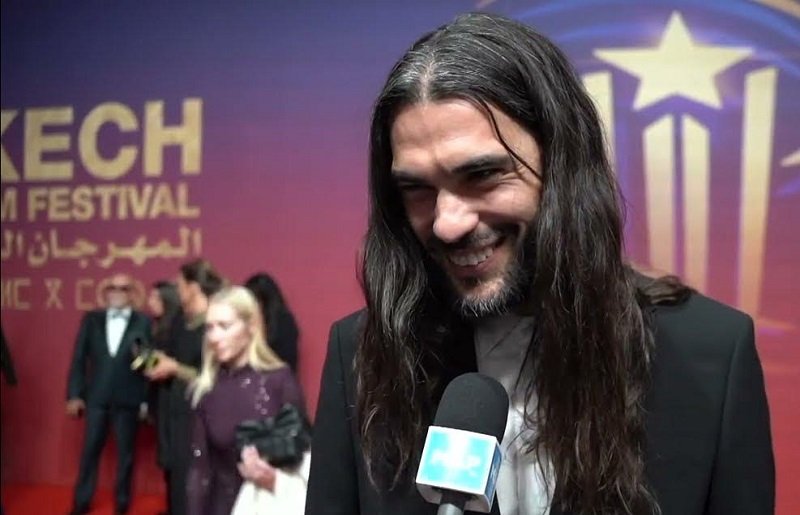
At the 22nd edition of the Marrakech International Film Festival, the film “Sirat” by Spanish-French filmmaker Olivier Laxe provoked wide discussion, despite being screened outside the main competition. Winner of the Jury Prize at the latest Cannes Festival, the film unfolds as a cinematic experience that transcends narrative conventions to become a philosophical meditation on space, fate, and death.
Landscape as a living character
From its opening frames, Sirat establishes a striking relationship with its setting: the Moroccan desert is not a backdrop but a living entity, almost mystical in its presence. Light, silence, the vastness of emptiness — every element transforms the landscape into a force that observes, tests, and guides the characters. Laxe poses a deeper question: to what extent can a place shape consciousness, or unveil hidden layers of our humanity?
Death as inner liberation
In Sirat, death is not a spectacle nor a melodramatic climax; it is a moment of clarity, a passage toward a new state of awareness. The characters approach their fate with an unusual serenity, as if death were not an ending but an inner fulfillment. The film shifts the existential inquiry from “Why do we die?” to “How do we die?”—an approach reminiscent of Sufi thought, where dignity, courage, and spiritual surrender precede transcendence.
Islamic references and spiritual symbolism
The title itself, “Sirat”, carries profound symbolic weight. It suggests not only a path, but an existential crossing between the earthly and the transcendent. Subtle spiritual undertones, inspired by Islamic mysticism, weave through the film’s slow, contemplative rhythm. This blend of metaphysics and imagery positions Sirat as a rare cinematic space where film becomes a tool for inner exploration.
Morocco as a creative matrix
Drawing on years of filmmaking in Morocco, Laxe captures the territory as a spiritual and emotional force. Nature is never passive: it acts as a silent intelligence, shaping the film as much as the characters do. While Western cinema often treats landscapes as spectacle, Sirat restores them as sites of transformation — spaces where viewers confront the limits of perception and meaning.
Searching for what lies beyond the real
Ultimately, Sirat is not centered on plot, but on the quest for what the visible world conceals. Light, vastness, silence — each element becomes an invitation to sense what mystics call “the flash of truth”. The film aligns itself with a rare artistic pursuit: using cinema to reach the threshold of the unseen.
Conclusion
Sirat is not a film about the desert nor about death. It is a meditation on the human journey — how we move, stumble, rise, and vanish. A film that invites essential questions: How do we portray what escapes language? How do we film the invisible? And how can art bring us closer to that fragile space where the world and the soul meet?


