

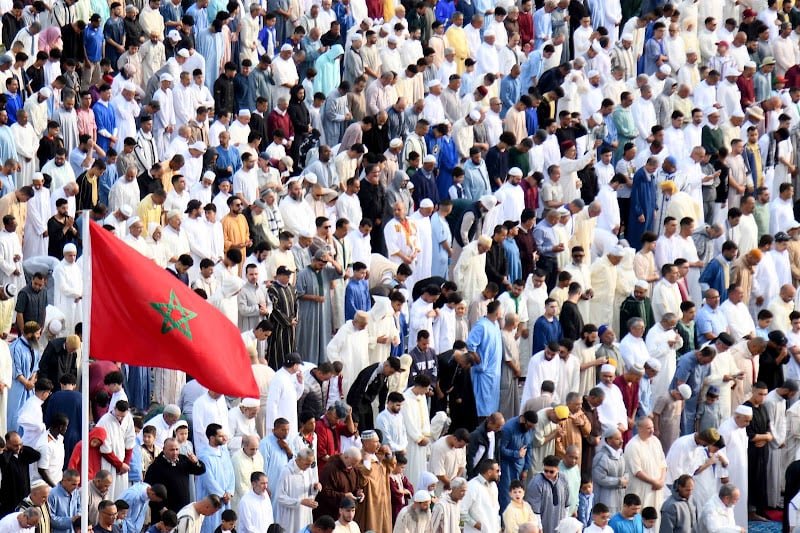
Morocco and spiritual persuasion: when religion becomes a tool of international influence
The report issued in London by the Institute for Strategic Dialogue goes beyond policy description. It exposes a carefully constructed framework of influence in which religion is neither a symbolic ornament nor a passive cultural legacy, but a strategic asset embedded within Morocco’s foreign policy architecture.
The starting point is telling. The 2003 Casablanca terrorist attacks are not framed solely as a security shock, but as a moment that revealed structural weaknesses within the country’s religious ecosystem. The state’s response was not confined to policing and surveillance; it took the form of a doctrinal and institutional reconfiguration, aimed at reshaping religious discourse and extending its reach beyond national borders.
Here lies the specificity of the Moroccan model. Unlike rigid or overtly politicized interpretations of Islam, the report highlights a functional symbiosis between religion and the state, embodied in the King’s dual status as head of state and Commander of the Faithful. This dual legitimacy grants the monarchy a unique capacity to project religious authority both domestically and internationally.
The doctrinal foundations themselves are longstanding, but their strategic activation is relatively recent. The Maliki school, grounded in communal consensus and local custom, aligns naturally with Morocco’s cultural diversity. Ash‘ari theology, with its rationalist approach, offers a counterbalance to literalist readings of scripture. Sufism, emphasizing spiritual refinement and inner transformation, resonates with popular religiosity and fosters social cohesion rather than ideological polarization. Together, these elements form a religious identity that is coherent, adaptable, and exportable.
What distinguishes Morocco’s approach is its external projection. Through imam-training institutes, scholarly networks, and transnational foundations, the Kingdom has gradually built religious corridors toward Sub-Saharan Africa and Europe—regions tied to Morocco by historical, cultural, and theological links. These structures operate simultaneously as platforms of religious cooperation and as subtle diplomatic instruments.
The report also makes clear that Morocco is not alone in this arena. Algeria promotes its Sufi networks, Egypt relies on the global stature of Al-Azhar, and Turkey funds mosques and religious education abroad, often framed within a neo-Ottoman narrative. Within this competitive environment, Moroccan religious diplomacy emerges as a positioning strategy—one that seeks to institutionalize “moderation” as a normative reference in contrast to radical or politicized narratives.
Ultimately, what is at stake goes beyond faith. This is a contest over symbolic legitimacy, where influence is exercised not only through treaties or economic leverage, but through the ability to shape moral and cultural reference points. In this sense, Morocco’s religious diplomacy is neither incidental nor apolitical. It represents a core component of a soft-power strategy rooted in historical continuity, yet consciously engaged with the fractures and rivalries of the contemporary international order.


