

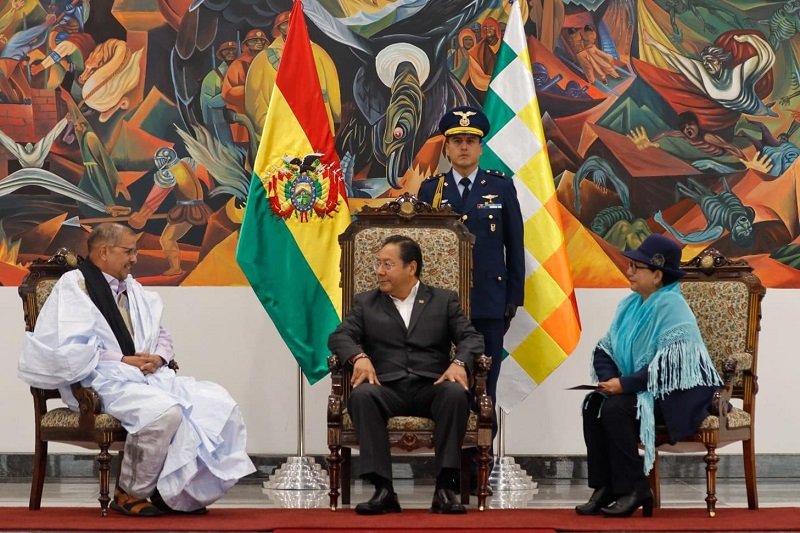
In what may appear as a technical diplomatic adjustment but carries significant political weight, Bolivia has announced the suspension of its recognition of the so-called “Sahrawi Arab Democratic Republic” — an entity not recognized as a member state of the United Nations — and the resumption of diplomatic relations with the Kingdom of Morocco.
The decision followed a phone call between Morocco’s Minister of Foreign Affairs, Nasser Bourita, and his Bolivian counterpart, Fernando Aramayo. Yet the implications extend far beyond this bilateral exchange.
According to the joint statement, Bolivia acted “in accordance with United Nations Security Council Resolution 2797 (2025)” and reaffirmed its support for the UN-led political process. La Paz decided to suspend diplomatic relations with the aforementioned entity and to cease all official contact with it, noting that it is not recognized as a UN member state.
From Ideological Alignment to Diplomatic Pragmatism
Historically, Bolivia’s position reflected an ideological framework rooted in South-South solidarity and self-determination rhetoric. However, Latin America’s political landscape has evolved, and so have strategic calculations.
The recent move signals a shift from symbolic positioning toward pragmatic diplomacy grounded in international legality and political realism. The language used — “a realistic, pragmatic and lasting political solution based on compromise” — mirrors the terminology consistently adopted by the United Nations in addressing this long-standing dispute.
The Structuring Impact of Resolution 2797 (2025)
The explicit reference to Resolution 2797 (2025) is significant. Over the years, the Security Council has emphasized the need for a negotiated, mutually acceptable political solution. By aligning itself with this framework, Bolivia underscores that any sustainable outcome must emerge from the UN process rather than from unilateral recognition of a non-recognized entity.
Thus, the suspension of recognition is not merely a gesture toward Rabat; it represents alignment with the prevailing international legal framework.
A New Chapter Between Rabat and La Paz
The decision paves the way for renewed bilateral engagement. Both countries agreed to fully restore diplomatic relations and initiate procedures for establishing resident embassies in Rabat and La Paz.
Beyond symbolism, this step may open avenues for economic, cultural, and technical cooperation within a renewed South-South partnership framework.
Part of a Broader International Trend
Bolivia’s move fits into a broader pattern of reassessment by several countries in Africa, Latin America, and the Caribbean. The Sahara issue is increasingly approached not through ideological lenses alone, but through considerations of regional stability, international legitimacy, and strategic opportunity.
What may seem like a routine diplomatic adjustment therefore reflects a deeper reconfiguration of international positions surrounding one of North Africa’s most enduring and sensitive geopolitical disputes.


