

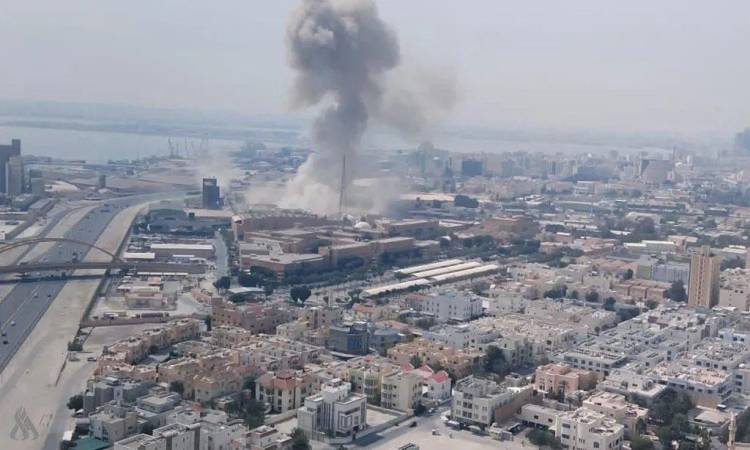
In a broader assessment of the escalating military and political tensions in the Middle East, several Gulf capitals have issued strong condemnations following allegations of Iranian missile strikes targeting territories and strategic sites across the region. Saudi Arabia, Qatar, and Kuwait described the incidents as attacks attributed to Iran, warning that such developments could have serious implications for regional security and international stability.
The Saudi Foreign Ministry denounced what it called a “flagrant aggression” and a clear violation of the sovereignty of states including the United Arab Emirates, Bahrain, Qatar, Kuwait, and Jordan. Riyadh reaffirmed its full solidarity with these countries and expressed readiness to mobilize all available capabilities to support any response measures. The statement reflects a shift toward a more assertive deterrence posture while simultaneously urging the international community to take firm action against perceived violations of international law.
بفعل صواريخ إيران.. انفجارات ببالسعودية وأبو ظبي ودبي والمنامة pic.twitter.com/gNbN9l3S0P
— Diplomatique.ma الدبلوماسية (@diplomatique_ma) February 28, 2026
Qatar stated that the alleged targeting of its territory by ballistic missiles constitutes a direct breach of its sovereignty and a threat to its national security. While asserting its right to respond in accordance with international law and in a proportionate manner, Doha reiterated its long-standing commitment to dialogue with Tehran and peaceful dispute resolution. This dual approach highlights Qatar’s attempt to balance deterrence with diplomatic engagement amid rising tensions.
Kuwait similarly condemned what it described as a blatant violation of its sovereignty, airspace, and the principles of the UN Charter. Authorities emphasized their inherent right to self-defense under Article 51 and reported that their air defense systems intercepted the attack. At the same time, Kuwait warned that continued military escalation could further undermine regional stability.
In parallel, the United States and Israel carried out strikes against targets inside Iran, citing threats attributed to the Iranian leadership. U.S. President Donald Trump and Israeli Prime Minister Benjamin Netanyahu publicly justified these operations, framing them as defensive actions in response to security concerns.
These developments unfolded amid ongoing negotiations over Iran’s nuclear program under Omani mediation, with a recent round of talks concluding in Geneva. The coexistence of diplomatic engagement and military escalation underscores the fragility of negotiation tracks when confronted with rapid shifts in strategic calculations.
From an analytical perspective, the current trajectory reflects a recalibration of deterrence dynamics across the Gulf and the wider Middle East. The strong condemnations issued by regional states signal concerns about becoming indirect arenas for power projection between larger actors. The core question remains whether international diplomatic mechanisms can effectively contain escalation and prevent a broader confrontation that could reshape regional alliances and geopolitical balances.


