

In a world where armed conflicts are multiplying and geopolitical tensions are reshaping international balances, war is no longer merely a military confrontation between states. It has increasingly become a global economic market, driven by powerful defense industries and strategic alliances.
Within this evolving landscape, France has emerged as one of the most influential players in the global arms trade.
According to the latest data released by the Stockholm International Peace Research Institute, France has become the world’s second-largest arms exporter, accounting for roughly 9.8% of global weapons exports, behind the United States, which dominates the market with about 42%.
The data also reveal a significant rise in French arms sales: exports increased by approximately 21% between 2021 and 2025 compared with the period between 2016 and 2020.
Today, French defense industries export military equipment to more than 60 countries, confirming Paris’ central position in the global arms trade.
Yet behind these figures lies a deeper geopolitical reality: arms flows often follow the geography of conflicts.
When conflict zones become strategic markets
A closer look at the geographic distribution of French arms exports shows that they are largely concentrated in regions marked by geopolitical tensions and security rivalries.
Asia and Oceania account for about 35% of French arms exports, while the Middle East and North Africa absorb around 28%, followed by Europe with approximately 15%.
Among the largest clients is India, which alone receives nearly 24% of French arms exports, reflecting its long-standing military rivalry with Pakistan and its strategic tensions with China.
Meanwhile, Egypt remains a key partner in the Middle East, and Greece has significantly strengthened its defense cooperation with Paris amid strategic competition with Turkey in the Eastern Mediterranean.
In other words, the global map of arms trade reveals a simple pattern: where tensions rise, defense markets expand.
Morocco in the regional security equation
Within this global dynamic, Morocco occupies a notable position.
The kingdom relies mainly on the United States for its military equipment, which represents around 60% of Moroccan arms imports, followed by Israel with approximately 24%, while France ranks third with about 10%.
Morocco’s military modernization takes place in a regional environment marked by persistent tensions with Algeria, particularly over the long-standing dispute regarding the Sahara.
Although arms imports across Africa have generally declined in recent years, Morocco remains among the countries that have continued strengthening their military capabilities, reflecting the strategic competition shaping North Africa’s security landscape.
French defense industry: economics and geopolitical influence
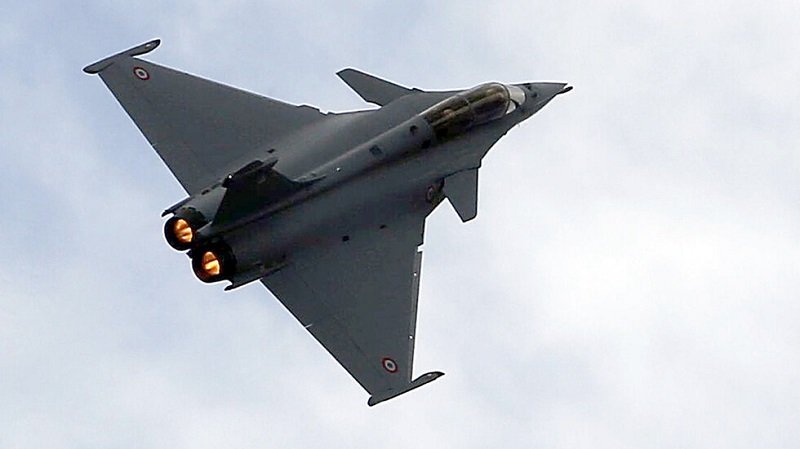
A significant share of France’s arms exports relies on advanced military technology, especially combat aircraft such as the Dassault Rafale, which has become one of the most recognizable symbols of French defense manufacturing.
These exports also include naval frigates, air-defense systems, missile technologies, and heavy armored vehicles.
Beyond their military function, arms sales have also become a powerful diplomatic tool, enabling France to deepen strategic partnerships and expand its geopolitical influence.
A question beyond statistics
Behind the numbers of the global arms trade lies a broader question:
Have wars become one of the engines of the global economy?
The contemporary geopolitical landscape suggests that the map of arms trade often mirrors the map of international tensions and rivalries.
In this sense, France represents a clear example of how defense industries can evolve into a major economic and diplomatic instrument.
Because in today’s world, the real question is no longer only who wins wars,
but also who profits from the economy of wars.


