

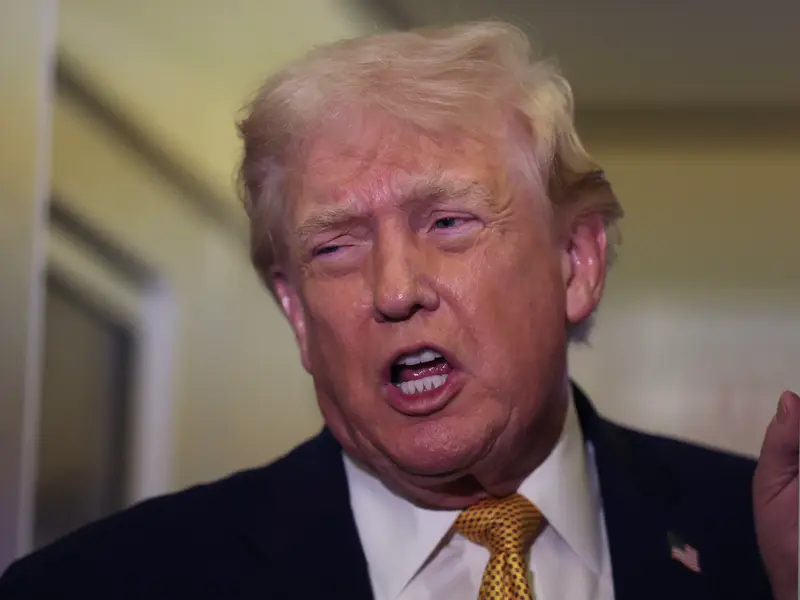
Trump widens the confrontation: Venezuela between U.S. control and regional tensions
Amid escalating tensions in Latin America, the arrest of Venezuelan President Nicolás Maduro and his wife by U.S. special forces early Saturday has drawn global attention. President Donald Trump’s assertion that the United States is now “running” affairs in Venezuela is not merely a protocol statement; it conveys a dual message: affirming direct U.S. influence while signaling a limited channel for dialogue with the interim president in Caracas.
Interim President Delsi Rodríguez expressed readiness to cooperate with Washington, calling for a relationship based on “mutual respect.” However, this stance contrasts with other U.S. officials, such as Senator Marco Rubio, who emphasized that the goal is not to fully change the regime but to combat drug trafficking and secure strategic interests, particularly in oil. These differences highlight internal tensions within the U.S. administration over crisis management.
Saturday’s operation, which involved helicopters, attack aircraft, and naval forces, elicited mixed reactions in Caracas. Streets returned to calm, while around two thousand Maduro supporters, armed and waving flags, demonstrated their presence. The Venezuelan army recognized Rodríguez as interim president and encouraged citizens to resume daily life. At the same time, partial medical reports indicate dozens of casualties, including Cubans allied with Maduro, exposing the gap between official communication and on-the-ground realities.
Trump extended his warnings beyond Venezuela to Iran, Cuba, and Colombia, signaling a potential expansion of U.S. pressure in the region. His references to “fixing a failed state” and “peace on the ground” present military and political control as corrective measures, without clarifying criteria or legal frameworks.
For the Venezuelan opposition, the operation is a step forward but insufficient for full stabilization. Statements from Edmundo González Urrutia, exiled in Spain and the alleged winner of the 2024 elections, underline that normalization requires the release of political prisoners and respect for the popular vote, indicating that the crisis extends beyond the U.S.–Maduro confrontation to internal and external actors with divergent interests.
Meanwhile, Venezuelan oil remains a key strategic asset, and celebrations among diaspora communities highlight the human impact and population polarization, with around eight million citizens having fled due to poverty and political repression.
Overall, Saturday’s operation is not merely a military intervention; it reflects a shift in U.S. strategy in managing regional crises, where direct control over events becomes a tool to secure influence, while maintaining limited room for negotiation focused on strategic interests. The central question remains: who will actually govern Venezuela in the coming days, and how will Washington reconcile its official rhetoric with the political and social realities in Caracas without provoking an open confrontation with regional allies or the local population?


