

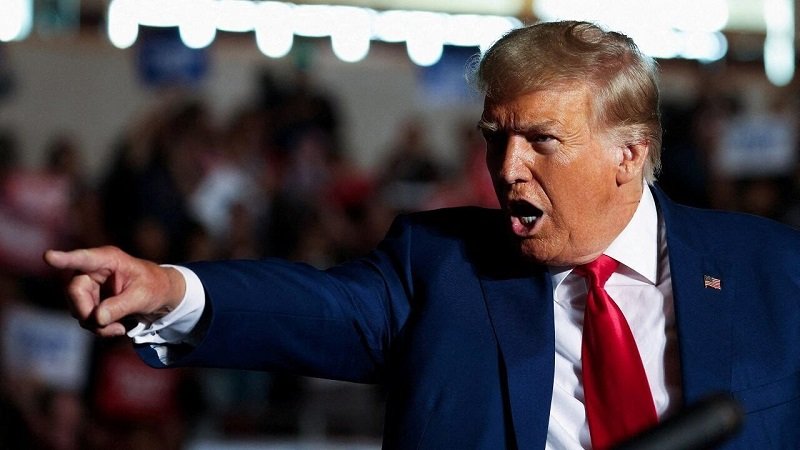
In a context of unprecedented military escalation between Washington and Tel Aviv on one side, and Tehran on the other, an unexpected political fracture is emerging within the Western camp itself. The American president Donald Trump has violently attacked NATO, calling it a “paper tiger” and accusing his allies of “cowardice.” But behind this spectacular outburst, a deeper question is taking shape: are we witnessing a simple tactical disagreement, or the beginning of a strategic recomposition of international alliances?
At first glance, the crisis is linked to the refusal of several European countries to engage militarily against Iran, despite American pressure. Yet, a closer reading reveals that this position is based on an accumulation of historical lessons. From Iraq to Afghanistan, Europe has learned that automatic alignment with Washington can lead to high political, economic, and security costs, often without clear benefits.
The statements of the French president Emmanuel Macron, insisting on respect for international law and de-escalation, reflect this desire for strategic autonomy. Paris, like Berlin, is measuring the direct consequences of a regional conflagration, particularly on global energy flows transiting through the Strait of Hormuz, a true artery of the oil market.
More deeply, Trump’s call on his allies to secure navigation in the strait reveals a major contradiction: the United States, initiator of the escalation without prior consultation, is now seeking to “mutualize” the cost of war. This dynamic highlights a transformation of power: deciding alone no longer means being able to bear the consequences alone.
On the economic level, the repercussions are already visible and extend far beyond the conflict zone. The rise in oil prices, linked to tensions around Hormuz, is impacting transport costs, consumer goods, and supply chains. For importing countries like Morocco, this translates into increased pressure on purchasing power and revives the debate on energy dependence.
But the real issue remains geopolitical. Donald Trump’s remarks reflect an erosion of trust within NATO. Such rhetoric is not merely political communication: it signals a structural crisis likely to accelerate European ambitions for autonomous defense.
Faced with this situation, countries such as Germany, France, Italy, and the United Kingdom are attempting a balancing line: supporting maritime security without directly engaging in the conflict. An intermediate position that reveals a strategic unease: how to preserve the transatlantic alliance without bearing its unilateral costs?
Ultimately, Donald Trump’s statements go beyond mere polemics. They reflect a redefinition of the role of the United States in the international order: from architect of alliances to an actor demanding burden-sharing. And in this recomposition, it is the citizens — in Europe, the Maghreb, and elsewhere — who bear the first consequences, through inflation, instability, and the growing uncertainty of a changing world.


