

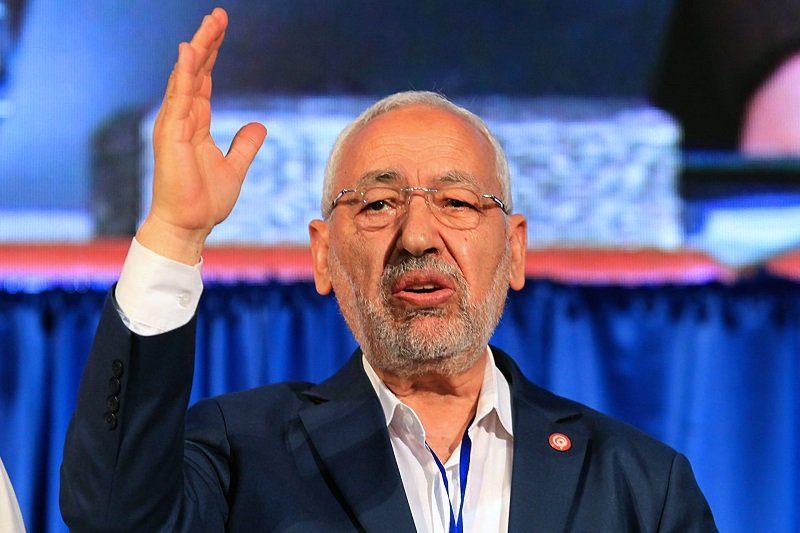
In a decisive moment for modern Tunisian politics, the Court of Appeal in Tunis has increased the sentence against Ennahdha leader Rached Ghannouchi to 20 years in prison, in the so-called “Conspiracy against State Security 2” case. The ruling is part of a broader judicial campaign targeting politicians, former ministers and security officials, with sentences ranging from 3 to 35 years.
Beyond its legal dimension, the case reflects a deeper political transformation. Ghannouchi, once Speaker of Parliament before its dissolution in 2021, has become the symbolic figure of a marginalized opposition, facing multiple trials whose combined sentences now approach half a century in prison.
For the Tunisian authorities, these rulings represent a firm stance against what they describe as serious threats to national stability. However, for many civil society actors and international observers, the trials signal a dangerous shift toward the political use of the judiciary.
Human rights perspective
Organizations such as Amnesty International and Human Rights Watch argue that the proceedings lack the basic guarantees of fair trials. They criticize the vague and broad use of charges like “conspiracy” and “terrorism”, which, according to them, are increasingly employed to suppress peaceful political dissent.
Amnesty warns that political participation in Tunisia is being criminalized, turning courts into tools of political management rather than independent arbiters of justice.
Regional implications
Once praised as the Arab world’s only democratic success story after 2011, Tunisia now stands at a critical crossroads. The growing number of politically sensitive trials raises a fundamental question: is the country witnessing a judicial return to authoritarian governance?
Beyond Tunisia, the case sends a powerful signal across the region: without judicial independence and genuine political pluralism, democratic transitions remain fragile, reversible, and vulnerable to regression through legal mechanisms.


