

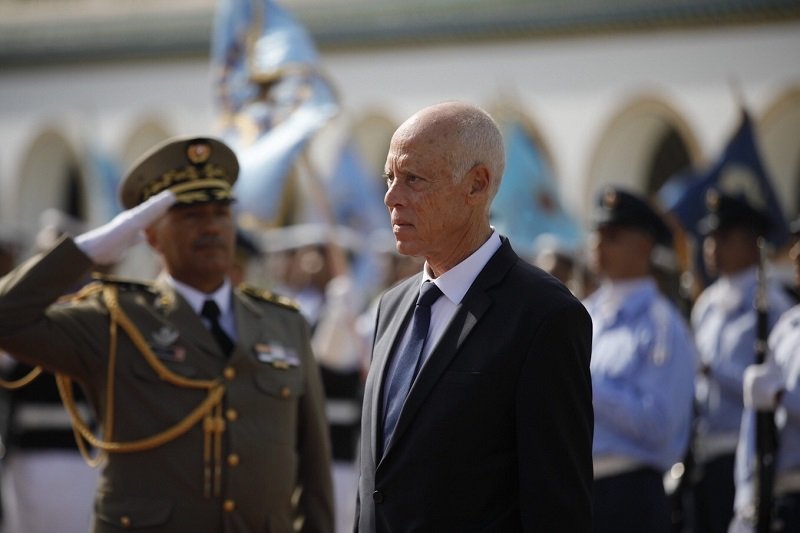
More than a decade after the Dignity Revolution sparked hope for democracy, Tunisia now faces a critical turning point regarding human rights and public freedoms. In its World Report 2026, Human Rights Watch highlights what it describes as a worrying intensification of political repression and a sharp decline in press freedom and the right to assembly.
Since July 2021, following President Kais Saied’s consolidation of power, Tunisian authorities have implemented a series of “exceptional measures”, using the judiciary to suppress opposition and control public space. Charges, often related to “terrorism” or “conspiracy against state security,” have targeted political opponents, activists, and lawyers, often without guarantees of fair trials.
Mass Trials: From Justice to Political Control
The cases “Conspiracy 1” and “Conspiracy 2” exemplify this trend. Dozens of individuals, including senior political figures, have received long prison sentences in cases deemed politically motivated. In “Conspiracy 2,” some sentences reached up to 35 years, raising questions about judicial independence.
Observers note a lack of procedural guarantees, with restrictions on defense rights and access to critical evidence, challenging the conformity of these trials with international standards.
Press Freedom Under Pressure
At the same time, media freedom is in sharp decline. Human Rights Watch denounces the pressure on journalists, closure of certain media outlets, and obstruction to information access, placing Tunisia in a concerning position in global press freedom rankings. Several journalists remained detained until late 2025 and early 2026, reflecting a systematic strategy to intimidate critical voices.
Migrants and Civil Society: Rights Under Constraint
Violations also extend to migrants and refugees, including unaccompanied minors, with arbitrary arrests, forced expulsions, and mistreatment. Anti-migrant rhetoric appears to be rising, restricting access to education, health, and housing for these populations.
Civil society organizations also face bureaucratic and security obstacles, limiting their ability to monitor human rights and support abuse victims.
Women and Persistent Discrimination
Despite protective laws, Tunisian women continue to face discrimination in inheritance and domestic violence cases. Gaps in funding, lack of shelters, and weak police intervention make women particularly vulnerable.
Local and International Reactions
On the ground, weekly demonstrations denounce “repressive policies and the instrumentalization of justice.” Internationally, Tunisia’s strategic partners, such as the European Union and the United States, are being urged to question the real effectiveness of their human rights pressures.
Conclusion
Tunisia today faces a major test for its democracy, between the legacy of 2011 and a political context marked by repression. The Human Rights Watch report highlights how the state can use the law either to protect or to restrict freedoms, depending on who wields it. The central question remains: can civil society restore democratic balance, or is the country heading toward a profound redefinition of the relationship between the state and its citizens?


