

Maritime Fisheries: When Russia Speaks the Language of Interests—and Quietly Anchors Morocco’s Sovereignty over the Sahara
At a time when international relations are increasingly complex and layered with strategic ambiguity, the fisheries agreement between Morocco and Russia redraws—quietly yet decisively—the contours of diplomatic and economic interaction. What appears, on the surface, as a technical administrative measure reveals, upon closer inspection, a deeper political and strategic logic that goes well beyond routine sectoral cooperation.
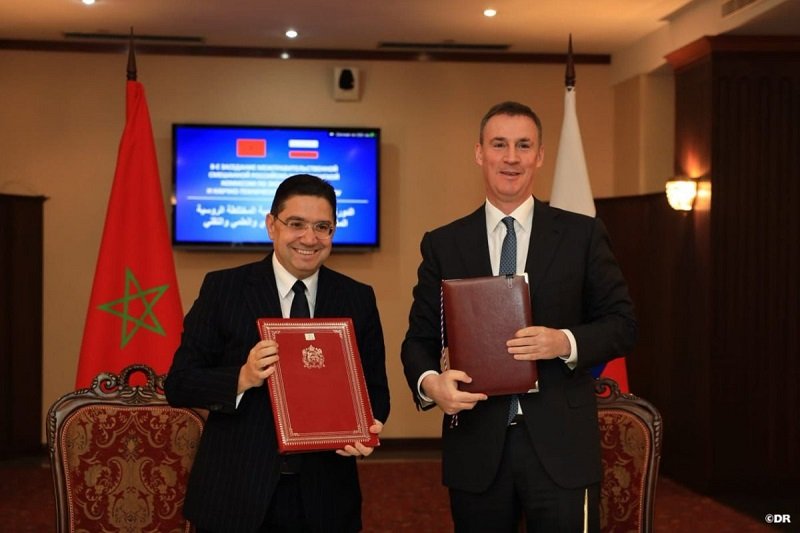
Russia’s Federal Agency for Fisheries and Oceanographic Sciences has officially opened the application process for allocating fishing quotas to Russian companies seeking to operate in Morocco’s Atlantic waters, as part of the implementation of the bilateral fisheries agreement signed in Rabat and Moscow on October 17, 2025. This step is not isolated; it is embedded in a broader reconfiguration of partnerships shaped by shifting global interests.
The Agreement Text—and What It Carefully Leaves Unsaid
Formally, the application window runs from January 12 to January 30, 2026, covering several high-value pelagic species, including sardine, sardinella, mackerel, and anchovy. On paper, the framework is strictly regulatory: Russian operators are required to comply fully with Moroccan fisheries law and with nationally and internationally recognized environmental sustainability standards.
Yet a closer reading reveals signals that extend far beyond technical compliance.
First, the agreement replaces a previous framework that expired in December 2024, underscoring continuity rather than rupture—albeit under clearer and more assertive terms. Second, the focus on pelagic species reflects not only economic logic but also strategic considerations linked to food security and global market demand.
Most importantly, the Russian text establishes Moroccan law as the sole regulatory authority governing activities in these waters, without qualifiers, reservations, or semantic hedging. The maritime space is treated as a single, unified legal domain under Moroccan sovereignty.
From Political Neutrality to Recognition through Practice
This is where the agreement’s real political meaning takes shape.
Russia, long associated with a posture of declared neutrality on the Sahara issue, appears to be making a subtle yet consequential shift—toward functional, interest-based recognition. Not through official statements, but through concrete action.
In international relations, such recognition by practice often carries greater weight than formal declarations. When major powers harbor doubts over territorial status, they tend to rely on legal caveats, indirect language, or institutional distancing. Moscow has done none of this. Instead, it has integrated Morocco’s Atlantic waters—including those off the Southern Provinces—into an operational framework governed exclusively by Moroccan authorities.
This marks a transition from verbal neutrality to pragmatic acceptance, driven by interests rather than ideology.
Fisheries as a Diplomatic Lever
The agreement also aligns with Morocco’s broader strategy of diversifying its international partnerships, particularly in response to legal and political frictions with some traditional partners—most notably the European Union—over agreements involving the Sahara. Far from being a purely technical sector, fisheries have long functioned as a politically sensitive arena, often entangled with questions of sovereignty and international legitimacy.
Equally telling is the silence surrounding this agreement from Algeria and the Polisario Front—a contrast to the strong reactions provoked by similar arrangements with other partners. In diplomacy, silence can be as revealing as protest.
Between Established Facts and Strategic Inference
The timing of the announcement coincides with wider Moroccan-Russian engagement in areas such as energy and infrastructure, suggesting that fisheries cooperation forms part of a broader strategic alignment rather than a stand-alone initiative.
At the same time, the emphasis on legal and environmental compliance raises legitimate questions about monitoring mechanisms, enforcement, and long-term sustainability—particularly in a sector historically vulnerable to tensions between economic exploitation and ecological preservation.
Conclusion: When Interests Speak Louder Than Declarations
The opening of fishing quota applications in Moroccan waters should not be read as a routine administrative update. It represents another step in the consolidation of Morocco’s sovereignty over the Sahara through concrete practice and international economic integration.
Russia has not issued a formal statement of recognition. It has done something arguably more consequential: it has acted as if the issue were already settled.
In contemporary international relations, it is often these quiet, interest-driven actions that shape durable realities—
through economics,
through investment,
through the gradual embedding of Morocco’s Southern Provinces into global networks of cooperation.
The question that remains is not meant to provoke, but to invite reflection:
are we witnessing the emergence of a new standard—one in which sovereignty is affirmed through use, partnership, and practice long before it is formally declared?


