

When Morocco Becomes an Electoral Pawn: Why the Kingdom Often Remains a Spectator in Others’ Political Discourse
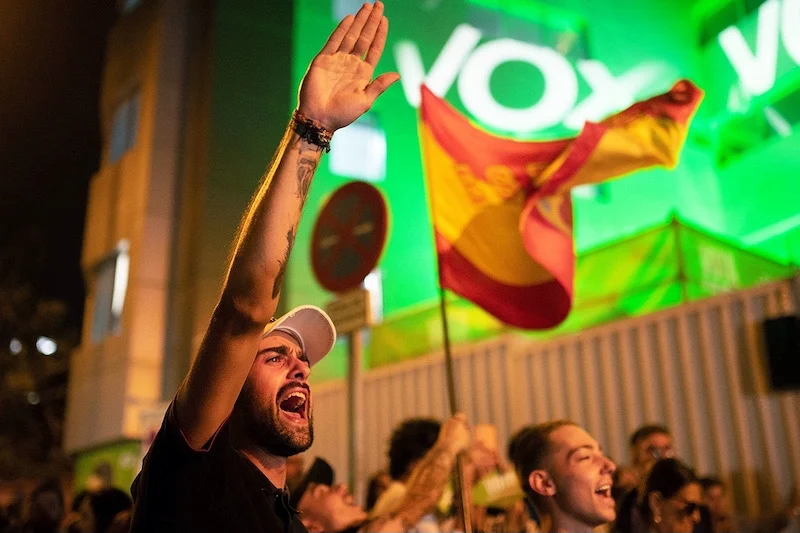
Every election season in Spain brings back the name of Morocco, not as a strategic partner or southern Mediterranean neighbor, but as a political tool in domestic debates. The latest controversy arose from comments by Santiago Abascal, leader of the far-right Vox, who attacked the president of Castilla y León, Alfonso Fernández Mañueco, giving him a mocking nickname blending his name with Morocco. What may seem like a trivial provocation is, in fact, part of a broader strategy: turning Morocco into a symbolic element of Spain’s internal electoral battle.
For years, Vox has used migration as a political lever, linking the arrival of migrants on Spanish shores to what it calls “governmental policy failures.” Within this narrative, Morocco becomes a political symbol—migration, borders, and demographic changes become issues mobilizable for electoral gain.
A deeper analysis, however, shows that this goes beyond migration alone. Sections of Spain’s far-right often invoke historical memory, resurrecting medieval imagery from the Reconquista or Andalusian periods to symbolically justify their positions. Morocco, in this discourse, becomes more than a geographic neighbor—it becomes an “other” to be watched, a symbolic stake in identity politics.
The irony is stark: Moroccan communities are among the largest in Spain, playing a crucial role in agriculture, construction, and service sectors. Spain’s economy relies directly on this workforce, even while political campaigns paradoxically portray them as a societal problem.
This raises a strategic question for Morocco: why does its name frequently appear in European political discourse, rather than the kingdom having tools to shape these debates itself?
Major powers use influence networks, think tanks, lobbies, and media personalities to defend their interests abroad. Morocco traditionally relies on institutional diplomacy. Yet European debates also play out in media and political arenas, where the absence of a strong Moroccan voice leaves room for misinterpretation and stereotyping.
Therefore, when Morocco’s name surfaces in Spanish electoral discourse, it is not merely a local political issue—it is a reminder that influence is also about perception. The real challenge for Morocco is moving from spectator to actor, defending its image and interests in a world where politics is also a battle of narratives.


