

Amid rising tensions, with a mix of military threats and diplomatic maneuvers, the U.S.–Iran relationship has returned to the forefront of international attention. In a stark warning, Iran’s Supreme Leader, Ayatollah Ali Khamenei, stated that any major U.S. strike would not only spark a bilateral conflict but ignite a regional war across the Middle East.
Khamenei’s remarks go beyond traditional warnings. They aim to exploit regional fears of conflict escalation, emphasizing that any confrontation could drastically reshape regional security dynamics.
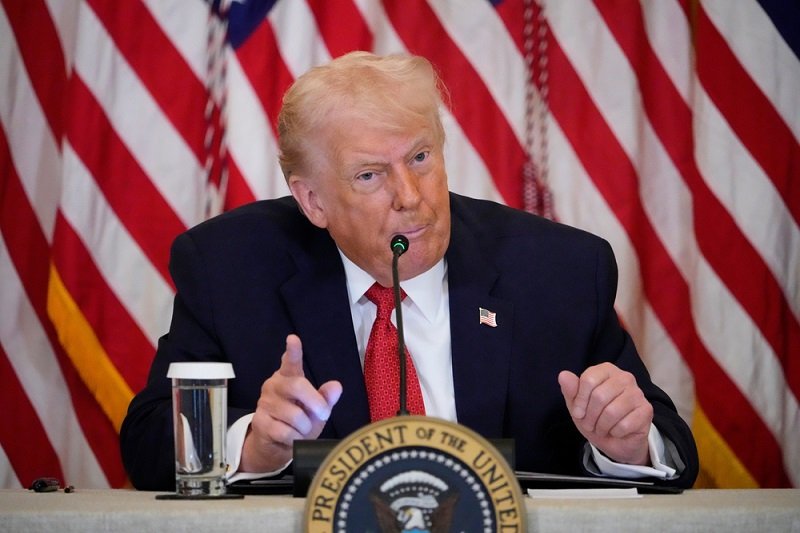
In response, President Donald Trump addressed journalists with a careful balance of strength and diplomatic hope: “Of course he’ll say that… We hope to reach an agreement,” he said, adding that if no deal is reached, the truth of Khamenei’s statements will be tested.
Tensions Rooted in Concrete Facts
This escalation is far from purely rhetorical:
-
U.S. military reinforcement in the region, including the deployment of the Abraham Lincoln aircraft carrier, signaling readiness for potential military action.
-
Bloody repression in Iran, as protests continue to be crushed, giving Washington grounds to adopt a firmer stance.
-
Regional divisions and interventions, with multiple countries fearing a conflict that could spill over their borders while attempting to mediate and prevent escalation.
🚨 Breaking | Unprecedented escalation between Washington and Tehran
Trump responds to Khamenei’s threat of a regional war if Iran is attacked:
"If negotiations fail, we will then know who was right." pic.twitter.com/2SXXelzF8g
— Diplomatique.ma الدبلوماسية (@diplomatique_ma) February 2, 2026
Regional Diplomacy and Mediation Efforts
Countries such as Qatar, Turkey, and Egypt are stepping in as intermediaries, opening diplomatic channels despite the media noise. The goal is to provide Iran with a diplomatic exit while minimizing the risk of military action.
Observers note, however, that talks focused on Iran’s nuclear program may not fully alleviate all tensions, especially regarding ballistic missiles and Tehran’s regional influence.
At a Crossroads
The world now stands at a critical juncture. Trump’s statements and Iran’s responses could mark the start of a new dialogue, potentially keeping the specter of confrontation at bay. Yet the threat still looms, illustrating a region caught between careful diplomacy and potential military escalation, with consequences that could redefine the future of the Middle East.


