

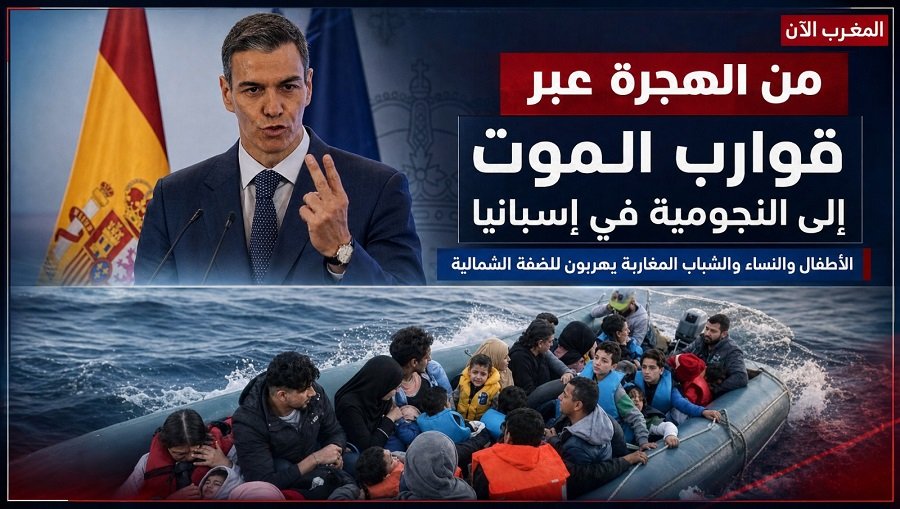
There are moments in history that do not announce themselves through wars, revolutions, or international treaties. Instead, they arrive quietly, disguised as routine administrative decisions whose true significance often becomes visible only years later. Spain’s announcement that more than one million applications have been submitted under its extraordinary regularization program for undocumented migrants may well be one of those defining moments. What appears today to be an immigration policy could, in retrospect, be remembered as the beginning of a new era in the global competition for the world’s most valuable strategic resource: human beings.
For decades, governments measured power through territory, natural resources, military capabilities, or financial strength. Oil, gas, rare minerals, and water were widely regarded as the strategic assets of the twenty-first century. Yet the unfolding reality on the northern shore of the Mediterranean suggests that the scarcest and most valuable resource no longer lies beneath the ground—it walks upon it. It is the worker, the engineer, the scientist, the entrepreneur, and the young generation capable of sustaining economic growth and social stability.
The countries that once invested billions in protecting their borders are increasingly discovering that their greatest challenge is no longer preventing migration, but preventing demographic decline. Aging populations, falling birth rates, shrinking workforces, and growing pension burdens have fundamentally transformed the way many European governments perceive immigration.
It is within this broader context that Spanish Prime Minister Pedro Sánchez’s announcement should be understood. His government is not merely legalizing the status of undocumented migrants. It is openly presenting immigration as part of Spain’s long-term demographic and economic strategy. By linking regularization to labor shortages, rural depopulation, and the sustainability of the welfare state, Madrid is signaling a profound shift in public policy—from managing migration to managing the country’s future.
At that point, the debate ceases to be exclusively Spanish.
It inevitably becomes a Moroccan question as well.
If Spain increasingly views Moroccan workers and young professionals as part of the solution to its demographic crisis, how does Morocco itself view those very same citizens? Are they still regarded primarily as a source of foreign currency through remittances? Or are they finally being recognized as the country’s most strategic national asset?
Statistics, however impressive they may appear, rarely tell the whole story. More than one million applications do not simply represent one million administrative files. They represent one million individual life projects, one million decisions to build a future on the northern shore of the Mediterranean. Behind every application lies a family, a profession, an ambition, and a personal calculation about where opportunities, stability, and dignity are more likely to be found.
But every departure also tells another story.
For every young worker, engineer, physician, researcher, craftsman, or entrepreneur who builds a future abroad, there is a country of origin that gradually loses part of the very human capital it spent years educating, training, and supporting. Migration therefore cannot be understood solely through the lens of border control or labor mobility. It must also be examined as a question of long-term national capacity.
Reducing Spain’s initiative to a simple administrative regularization would therefore miss its deeper meaning.
States rarely invest hundreds of millions of euros merely to solve temporary bureaucratic problems. They invest because they are preparing for the society they expect to inhabit decades from now.
This is precisely why the Spanish initiative deserves attention far beyond immigration policy itself. It reflects a broader understanding that demographic sustainability has become inseparable from economic resilience, social cohesion, and national competitiveness.
The most important question, therefore, is no longer how many Moroccans will benefit from this regularization process.
The more uncomfortable question is why European economies increasingly consider Moroccan youth a strategic asset, while public debate in their country of origin often remains focused on the annual volume of diaspora remittances rather than on the long-term consequences of exporting its most productive generations.
Perhaps the greatest lesson emerging from Spain’s policy is not that it has succeeded in managing migration.
It is that it has begun transforming migration into an instrument of national reconstruction.
That distinction changes everything.
Because the international competition of the twenty-first century is no longer fought exclusively over markets, trade routes, energy resources, or military influence.
It is increasingly fought over people.
The countries most likely to shape tomorrow’s global order may not necessarily be those possessing the largest territories or the richest natural resources.
They may instead be those most capable of attracting talent, integrating newcomers, retaining skilled workers, and convincing future generations that their ambitions can best be fulfilled within their borders.
At precisely this point, what initially appeared to be an immigration story begins to reveal itself as something much larger.
It becomes a story about how nations compete for the future itself.
The picture becomes even more revealing once the legal texts are placed within the broader political logic that produced them.
States do not allocate hundreds of millions of euros simply to resolve administrative irregularities. They do so because they believe they are investing in the future.
Spain, like much of Western Europe, is confronting what demographers have long described as a demographic winter. Birth rates continue to decline, life expectancy continues to rise, and the proportion of the working-age population is steadily shrinking. These trends are no longer merely social concerns; they pose structural challenges to economic growth, pension systems, public services, and the long-term sustainability of the welfare state itself.
Against this backdrop, Madrid appears to have fundamentally redefined its understanding of migration.
For decades, immigration policy was largely framed around border security, irregular migration, and public order. Today, however, the Spanish government’s discourse increasingly emphasizes labor shortages, economic productivity, demographic renewal, and social integration.
The migrant is no longer portrayed primarily as someone whose legal status must be resolved.
He or she is increasingly viewed as someone capable of helping secure Spain’s future.
This transformation is neither symbolic nor accidental.
Great powers rarely think in electoral cycles.
They think in generations.
When a government facilitates access to employment, invests in language education, supports family integration, and promotes long-term civic participation, it is doing far more than addressing immediate legal realities. It is gradually shaping the demographic, economic, and social foundations upon which future generations will live.
Seen from this perspective, Spain’s regularization program is not simply an immigration initiative.
It is a nation-building strategy.
Legal residence represents only the first stage.
Stable employment follows.
Economic participation comes next.
Social integration gradually deepens.
Children enter Spanish schools.
Families become taxpayers.
Communities become stakeholders.
Over time, what began as migration becomes citizenship—not merely in its legal sense, but in its social, economic, and civic dimensions.
For Morocco, this raises questions that extend far beyond migration statistics.
If Spain increasingly considers Moroccan youth an indispensable component of its future workforce, what long-term strategy does Morocco have for that same generation?
The issue cannot be reduced to remittances alone.
Diaspora transfers undoubtedly represent one of Morocco’s most important sources of foreign currency.
Yet no financial inflow can fully compensate for the departure of physicians, engineers, researchers, entrepreneurs, technicians, or highly skilled workers whose expertise contributes increasingly to the competitiveness of other economies rather than their own.
Money may return.
Human potential often does not.
This is precisely why migration deserves to be understood as a question of strategic human capital rather than merely labor mobility.
The debate becomes even more complex when viewed alongside another political discussion currently unfolding in Madrid: the parliamentary proposal seeking to facilitate Spanish nationality for certain Sahrawis born during the period of Spanish administration in the territory.
Legally, the two issues remain entirely separate.
The proposed nationality law is based upon a distinct historical and legal rationale and follows an independent legislative process.
Yet politically, their coexistence reveals something important.
Nationality laws are no longer simply instruments of civil law.
Increasingly, they function as tools of historical memory, soft power, diplomatic influence, and long-term demographic policy.
This observation should not be misunderstood.
Granting nationality to specific categories of individuals does not alter the international legal status of Morocco’s Southern Provinces, which remains governed by international law and the official positions of states and international institutions.
Nevertheless, the broader lesson deserves careful attention.
Identity, citizenship, and legal belonging are gradually becoming part of the strategic instruments through which states project influence across generations.
Viewed from this perspective, Spain’s migration policy and its broader debates on nationality are not isolated developments.
They form part of a wider vision of how a modern state prepares itself for demographic transformation, economic resilience, and geopolitical relevance throughout the twenty-first century.
Perhaps, then, Morocco’s most important question is no longer how many of its citizens will obtain legal residency in Spain.
Nor is it how many may eventually acquire Spanish nationality.
The more fundamental question is whether Morocco itself possesses a long-term strategy capable of transforming its own human capital into the principal engine of national development.
Does the country envision its global diaspora merely as a source of annual remittances?
Or does it see it as a strategic community capable of generating scientific knowledge, technological innovation, international investment, diplomatic influence, and sustainable economic growth?
At this stage, migration ceases to be merely a matter of movement across borders.
It becomes a question about how nations imagine their future—and about the value they assign to the people who will ultimately shape it.
The picture becomes even more revealing once the legal texts are placed within the broader political logic that produced them.
States do not allocate hundreds of millions of euros simply to resolve administrative irregularities. They do so because they believe they are investing in the future.
Spain, like much of Western Europe, is confronting what demographers have long described as a demographic winter. Birth rates continue to decline, life expectancy continues to rise, and the proportion of the working-age population is steadily shrinking. These trends are no longer merely social concerns; they pose structural challenges to economic growth, pension systems, public services, and the long-term sustainability of the welfare state itself.
Against this backdrop, Madrid appears to have fundamentally redefined its understanding of migration.
For decades, immigration policy was largely framed around border security, irregular migration, and public order. Today, however, the Spanish government’s discourse increasingly emphasizes labor shortages, economic productivity, demographic renewal, and social integration.
The migrant is no longer portrayed primarily as someone whose legal status must be resolved.
He or she is increasingly viewed as someone capable of helping secure Spain’s future.
This transformation is neither symbolic nor accidental.
Great powers rarely think in electoral cycles.
They think in generations.
When a government facilitates access to employment, invests in language education, supports family integration, and promotes long-term civic participation, it is doing far more than addressing immediate legal realities. It is gradually shaping the demographic, economic, and social foundations upon which future generations will live.
Seen from this perspective, Spain’s regularization program is not simply an immigration initiative.
It is a nation-building strategy.
Legal residence represents only the first stage.
Stable employment follows.
Economic participation comes next.
Social integration gradually deepens.
Children enter Spanish schools.
Families become taxpayers.
Communities become stakeholders.
Over time, what began as migration becomes citizenship—not merely in its legal sense, but in its social, economic, and civic dimensions.
For Morocco, this raises questions that extend far beyond migration statistics.
If Spain increasingly considers Moroccan youth an indispensable component of its future workforce, what long-term strategy does Morocco have for that same generation?
The issue cannot be reduced to remittances alone.
Diaspora transfers undoubtedly represent one of Morocco’s most important sources of foreign currency.
Yet no financial inflow can fully compensate for the departure of physicians, engineers, researchers, entrepreneurs, technicians, or highly skilled workers whose expertise contributes increasingly to the competitiveness of other economies rather than their own.
Money may return.
Human potential often does not.
This is precisely why migration deserves to be understood as a question of strategic human capital rather than merely labor mobility.
The debate becomes even more complex when viewed alongside another political discussion currently unfolding in Madrid: the parliamentary proposal seeking to facilitate Spanish nationality for certain Sahrawis born during the period of Spanish administration in the territory.
Legally, the two issues remain entirely separate.
The proposed nationality law is based upon a distinct historical and legal rationale and follows an independent legislative process.
Yet politically, their coexistence reveals something important.
Nationality laws are no longer simply instruments of civil law.
Increasingly, they function as tools of historical memory, soft power, diplomatic influence, and long-term demographic policy.
This observation should not be misunderstood.
Granting nationality to specific categories of individuals does not alter the international legal status of Morocco’s Southern Provinces, which remains governed by international law and the official positions of states and international institutions.
Nevertheless, the broader lesson deserves careful attention.
Identity, citizenship, and legal belonging are gradually becoming part of the strategic instruments through which states project influence across generations.
Viewed from this perspective, Spain’s migration policy and its broader debates on nationality are not isolated developments.
They form part of a wider vision of how a modern state prepares itself for demographic transformation, economic resilience, and geopolitical relevance throughout the twenty-first century.
Perhaps, then, Morocco’s most important question is no longer how many of its citizens will obtain legal residency in Spain.
Nor is it how many may eventually acquire Spanish nationality.
The more fundamental question is whether Morocco itself possesses a long-term strategy capable of transforming its own human capital into the principal engine of national development.
Does the country envision its global diaspora merely as a source of annual remittances?
Or does it see it as a strategic community capable of generating scientific knowledge, technological innovation, international investment, diplomatic influence, and sustainable economic growth?
At this stage, migration ceases to be merely a matter of movement across borders.
It becomes a question about how nations imagine their future—and about the value they assign to the people who will ultimately shape it.


