

When Decorations Become Strategic Messages… What Is Madrid Telling Morocco Through Security Cooperation?
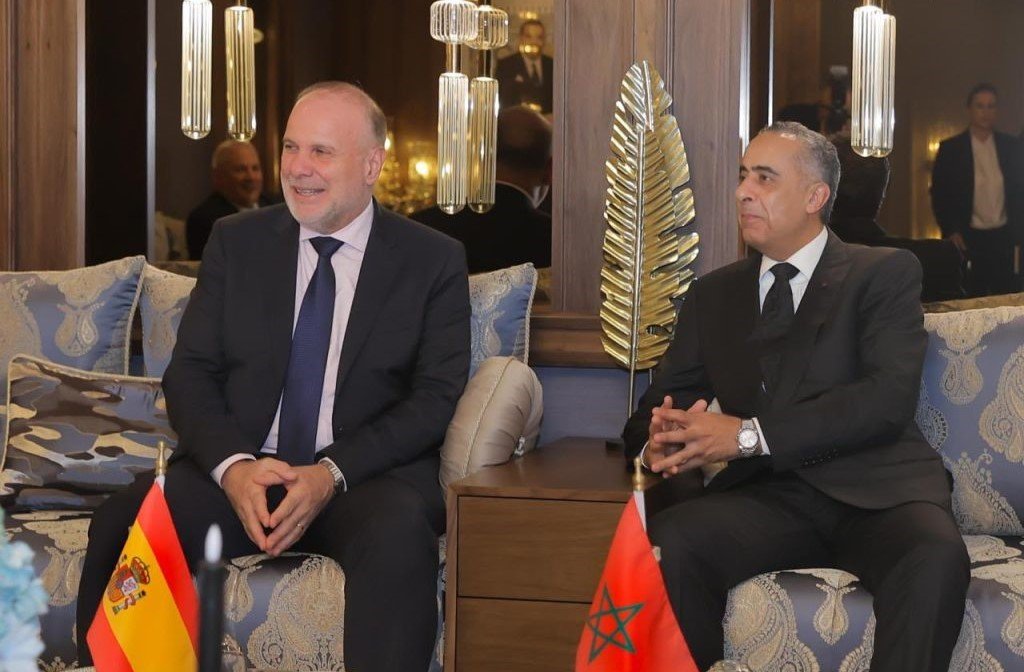
The reception of a high-level delegation from the Spanish Civil Guard by Abdellatif Hammouchi, Director General of Morocco’s National Security and Territorial Surveillance, cannot be dismissed as yet another protocol meeting marked by official photographs and diplomatic courtesies. Likewise, the decision to award prestigious Spanish decorations to several Moroccan security officials extends far beyond the realm of personal recognition or institutional appreciation. In relations between states, decorations are rarely mere ceremonial symbols; they often constitute a discreet diplomatic language through which governments communicate political and strategic messages far more profound than any official statement.
This development unfolds against an exceptionally sensitive regional backdrop. The Western Mediterranean, the Sahel, and the broader Sahara-Sahel region are experiencing an unprecedented convergence of security challenges: the persistence of terrorist threats, the expansion of transnational criminal networks, sustained migratory pressures, and a rapidly evolving geopolitical landscape that is reshaping Europe’s strategic security priorities. Within such an environment, the decision by a European state to bestow official honors upon Moroccan security leaders represents far more than a ceremonial gesture. It is an explicit acknowledgment of the exceptional level of confidence that Moroccan security institutions have earned from one of their most important European partners.
A closer examination of Moroccan-Spanish relations over the past decade reveals an equally significant reality. Security cooperation has frequently preceded political rapprochement and has repeatedly served as the principal stabilizing force in bilateral relations, even during periods marked by diplomatic tensions. Experience has consistently demonstrated that security imperatives cannot wait for political disagreements to be resolved. Terrorism recognizes no borders, human trafficking networks flourish wherever institutional vulnerabilities emerge, and organized crime systematically exploits every interruption in coordination between neighboring states.
Against this backdrop, Spain’s description of Morocco as an “indispensable strategic partner” in combating terrorism and organized crime carries exceptional significance. This is not diplomatic rhetoric designed for ceremonial occasions. Rather, it reflects an operational reality forged through years of intelligence sharing, permanent coordination, joint investigations, and collaborative operations that have prevented threats from reaching either Moroccan or European territory before they could materialize.
Yet the most meaningful interpretation of this event begins with a deeper question: why have Morocco’s security institutions reached such an exceptional level of international recognition?
The answer extends well beyond operational effectiveness alone. It also lies in the gradual evolution of Morocco’s security doctrine. Over the years, the Kingdom has transformed itself from a state primarily concerned with safeguarding its own national territory into a country actively contributing to the production of regional security. This evolution represents far more than an expansion of operational capacity; it reflects a broader strategic responsibility that transcends the traditional concept of border protection.
The implications of this transformation are considerable. When a member state of the European Union considers its own internal security to be closely linked with sustained cooperation with Moroccan institutions, Morocco ceases to be viewed merely as Europe’s southern neighbor. Instead, it becomes an integral component of the Euro-Mediterranean security architecture itself.
This strategic evolution becomes even more apparent as the nature of contemporary threats continues to change. Modern terrorism no longer relies exclusively on conventional cells. It increasingly exploits cyberspace, sophisticated financial networks, migration routes, cybercrime, and international trafficking in weapons and narcotics. Confronted with such hybrid threats, no single nation can realistically claim to ensure its security in isolation.
Consequently, the true value of the Moroccan-Spanish partnership cannot be measured simply by the number of bilateral meetings held or agreements signed. Its real strength lies in the extraordinary level of operational trust established between the two security institutions. Within the intelligence community, trust is arguably the most valuable strategic asset of all. It signifies a willingness to exchange highly sensitive information capable of directly affecting each nation’s national security—a level of cooperation achieved only after years of demonstrated reliability, operational success, and institutional credibility.
The honors conferred by the Spanish authorities reveal another dimension of this relationship—one that receives far less public attention: Morocco’s growing practice of security diplomacy.
For decades, the notion of soft power was largely associated with culture, economic influence, and traditional diplomacy. Today, however, security credibility has emerged as an equally decisive source of international influence. When a national security institution earns the confidence of major international partners and becomes a sought-after ally in addressing shared threats, it strengthens its country’s geopolitical standing well beyond the confines of policing. Its influence extends into investment, technological cooperation, diplomatic negotiations, and the broader architecture of strategic partnerships.
Viewed from another perspective, this evolution also reflects a profound shift in Europe’s perception of the southern shore of the Mediterranean. For many years, countries in North Africa were frequently portrayed as potential sources of instability or security risks. Morocco, by contrast, is increasingly recognized as a producer of security—an actor capable of contributing actively to regional stability rather than merely responding to crises or representing a source of vulnerability.
This transformation cannot be separated from the profound changes unfolding across the Sahel. Several states in the region continue to face institutional fragility, while terrorist organizations have expanded their operational reach and traditional mechanisms of regional security cooperation have weakened. Within this increasingly volatile environment, Morocco has steadily consolidated a unique strategic profile: institutional stability, internationally recognized intelligence capabilities, a geographic position linking Africa with Europe, and an expanding capacity to coordinate regional security responses.
The succession of prestigious Spanish decorations awarded to senior Moroccan security officials—following the distinction bestowed upon Abdellatif Hammouchi in 2025—demonstrates that this recognition has moved beyond the exceptional nature of a single symbolic event. It has become part of a sustained institutional process grounded in the practical evaluation of operational results rather than temporary political considerations. Such continuity reflects confidence built over years of measurable cooperation, shared successes, and mutual strategic interests.
Yet despite these positive indicators, one fundamental strategic question remains unanswered: how can Morocco transform this considerable security capital into an even broader framework of international cooperation?
International experience suggests that the most enduring security achievements are those accompanied by stronger economic, technological, scientific, and institutional partnerships. Cybersecurity, artificial intelligence, the protection of critical infrastructure, advanced intelligence technologies, and specialized professional training all offer opportunities to transform security cooperation into the cornerstone of a comprehensive strategic relationship between Rabat and Madrid.
Such a transition would not merely reinforce bilateral relations. It would position security as a catalyst for wider collaboration capable of generating mutual economic, technological, and geopolitical benefits, thereby expanding the value of trust already established between the two nations into new strategic domains.
At the same time, this growing international recognition carries equally significant responsibilities. The greater the level of trust between strategic partners, the higher the expectations that accompany it. Every successful operation establishes a new benchmark. Every strategic partnership demands continuous adaptation, stronger institutional capabilities, more advanced operational expertise, and constant innovation in response to threats that evolve with remarkable speed.
Beyond the symbolism of an official ceremony, this event reveals a far deeper transformation in Morocco’s position within the regional and international security landscape. In today’s geopolitical environment, states are no longer assessed solely by the size of their economies or the strength of their armed forces. They are increasingly judged by their ability to generate trust, contribute to collective stability, and become indispensable partners in confronting transnational threats that no nation can overcome alone.
This evolution reflects a broader shift in the nature of international influence itself. Security has become one of the defining currencies of global diplomacy. Intelligence cooperation, operational credibility, and the capacity to anticipate emerging threats now shape strategic alliances as profoundly as economic or military power. Nations that consistently demonstrate reliability in these domains are no longer viewed merely as participants in international security—they become architects of it.
For Morocco, this transformation represents more than a diplomatic achievement. It reflects the emergence of a long-term strategic asset capable of strengthening the Kingdom’s international standing across multiple dimensions. A country that earns the confidence of its partners in one of the world’s most sensitive domains also gains greater leverage in political dialogue, technological cooperation, economic partnerships, and regional diplomacy. Security, in this sense, becomes a gateway to broader geopolitical influence.
The Moroccan-Spanish partnership illustrates this reality with particular clarity. Built upon years of intelligence sharing, operational coordination, and mutual confidence, it demonstrates how sustained institutional cooperation can transcend political cycles and withstand moments of diplomatic tension. Such resilience is rarely accidental; it is the product of shared strategic interests, proven effectiveness, and a common understanding that security in the Euro-Mediterranean region has become indivisible.
Ultimately, the significance of these Spanish decorations extends far beyond the ceremony itself. They symbolize recognition of an institutional model that has gradually positioned Morocco among the most trusted security partners in the Mediterranean basin. They also signal that international credibility is earned through consistent performance, professional excellence, and the ability to deliver stability in an increasingly uncertain world.
The most important question, therefore, lies beyond the medals themselves. If these distinctions acknowledge Morocco’s expanding contribution to regional security today, can this growing confidence be transformed into an even broader strategic role tomorrow? Can the Kingdom move beyond being an indispensable security partner to becoming one of the principal architects shaping the future security architecture of the Euro-Mediterranean region?
The answer will not be determined by ceremonies or honors alone. It will depend on Morocco’s ability to continue investing in institutional excellence, technological innovation, intelligence capabilities, and strategic partnerships that respond to the rapidly changing nature of global security. In an era where trust has become one of the world’s most valuable strategic assets, the true measure of influence belongs not only to those capable of protecting their own borders, but also to those capable of helping shape the security of entire regions.


