

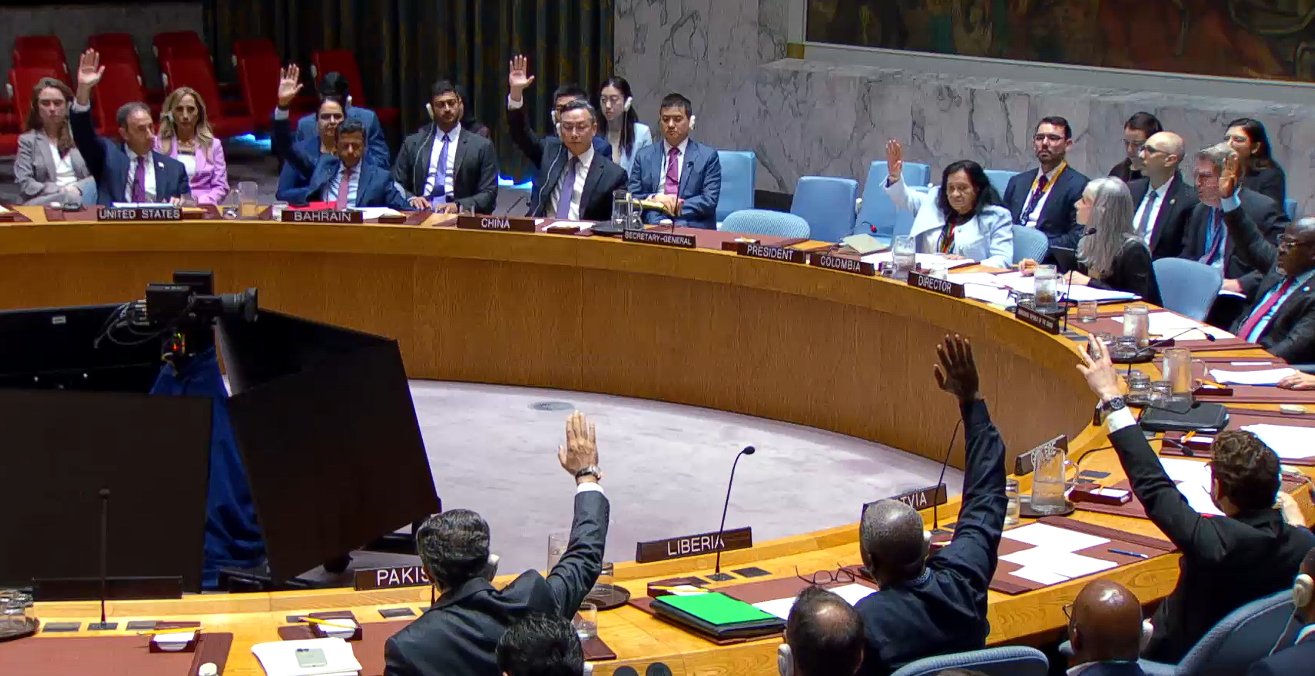
Not every resolution adopted by the United Nations Security Council is aimed at a specific conflict. Yet some resolutions carry implications that extend far beyond legal language, reaching into the heart of some of the world’s most sensitive geopolitical disputes. This appears to be the case with Security Council Resolution 2823 of 2026, unanimously adopted to strengthen accountability for crimes committed against United Nations peacekeeping personnel.
At first glance, the resolution may appear technical and procedural. In reality, however, it reflects a deeper transformation in the UN’s approach to protecting its missions deployed in conflict zones. It signals a growing determination by the international organization to stop treating attacks on peacekeepers as routine consequences of war and instead view them as acts carrying political, diplomatic, and potentially legal consequences.
For Morocco and the Sahara issue, this resolution cannot be regarded as just another document added to the archives of the Security Council. For decades, MINURSO has represented far more than a monitoring mission. It has become one of the primary instruments through which the international community observes developments on the ground. Any change in the way the United Nations approaches the protection of that mission inevitably affects the broader political and security environment surrounding the conflict.
The resolution emerges against the backdrop of a global increase in attacks targeting UN peacekeeping operations. From Africa to the Middle East, the United Nations has reported growing threats against its personnel, while accountability for perpetrators has often remained limited. Faced with this reality, the Security Council appears to have chosen a new course—moving beyond moral condemnation toward the creation of permanent mechanisms for documentation, investigation, and accountability.
This shift is far from symbolic. The resolution no longer focuses solely on reporting incidents. It calls for immediate documentation of attacks, the creation of detailed records, the preservation of evidence, the appointment of a senior UN official dedicated to accountability issues, and regular reporting by the Secretary-General to the Security Council. In practical terms, attacks against peacekeepers are now being incorporated into a continuous institutional process rather than remaining isolated incidents recorded in periodic reports.
It is within this framework that questions regarding the Polisario Front emerge. Since military tensions resumed east of Morocco’s defense wall in 2020, a number of incidents have been reported near MINURSO movements and positions. While such incidents were already subject to monitoring, the new resolution adds a new layer of international scrutiny. Any future event affecting the safety of mission personnel, facilities, or equipment could now attract greater attention and more systematic examination within UN institutions.
The significance of this development lies in the changing nature of modern conflicts. Contemporary disputes are no longer assessed solely through military strength or political legitimacy. Increasingly, they are evaluated through adherence to the norms governing the international order. When a UN mission becomes protected by a stronger framework of monitoring, investigation, and accountability, any party accused of threatening that mission may face substantially higher diplomatic and political costs.
Beyond the Sahara issue itself, the resolution also reveals a broader transformation in the philosophy of peacekeeping. For decades, UN efforts focused primarily on protecting civilians and preventing the resurgence of conflict. Today, the organization appears increasingly convinced that safeguarding its own missions is a prerequisite for fulfilling its global mandate. Consequently, attacks against peacekeepers are no longer viewed merely as unfortunate by-products of war but as actions capable of triggering international accountability.
For local populations, the implications extend well beyond legal debates. The greater the international importance attached to MINURSO’s security, the greater the level of scrutiny applied to the territory in which it operates. Every military escalation, every projectile, and every security incident may therefore attract closer attention from the Security Council, with potential consequences for the image of the parties involved and for the future of the political process itself.
The resolution also sends a direct message to states. It calls for full cooperation with investigations, expands the Secretary-General’s role in overseeing accountability efforts, and establishes annual reporting mechanisms concerning crimes committed against peacekeepers. In doing so, it contributes to the creation of a lasting institutional memory of such incidents, ensuring that they are not forgotten as political circumstances evolve.
Ultimately, the central question may not be whether this resolution increases pressure on the Polisario Front or on other actors operating within peacekeeping environments. The deeper question is whether the United Nations is entering a new phase in which the security of its missions becomes an integral component of international legitimacy itself.
If that is indeed the direction being taken, then an even larger question emerges: Are we witnessing the transformation of the United Nations from a body that merely observes conflicts into one that increasingly identifies responsibility and pursues accountability for attacks against its missions? And if so, how will conflict actors adapt to a reality in which every shot fired, every attack launched, and every threat directed at peacekeepers may become part of a permanent international accountability file?


