

When politics reaches a dead end, experts return to the negotiating table. And when the world appears to be moving ever closer to the edge of uncertainty, major powers begin searching for quiet places where dialogue can continue away from the noise of public rhetoric and political posturing. Seen from this perspective, the meeting held in Casablanca between experts representing the five recognized nuclear-weapon states was far more than a routine diplomatic gathering. It was a political signal whose significance extends well beyond any official statement.
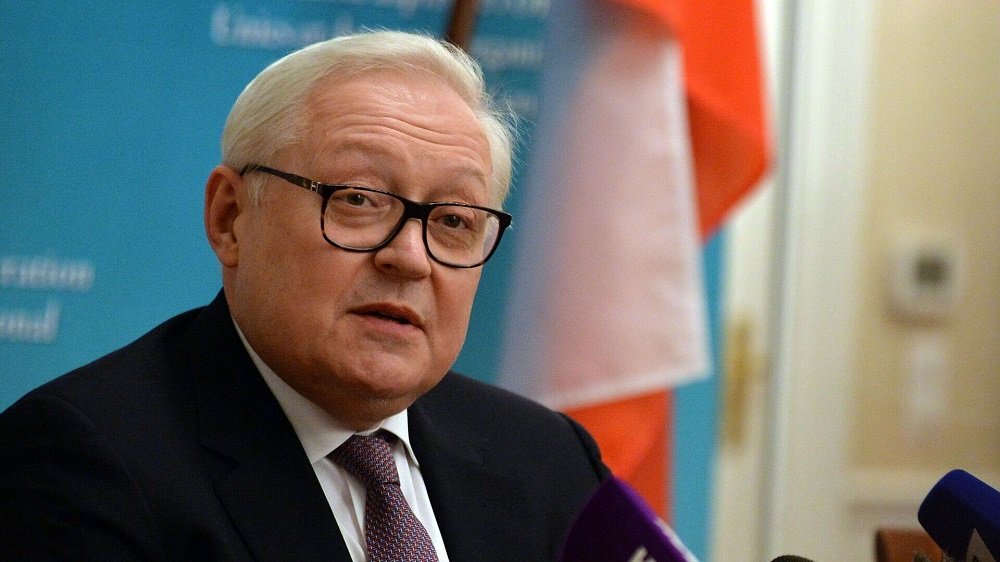
Russian Deputy Foreign Minister Sergey Ryabkov’s disclosure that experts from Russia, the United States, the United Kingdom, France, and China met in Morocco several weeks ago offers a rare glimpse into a largely unseen dimension of international diplomacy. While the world’s attention remains focused on wars, sanctions, military buildups, and geopolitical rivalries, technical and professional channels of communication continue to operate behind the scenes, seeking to prevent crises from spiraling into uncontrollable confrontations.
The importance of the Casablanca meeting lies largely in its timing. Relations among the major powers have rarely been as strained as they are today. The war in Ukraine has revived many of the dynamics associated with the Cold War. Escalating tensions in the Middle East have once again placed Iran’s nuclear program at the center of international concerns. At the same time, strategic competition between Washington and Beijing continues to deepen across military, technological, and economic domains. In such an environment, the mere existence of dialogue among nuclear powers becomes a critical component of global stability, even when the prospects for concrete agreements remain limited.
Why Morocco? The answer goes beyond political stability or diplomatic infrastructure. It also reflects the Kingdom’s growing reputation as a neutral and reliable venue for sensitive international discussions. When major powers seek a place to meet, they are not merely looking for conference rooms; they are looking for an environment where communication remains possible despite profound disagreements.
Casablanca itself carries a symbolic historical weight. In 1943, the city hosted the famous Anfa Conference, where Allied leaders gathered during World War II to shape the strategic vision of the postwar world. More than eighty years later, the same city has become a venue for representatives of the world’s most powerful military states. The objective, however, is fundamentally different. Rather than planning military victory, the focus today is on maintaining communication among states that possess the capability to alter the future of humanity itself.
Yet Ryabkov’s remarks also reveal the limitations of such meetings. The Russian official acknowledged that current geopolitical conditions leave little room for meaningful breakthroughs. Dialogue continues, but trust—the foundation of any lasting security architecture—has been severely weakened. When nuclear powers are still able to meet yet remain unable to reach substantial understandings, the challenge is no longer a lack of communication. It is a profound deficit of confidence.
The Casablanca gathering also highlights a reality often overlooked by public opinion. The management of global affairs does not depend solely on presidential summits or headline-grabbing speeches. It also relies on the quiet work of diplomats, military experts, strategists, and technical specialists whose efforts are aimed at preventing crises from crossing irreversible thresholds. In the nuclear realm, such discreet diplomacy may sometimes represent the final barrier separating political tension from global catastrophe.
For that reason, the significance of the Casablanca meeting extends far beyond the news itself. The central story is not merely that experts from the five nuclear powers met in Morocco. The deeper story is that, in a world increasingly divided by conflict and mistrust, the simple fact that rivals continue to speak to one another has become a diplomatic achievement in its own right. This raises a more fundamental question: do international institutions still possess the capacity to manage the most dangerous crises of our time, or have we entered an era in which diplomacy is no longer seeking to resolve conflicts, but merely to postpone their consequences?


