

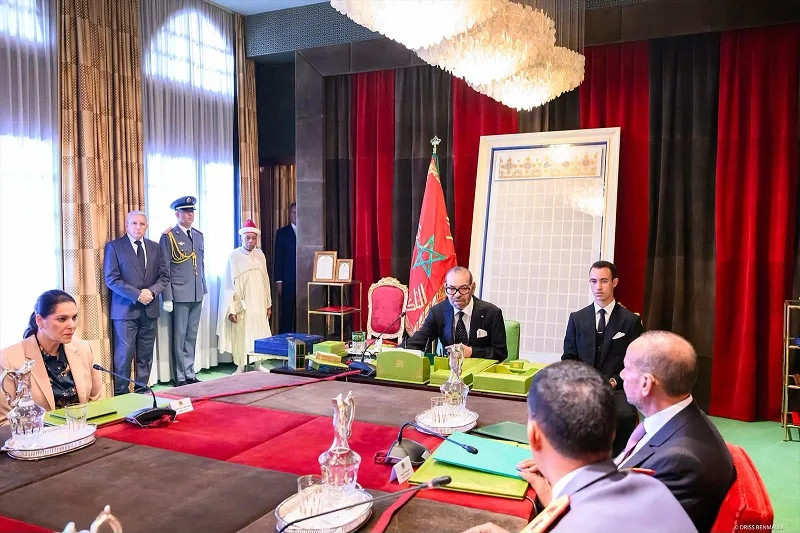
The communiqué issued by the Royal Cabinet following the working session chaired by His Majesty King Mohammed VI, May God Assist Him, on Wednesday at the Royal Palace in Rabat, in the presence of His Royal Highness Crown Prince Moulay El Hassan, marks a new milestone in Morocco’s efforts to build a national defence industrial and technological base. It signals a shift in the Kingdom’s strategic approach, from meeting defence requirements primarily through procurement and foreign partnerships towards developing an increasingly significant capacity to design, manufacture, maintain, test and store defence equipment and systems domestically.
The significance of the announcement lies not merely in the launch of new industrial projects or the allocation of financial resources to support them. Its deeper importance resides in the nature of the transformation being pursued: positioning the defence industry as an integral part of Morocco’s industrial, economic and technological policy, while linking national security to productive capacity, skills development, scientific research, investment attraction and access to export markets.
This is a vision that goes beyond the narrow definition of military manufacturing. It places Morocco before a broader strategic question concerning its position in the global industrial economy and its ability to transform the progress achieved in the automotive, aerospace and electronics sectors into a new productive base with greater technological added value.
The Royal Cabinet communiqué remains the primary reference for the vision, its priorities, objectives and announced figures. The following analysis examines the strategic messages behind the announcement and the economic, institutional and human conditions required to translate the Royal orientation into tangible results.
From Purchasing Equipment to Developing the Capacity to Manufacture It: The Transformation Morocco Is Pursuing
When the communiqué refers to enabling the Kingdom to establish an industrial and technological base capable of strengthening defence sovereignty, it gives sovereignty a broader economic and technological dimension.
Possessing military equipment is important, but a country’s ability to maintain, upgrade and secure the supply of that equipment is equally decisive. Developing the industrial and technological knowledge required to design systems, manufacture components and develop software gives the state greater independence in strategic decision-making and in securing its own requirements.
This is the first major message emerging from the Royal orientation: a gradual transition from being primarily a consumer in the international defence industry market towards becoming a producer and industrial partner, while retaining strategic partnerships as instruments for technology transfer, expertise acquisition and the expansion of national capabilities.
This vision gains particular significance against the backdrop of global transformations in the defence industry. Military strength is no longer measured solely by the number of aircraft, tanks or naval vessels. It increasingly depends on electronic systems, digital capabilities, artificial intelligence, unmanned aerial vehicles, autonomous systems and cybersecurity. These are fields in which civilian and military technologies increasingly overlap, while countries compete for technological knowledge, innovation and control over supply chains.
By identifying these areas among the priorities of the roadmap, the communiqué places Morocco before the challenge of entering technological sectors requiring long-term investment, specialised research centres, innovative companies and highly qualified scientific and engineering talent.
The objective, therefore, is not simply to establish factories assembling defence equipment. It is to develop an integrated industrial ecosystem covering design, production, maintenance, testing and storage. This distinction is fundamental: it separates a local industry limited to assembly operations from one capable of developing, upgrading and maintaining its own products and components within the country.
Law 10.20: The Legal Framework That Prepared the Ground for Defence Manufacturing
Understanding the Royal announcement requires examining the legislative process that preceded this stage.
On 25 July 2020, the Dahir promulgating Law No. 10.20 concerning defence and security equipment, weapons and ammunition was issued and published in the Official Gazette.
The law established a regulatory framework governing manufacturing, imports, exports, trade, transportation, maintenance and repair. It also subjected manufacturing activities to administrative authorisation and established conditions for conducting activities related to the sector.
Decree No. 2.21.405, issued in July 2021, subsequently established the implementing provisions of the law. This was followed by Decree No. 2.23.925 of 20 June 2024, which established two defence industrial acceleration zones.
The roadmap announced in the Royal communiqué is therefore part of a gradual institutional and legislative process. It is not an isolated initiative disconnected from the policies and frameworks already adopted.
What is new at this stage is the transition from establishing the legal framework and allocating industrial land for investment towards building an integrated system of governance, financing, training, manufacturing and exports.
This is where the importance of establishing a specialised strategic agency becomes apparent. The agency is expected to oversee implementation of the national strategy and support investors, alongside an industrial holding company tasked with structuring production ecosystems, mobilising public and private capital and encouraging the emergence of leading national companies.
The multiplication of institutions and stakeholders, however, raises an essential question of coordination and accountability: how will responsibilities be distributed between the strategic agency, the industrial holding company, the National Defence Administration and the government departments concerned? Who will be accountable for implementation deadlines, local integration rates and investment outcomes?
The success of the defence industry cannot depend solely on allocating land or providing financing. It requires clear governance, efficient decision-making, regulatory stability, defined responsibilities and mechanisms for evaluating results.
From Aerospace and Automotive Manufacturing to Defence Industries: A Real Test of Morocco’s Industrial Capabilities
The Royal orientation builds on an industrial foundation that Morocco has developed over recent years, particularly in the automotive, aerospace and electronics sectors.
This is an important advantage. Building a defence industry from scratch is fundamentally different from developing one that can draw on existing production ecosystems, suppliers, engineers and accumulated expertise in manufacturing, quality control and exports.
Figures from Morocco’s Foreign Exchange Office provide an indication of the scale of this industrial base. Moroccan aerospace exports reached approximately MAD 29.087 billion in 2025, compared with MAD 26.446 billion in 2024, representing an increase of 10%. Automotive exports amounted to MAD 154.494 billion, despite recording a 2% decline compared with the previous year.
These figures demonstrate the existence of production and export expertise that can be leveraged. At the same time, they require an important distinction between manufacturing for international supply chains and actually possessing technological capabilities, intellectual property and the capacity to develop national products.
The presence of factories manufacturing aircraft or automotive components does not automatically translate into the ability to design integrated defence systems. Similarly, participation in the production chains of international companies does not necessarily mean controlling the underlying technology, software or industrial decision-making processes.
This is precisely why the communiqué’s emphasis on industrial integration and dual-use technologies is significant.
Dual-use technologies create substantial opportunities for Moroccan companies because innovations developed for civilian applications can also serve defence purposes, and vice versa. Electronics, robotics, artificial intelligence, telecommunications, composite materials, sensor systems and three-dimensional printing all provide opportunities to build bridges between civilian and defence industries.
Moroccan media outlets have also reported, based on a presentation by Abdeltif Loudyi, Minister Delegate in charge of the National Defence Administration, before a parliamentary committee during discussions on the 2027 budget, an agreement with Mohammed VI Polytechnic University to establish a joint centre for developing advanced manufacturing technologies, 3D printing, artificial intelligence, robotics and composite-material processing.
This development illustrates how university research can be connected to industrial and defence requirements.
Yet an essential question remains: will Moroccan companies be able to move beyond their role as industrial subcontractors and become producers with their own technological knowledge, design capabilities and innovation capacity? And will universities and research centres become genuine partners in developing products that can be commercialised and exported?
Unmanned Aerial Vehicles and Artificial Intelligence: The Battle for Knowledge Before the Battle for Production
The decision to prioritise unmanned aerial vehicles, autonomous systems, land and maritime systems, defence electronics, cybersecurity and artificial intelligence carries strategic implications extending well beyond the military sphere.
The global defence industry is undergoing a profound transformation in which software, data, information-processing capabilities and autonomous operation have become essential components of modern systems.
These developments offer Morocco an opportunity to develop technological specialisations that can also serve other sectors, including manufacturing, telecommunications, transport, agriculture, critical infrastructure monitoring and logistics management.
However, this field presents a fundamental challenge: an advanced technological industry cannot be built solely on the importation of ready-made components. The real competition lies in systems engineering, software development, testing, applied research and the ability to continuously upgrade products.
Cybersecurity, moreover, should not be viewed merely as one component of the defence industry. It is a fundamental requirement for protecting the national economy, critical infrastructure, public administrations, institutions and businesses.
Investment in these areas can therefore generate economic benefits extending well beyond military and security institutions, provided that a clear policy exists for transferring knowledge and expanding the civilian applications of the technologies developed.
Ben Guerir and Benslimane: Can Industrial Zones Become Technological Hubs?
Among the announcements contained in the communiqué is the creation of a new large-scale defence industrial zone in Ben Guerir and another in Benslimane, in addition to the two industrial acceleration zones previously launched.
This initiative reflects an approach aimed at distributing defence industrial infrastructure across several locations, providing spaces for investment, production and development while offering the regions concerned new opportunities to attract industrial and technological projects.
Decree No. 2.23.925 had already established two defence industrial acceleration zones in 2024, defining the activities they could accommodate, including the manufacture of defence and security equipment, weapons systems, ammunition and related services.
On 4 November 2026, the newspaper Médias24 reported that the company responsible for managing defence industrial zones had announced seven land-mobilisation agreements on the sidelines of DEFSEC Morocco 2026, as part of preparations for new industrial projects. The newspaper referred to the Nouaceur and Sidi Yahya zones, covering areas of 75 and 600 hectares respectively.
The importance of these developments lies in the need to transform industrial land allocation into productive investment. Industrial zones should not be assessed by their surface area, but by the number of projects that actually enter production, the value added they generate, the quality of employment they provide and their connections with research and training institutions.
This makes it essential to connect these industrial hubs with universities, engineering schools, vocational training institutions and small and medium-sized enterprises capable of forming a network of local suppliers.
The geographical expansion also raises a question of balanced regional development: will these zones become economic hubs generating employment and investment in their surrounding areas, or will they remain relatively closed industrial facilities with limited links to local economic activity?
MAD 4 Billion from the Hassan II Fund: Financing Moves to the Centre of the Project
One of the most significant decisions disclosed in the Royal communiqué is the allocation of MAD 4 billion from the Hassan II Fund for Economic and Social Development to support implementation of the roadmap.
The significance of this contribution goes beyond its financial value. It reflects the inclusion of the defence industry among the state’s strategic investment priorities and provides financial support for the transition towards implementation.
However, the use of these resources requires clearly defined priorities, identification of eligible projects and financing mechanisms linked to performance indicators covering implementation, production, technology transfer and employment.
The objective must be to transform public funding into a lever for attracting private investment, rather than allowing it to become a financing source disconnected from the expected economic outcomes.
An additional figure previously presented before Parliament deserves attention.
During the presentation of the 2027 budget for the National Defence Administration, Abdeltif Loudyi stated that authorisations had been granted for defence industrial projects involving total investments of USD 333 million, with expectations of creating more than 3,500 direct jobs. He also referred to the mobilisation of approximately MAD 317 million in grants to support projects covered by investment agreements.
The presentation also referred to the adoption of an industrial compensation mechanism intended to encourage foreign companies benefiting from public contracts to invest in Morocco and transfer technology and expertise.
This information is important because it indicates that the initiative has moved beyond the stage of legislative planning towards project authorisations and investor mobilisation.
Nevertheless, the figures relating to projects currently authorised must be distinguished from the overall objectives of the Royal roadmap. Confusing investments already mobilised at the present stage with the broader ambitions set for 2035 would lead to an inaccurate assessment of progress.
The challenge is to ensure that industrial compensation results in genuine knowledge transfer rather than merely formal investment commitments. Morocco needs to acquire technical expertise, develop local suppliers and ensure continuous training for Moroccan engineers and technicians, so that international partnerships become bridges towards building national capabilities.
50,000 Jobs: The Defence Industry Enters the Social and Economic Debate
One of the most noteworthy objectives in the Royal communiqué is the ambition to create 50,000 direct and indirect jobs by 2035.
This target gives the project a clear social and economic dimension. The defence industry is no longer presented exclusively as a matter related to the requirements of the armed forces, but also as an industrial development programme capable of generating employment and expanding the national production base.
The nature of the expected jobs deserves particular attention.
Modern defence manufacturing requires aerospace, electronics and information-systems engineers, cybersecurity and artificial intelligence specialists, maintenance and testing technicians, experts in advanced materials and precision manufacturing, as well as administrative, commercial and logistics professionals.
This means that employment opportunities will not emerge simply through the opening of factories. They will depend on the ability of the education system, vocational training institutions and universities to prepare the skills required by this industry.
This is why the Royal emphasis on establishing a specialised academy, developing research and innovation, and mobilising national civilian and military expertise, including the skills of Moroccans living abroad, is particularly significant.
The communiqué opens the way to a new understanding of the role that Moroccan professionals abroad can play. Moroccans who have worked in research centres, advanced manufacturing industries and international technology companies can contribute to transferring expertise, mentoring professionals and developing joint projects.
The challenge goes beyond attracting prominent scientists or organising meetings with experts. It requires sustainable mechanisms that allow knowledge to return to Morocco through investment, university partnerships, technological project incubation and the mentoring of national engineering teams.
Vocational training must also reach young people across different regions, ensuring that the benefits of this initiative are not restricted to highly qualified professionals or cities hosting industrial facilities.
If the objective is to create 50,000 jobs, several social questions must be addressed: how many positions will be allocated to engineers? How many will allow young people with technical and vocational qualifications to enter the labour market? What opportunities will become available to small and medium-sized enterprises and communities surrounding the industrial zones?
These questions are essential to ensure that industrial success is reflected in employment and local development rather than remaining confined to investment indicators.
40% of National Requirements and 65% of Revenues from Exports: Balancing Independence and International Openness
The Royal communiqué sets another highly significant objective: meeting 40% of the requirements of the Royal Armed Forces and security services by 2035, while generating more than 65% of the industry’s revenues through exports.
This equation reveals two complementary objectives.
The first is to build national capacity to meet part of Morocco’s defence and security requirements, thereby reducing certain forms of dependence on foreign suppliers, particularly in maintenance, spare parts, systems and equipment that can be developed locally.
The second is to transform the defence industry into an economic activity capable of entering international markets and generating export revenues.
Achieving both objectives requires a careful balance between meeting domestic needs and satisfying the requirements of foreign markets, while protecting national technological capabilities and remaining open to international partnerships.
Exports in this sector depend on much more than production capacity. They require product quality, conformity certification, reliability, after-sales services, maintenance and upgrading capabilities, as well as compliance with legal, diplomatic and international regulations governing the trade in defence equipment.
The 65% target announced in the communiqué will also require a clearly defined calculation basis when implementation is assessed in the future. Does this percentage concern the combined revenues of defence industrial companies? Which products and services will be included? And how will domestic value added within exports be measured?
Answers to these questions will help distinguish between an industry exporting products assembled locally from imported components and one generating genuine national value through design, development, manufacturing and innovation.
Technological Development: What Can Society Gain Beyond the Defence Sector?
One of the most important messages emerging from the communiqué is that the defence industry could become an instrument for accelerating technological, economic and social development, particularly through dual-use applications.
Progress in robotics, artificial intelligence, sensor systems, composite materials and telecommunications can extend into numerous civilian sectors.
These investments could contribute to strengthening national manufacturing, improving applied research, upgrading industrial maintenance capabilities, training specialised professionals and developing start-ups operating in software, electronic systems and advanced manufacturing.
The state therefore has a responsibility to ensure that technological benefits reach the civilian economy, rather than allowing accumulated knowledge to remain confined within defence institutions and projects.
Moroccan society needs higher-value employment opportunities, educational institutions capable of keeping pace with digital transformation, companies able to compete in technology markets and a scientific research ecosystem connected to the needs of the economy.
At the same time, this industry must operate under strict standards concerning data protection, cybersecurity, industrial safety and compliance with national legislation and international obligations. Technological progress creates economic opportunities, but it also brings legal, ethical and security responsibilities.
This is one reason why the project should be accompanied by an institutional public debate on its economic and social dimensions, within the limits imposed by national security requirements and the confidentiality of defence information.
International Partnerships and Moroccans Abroad: From Attracting Investment to Acquiring Knowledge
The Royal communiqué emphasises the importance of the Kingdom’s strategic partnerships in strengthening the integration of Morocco’s defence industry into global value chains and developing its export capabilities.
This approach reflects an understanding that entering such a complex and competitive sector requires drawing on the experience of countries and companies that have accumulated decades of expertise in design, manufacturing, testing and technological development.
However, the real value of these partnerships will depend on their capacity to transfer technology, train professionals and allow Moroccan companies to participate in the more advanced stages of production.
Morocco needs partnerships that progressively strengthen its own capabilities, rather than agreements limited to purchasing or assembling equipment.
The involvement of Moroccans abroad who have accumulated experience in advanced industries can provide an additional bridge between international expertise and national capabilities.
This also creates an important opportunity for Moroccan economic diplomacy to pursue industrial and scientific partnerships with countries possessing advanced technological expertise, linking defence cooperation to training, research, investment and joint production.
Governance, Financing and Speed of Implementation: The Real Test of the Roadmap
At the conclusion of the working session, His Majesty the King issued His High Instructions to focus on the effective and rapid implementation of the roadmap, giving priority to establishing governance structures and a financing plan, simplifying investment procedures and mobilising the national private sector.
These instructions move the discussion from strategic objectives to executive responsibility.
The creation of the strategic agency and industrial holding company, the allocation of financial resources, the establishment of industrial zones and the attraction of investors all require specialised management, clear procedures and defined implementation deadlines.
Encouraging the national private sector also raises the question of whether Moroccan companies, particularly small and medium-sized enterprises, will be able to enter this industrial ecosystem.
Defence manufacturing requires an extensive network of suppliers, manufacturers and service providers. It cannot rely exclusively on a limited number of large companies.
Small and medium-sized enterprises must therefore have access to financing, technology, training and industrial upgrading, while meeting the strict requirements governing quality, security and authorisation.
This makes the establishment of regular performance indicators essential. These should include the actual volume of completed investments, the number of factories entering production, local integration rates, the number of qualified professionals, expenditure on research and development, and export revenues.
The issue is not simply announcing objectives for 2035. It is building a transparent trajectory that allows progress to be assessed at every stage and shortcomings to be addressed before they become structural obstacles.
Strategic Questions Raised by the Royal Vision
The Royal Cabinet communiqué opens up a series of questions extending beyond the technical aspects of defence manufacturing and reaching into the nature of the economic and development model Morocco seeks to build:
- How will Morocco ensure that technology is transferred from international partners to national companies, rather than limiting cooperation to assembly and restricted manufacturing operations?
- What mechanisms will guarantee coordination between the strategic agency, the industrial holding company, government departments and research institutions?
- How will Moroccan small and medium-sized enterprises become integrated into defence industry value chains?
- What share of investment will be allocated to scientific research, innovation and technological development?
- How will the specialised academy become an institution capable of training engineers, technicians and experts who genuinely meet the industry’s requirements?
- What mechanisms will ensure the participation of Moroccan professionals abroad in knowledge transfer, investment and scientific mentoring?
- How will the new industrial zones translate into employment opportunities and local economic development rather than remaining production facilities isolated from their surrounding communities?
- What criteria will be used to measure national industrial integration and progress towards meeting 40% of defence and security requirements?
- How will Morocco protect the balance between national security requirements and transparency in the management of public investment and resources?
- Will the defence industry succeed in developing national products capable of competing internationally and thereby achieving the objective of generating more than 65% of its revenues from exports?
These questions do not diminish the importance of the objectives announced in the communiqué. Rather, they identify the challenges that must be addressed to make the vision measurable, assessable and subject to institutional accountability.
Morocco Faces an Opportunity to Build a New Foundation for Industrial and Technological Sovereignty
A careful reading of the Royal Cabinet communiqué reveals a project in which defence, economic, social and technological considerations intersect.
Under the announced vision, the defence industry is not simply another sector within Morocco’s industrial fabric. It is an ambitious undertaking intended to contribute to developing knowledge, production, employment, investment and exports.
The significance of this orientation lies in the fact that it builds on an existing industrial foundation, an established legal framework, designated investment zones, international partnerships and a financial contribution of MAD 4 billion from the Hassan II Fund for Economic and Social Development.
Yet transforming these foundations into an advanced national industry will require time, continuity in public policy, investment in human capital, protection of research and innovation, and governance capable of translating decisions into measurable outcomes.
The success of this project will also be measured by its ability to create Moroccan companies possessing their own knowledge, expertise and competitive capabilities; generate high-quality employment for young people; develop civilian technologies alongside defence applications; and integrate the national economy into global production chains from a more advanced position.
In this sense, the strategic challenge raised by the Royal communiqué goes beyond asking what defence equipment Morocco will manufacture. It raises a much broader question: what knowledge, technology, skills and industrial institutions will Morocco build as it develops this industry?
That is the real test of the 2035 horizon: transforming defence sovereignty into a lever for industrial and technological sovereignty, and ensuring that investment in national security also becomes an investment in the future of the Moroccan economy and the ability of coming generations to innovate, produce and compete.
The expected strategic outcome cannot be reduced to the number of factories established or the value of investments mobilised. Its real measure will be the knowledge Morocco acquires, the productive capabilities it develops, the national expertise it consolidates and the tangible impact this industrial ecosystem leaves on the economy and society.


