

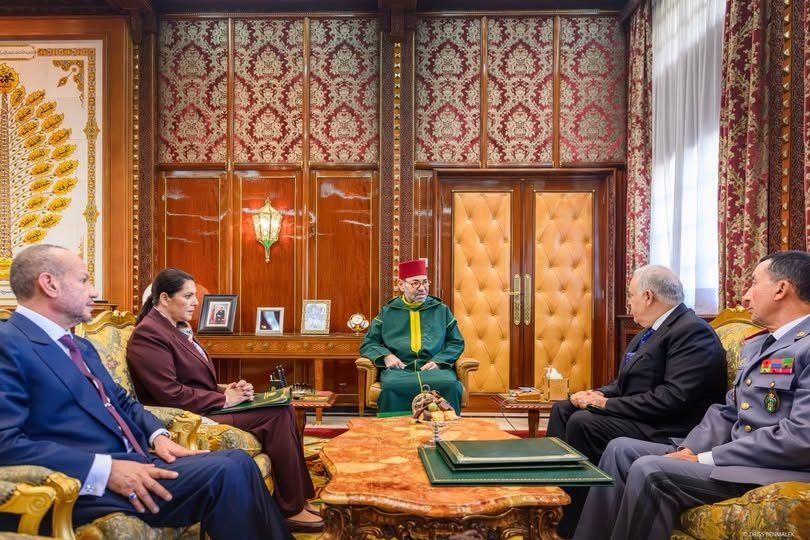
The communiqué issued by the Royal Cabinet following the working session chaired by His Majesty King Mohammed VI, May God Assist Him, on 4 November 2026 at the Royal Palace in Rabat, conveys a message that goes far beyond the question of the end of the United Nations Mission for the Referendum in Western Sahara (MINURSO). It outlines Morocco’s vision for the period ahead, identifies the priorities that must guide this transition, and reaffirms the interconnectedness of three fundamental dimensions: national sovereignty, stability on the ground, and the continuation of development across the Southern Provinces of the Kingdom.
ما بعد المينورسو.. الملك محمد السادس يضع محددات المرحلة الجديدة: السيادة الوطنية، أمن الأقاليم الجنوبية واستمرار التنمية دون فراغ مؤسساتي pic.twitter.com/dxsbq7OMHC
— Diplomatique.ma الدبلوماسية (@diplomatique_ma) November 4, 2026
The significance of the communiqué lies primarily in the way the Moroccan monarchy approaches the end of the UN mission’s mandate. This is not merely an administrative change within the United Nations system. It is a transition that requires institutional, political and diplomatic preparation to prevent any coordination vacuum or uncertainty. The communiqué therefore constitutes a political document defining the State’s orientations for a new phase, clarifying the responsibilities of the institutions concerned and conveying messages both domestically and internationally.
It is important to clarify that the orientations, positions and instructions discussed in this article are those set out in the Royal Cabinet’s communiqué, which remains the source and author of their formulation and political content. The journalistic task here is to examine their implications, place them within their broader contexts and explore the strategic questions they raise.
From conflict management to managing a new phase: sovereignty as the guiding principle
The first element that draws attention in the communiqué is the way His Majesty King Mohammed VI links the end of the UN mission’s mandate to principles that cannot be postponed or left open to ambiguity: the Kingdom’s territorial integrity, national unity, security, the tranquillity of its citizens and, in particular, the security and peace of the inhabitants of the Southern Provinces.
This sequence is not merely protocol. It establishes a clear hierarchy of Moroccan priorities: no questioning of national sovereignty, no disruption of security and stability, and no interruption of the State’s responsibility towards its citizens, regardless of the transformations affecting the international mechanisms that have accompanied this issue for several decades.
The significance of this message lies precisely in its shift of focus. The question is no longer simply the end of an international mission, but Morocco’s capacity to manage the post-MINURSO phase. Moroccan institutions are now called upon to demonstrate their ability to ensure continuity, coordinate their respective responsibilities and monitor diplomatic and on-the-ground developments without allowing contradictory interpretations or uncoordinated initiatives to emerge.
When the communiqué specifies that every institution must act within the limits of its respective powers, the message is directed squarely at the executive, administrative, security, military and diplomatic apparatus. The objective is to move from a logic of monitoring events to one of anticipation, and from the mere reaffirmation of positions to their translation into concrete institutional measures.
An essential question therefore arises: does the Moroccan administration, at its various levels, possess the coordination mechanisms and operational capacity required to accompany such a sensitive phase? Can its institutions guarantee clarity in decision-making, communication and accountability?
Sovereignty, in its political and institutional dimension, is not expressed solely through diplomatic positions. It is also measured by the State’s ability to protect stability, administer its territory, safeguard rights, provide public services and demonstrate the day-to-day effectiveness of its institutions.
The Southern Provinces: development at the heart of sovereignty
One of the most significant passages in the Royal communiqué is His Majesty the King’s emphasis on continuing the development project in the Southern Provinces and the major structural projects associated with it.
This orientation places development at the centre of the coming phase. It is not an economic and social programme running parallel to the question of territorial integrity, but rather a concrete expression of the State’s responsibility towards its territory and its inhabitants.
Investments in infrastructure, ports, roads, energy, public services, education, healthcare and employment cannot be assessed solely by the volume of financial resources allocated. Their real significance lies in their capacity to transform living and production conditions, create sustainable employment opportunities for young people and make the Southern Provinces an integrated economic space connected to its national, African and international environment.
The Moroccan government is therefore facing a challenge that goes beyond the simple management of announced projects. It must assess their social and economic impact. Citizens in Laayoune, Dakhla, Boujdour, Es-Semara and other parts of the South expect investments to translate into higher incomes, better professional prospects, improved public services and greater participation by local businesses in economic activity.
The priority must consequently shift from announcing projects to evaluating their impact, and from calculating investment volumes to measuring the value they actually create for local populations.
Will the new phase accelerate industrial, logistical and maritime development? Will the government be able to expand local employment opportunities, integrate young people into production chains and develop the social and solidarity economy? How can small and medium-sized enterprises, alongside local expertise, be guaranteed a meaningful role in major development projects?
These questions acquire particular importance when the communiqué establishes a direct link between strengthening national consensus and continuing the development project. Consensus cannot be sustained solely through unity in political positions. It also depends on confidence in institutions, fairness in the distribution of opportunities and the perception that development is genuinely improving citizens’ everyday lives.
The ceasefire: a commitment to peace accompanied by permanent vigilance
Another particularly important passage concerns the communiqué’s confirmation of the Kingdom’s commitment to respecting the ceasefire, a voluntary commitment that will not change with the end of the United Nations mission’s mandate.
This formulation carries a clear political and security significance. It distinguishes the continuity of Morocco’s commitment to de-escalation from the continuity of the UN instrument that was tasked with accompanying that commitment. In other words, the end of the mission’s mandate does not constitute, for Morocco, a reason to abandon restraint or modify the rules of conduct to which it has committed itself.
At the same time, the communiqué points out that the mission was repeatedly unable to monitor compliance with the ceasefire or draw the necessary consequences from reported violations. This assessment reflects the position of the Moroccan monarchy regarding the limitations of the UN mechanism’s effectiveness and brings the question of international monitoring back to the centre of the debate over the period now coming to an end.
Maintaining the ceasefire does not, however, mean abandoning vigilance or underestimating risks. The communiqué links the commitment to peace with the necessity of protecting national security and the tranquillity of citizens. The institutions concerned therefore face a dual responsibility: preventing escalation while preserving the capacity to respond to any development that could threaten stability.
This message is addressed both to Moroccan public opinion and to the other actors involved in the conflict, foremost among them Algeria and the Polisario Front. The Moroccan position, as expressed in the communiqué, is to maintain its commitment to de-escalation while refusing to allow the end of the UN mandate to be exploited to create new realities on the ground or exert pressure on the Kingdom.
For Algeria, this new phase raises directly the question of its willingness to consider the ongoing developments within a realistic framework for resolving the dispute, rather than through regional confrontation and the perpetuation of the conflict.
As for the Polisario Front, politically and diplomatically supported by Algiers and defending a position opposed to Morocco’s, international developments invite it to reconsider its political calculations in light of the growing support from several countries for Morocco’s autonomy initiative under Moroccan sovereignty.
Nevertheless, it is important to distinguish Moroccan political positions from facts requiring independent verification. Any responsibility for a potential ceasefire violation must be established on the basis of documented evidence rather than reciprocal accusations.
The Coordination Office with MINURSO: an administrative mechanism reflecting an institutional vision
One of the most concrete measures announced in the communiqué concerns the Royal Instructions assigning the Coordination Office with MINURSO, operating under the Ministry of the Interior, responsibility for coordinating and accompanying the process of winding down and withdrawing the UN mission.
This decision goes beyond its immediate administrative dimension. It indicates that Morocco intends to manage the transition through a clearly identified institutional channel, responsible for facilitating communication, coordination and monitoring of the procedures associated with the end of the mission’s presence.
The choice of the Ministry of the Interior can be understood in light of the nature of this assignment, which requires territorial, administrative, security and logistical coordination, while taking into account international obligations and the procedures governing the conclusion of the mission’s activities.
Relying on an existing structure, rather than creating an improvised arrangement or a coordination mechanism with unclear responsibilities, also reflects a desire to maintain control over the transition and avoid any institutional vacuum.
The success of this operation, however, will not be measured solely by the completion of withdrawal formalities. It will also depend on respect for the rules governing relations with the United Nations, the security of personnel, property and equipment, and the preservation of the communication channels required throughout the transitional period.
The Ministry of the Interior therefore assumes a central coordination responsibility, while other government departments will be expected to provide the necessary information and expertise within their respective mandates.
A question deserves continued attention: will this mechanism remain limited to accompanying the withdrawal and liquidation of the mission, or could this experience lead to the establishment of a more integrated national framework for monitoring developments related to the issue at diplomatic, institutional and operational levels?
The United Nations: honouring commitments without depending on mechanisms that have become inadequate
The communiqué emphasises Morocco’s respect for its international commitments and its diplomatic doctrine, founded on preserving peace, contributing to it and pursuing every possible avenue for its achievement.
This orientation constitutes one of the principal messages addressed to the international community: Morocco intends to combine the defence of its national sovereignty with respect for the principles of international cooperation. It does not regard a change in the status of a UN mission as grounds for breaking its commitments or disengaging from the international organisation.
Nevertheless, this position opens a broader debate about the future role of the United Nations in the conflict, particularly following the difficulties encountered in renewing MINURSO’s mandate.
From a documentary perspective, Security Council Resolution 2797, adopted in 2025, had extended the mission’s mandate until 31 October 2026 and placed the political process within the framework of Morocco’s autonomy proposal as a basis for negotiations, while maintaining the reference to a mutually acceptable political solution and the elements relating to self-determination.
On 30 October 2026, the spokesperson for the UN Secretary-General indicated that the Security Council had failed to adopt two draft resolutions and that the mission’s mandate was due to end on 31 October.
This distinction is essential to avoid confusing political interpretation with legal qualification. The end of the mandate represents an important development in the course of the dispute, but it should not be presented as an international decision that definitively determines the question of sovereignty or, by itself, resolves the dispute.
The Royal communiqué therefore advances a clear equation: continue cooperation with the United Nations while respecting international responsibilities, while maintaining that, from Morocco’s perspective, the circumstances in which the mission was established and the functions originally assigned to it no longer correspond to present realities.
The international community is consequently confronted with a question that goes beyond the future of a particular mission: what political and diplomatic framework could now contribute to resolving the conflict, in light of the developments recorded in the positions of several states?
Algeria: do international developments require a reassessment of regional calculations?
It is difficult to examine the Royal messages contained in the communiqué without taking into account Algeria’s role in the conflict, as a central actor in the regional equation and a political and diplomatic supporter of the Polisario Front.
The communiqué does not explicitly mention Algeria, but it places the coming phase within a framework defined by the protection of sovereignty and national security, the monitoring of developments at every level and the maintenance of Morocco’s previously expressed position. The significance of this message therefore extends beyond the participants in the working session to include regional actors influencing the course of the issue.
The prolongation of the conflict imposes political, security and economic costs on the entire Maghreb region. It obstructs prospects for regional integration, commercial exchanges and joint investment. Yet Morocco and Algeria possess considerable economic, human and energy resources that could contribute to building a regional space based on cooperation rather than closed borders and political tensions.
The new phase therefore poses a strategic question for Algiers: what is the cost of continuing the conflict, and to what extent does this regional policy correspond to the transformations taking place in international relations?
Can continued support for the Polisario Front, against a backdrop of growing international positions favourable to autonomy under Moroccan sovereignty, still produce a political outcome? Or does it risk deepening regional isolation and prolonging the waste of opportunities for shared development?
The Polisario Front is also facing a new political test. Any serious negotiation process requires moving beyond slogans and declaratory positions towards seeking a realistic and implementable solution that takes into account the interests of the populations concerned and regional stability.
The future of the region cannot, moreover, ignore the humanitarian and social situation of the populations in the Tindouf camps. Protecting their rights and dignity must remain a priority, so that civilian suffering does not become an instrument for prolonging the political conflict.
The message to the international community should therefore be unambiguous: supporting peace means addressing the causes of the conflict, encouraging realistic solutions and holding accountable any actor contributing to obstructing a settlement or threatening stability, on the basis of verifiable facts and evidence.
Diplomatic momentum: moving from political support to consolidating achievements
In its concluding section, the communiqué returns to the positive developments recorded in Morocco’s national cause and the diplomatic momentum accompanying them, particularly international recognitions and positions supporting Morocco’s sovereignty over its Sahara, as well as support for the autonomy initiative under Moroccan sovereignty as a framework for reaching a definitive settlement of the dispute, in accordance with the Kingdom’s position.
This reference is not simply a reminder of past achievements. It underscores the need for Moroccan diplomacy to pursue its efforts to transform international support into lasting political positions, economic partnerships and concrete institutional cooperation.
Political recognition acquires its full strategic significance when it translates into sustained diplomatic cooperation, investment, commercial partnerships, a stronger economic presence in the Southern Provinces and support for Moroccan initiatives within international institutions.
The Royal Cabinet communiqué of 30 October 2026 had indicated that more than two-thirds of UN member states, including permanent members of the Security Council and influential international powers, clearly supported autonomy under Moroccan sovereignty as a framework for resolving the conflict.
Consolidating this momentum nevertheless requires continuous diplomatic work. International positions remain influenced by national interests, political changes and the balance of power between states. The challenge is therefore no longer limited to obtaining additional recognitions, but also involves strengthening the credibility of Morocco’s management of the issue, demonstrating the feasibility of the autonomy initiative and presenting a coherent institutional and development model.
Economic, cultural, media and parliamentary diplomacy assume particular importance here, alongside official diplomacy. Diplomatic battles are not fought exclusively in conference rooms. They are also built in universities, research centres, economic institutions, international forums and media organisations.
Moroccan communities abroad, together with Moroccan academic and professional expertise, can also play an important role in presenting the economic, social and institutional transformations taking place in the Southern Provinces, provided they have access to the necessary working tools and reliable information.
Moroccan society: national consensus beyond slogans
Another essential message in the communiqué deserves particular attention: the connection established between strengthening national consensus and protecting the Kingdom’s higher interests.
This relationship places Moroccan society before a collective responsibility to preserve national unity. It also commits the State and its institutions to safeguarding the trust upon which this consensus depends.
Major national issues must not become arenas for political one-upmanship, disinformation or the exploitation of emotions. Nor should they be removed from all responsible debate concerning public policies and the effectiveness of their implementation.
National media therefore have an important role to play in accompanying this new phase: providing accurate information, distinguishing facts from analysis and political positions, combating misleading information and avoiding the transformation of every diplomatic development into a celebration disconnected from reality.
Universities, educational establishments and cultural institutions are also called upon to deepen understanding of the history of the Moroccan Sahara, the social and cultural transformations of the Southern Provinces, and the autonomy proposal and its institutional prospects.
National unity does not derive its strength solely from historical memory. It is also reinforced by the ability to renew bonds between citizens, broaden participation and guarantee territorial equity, while preserving cultural diversity within the framework of a shared national identity.
A fundamental question therefore arises: how can national consensus around territorial integrity be transformed into a civic culture and an everyday institutional practice in which every citizen recognises the connection between defending national interests, personal dignity, individual rights and development opportunities?
This equation places good governance, transparency, the fight against corruption and the principle of accountability among the factors that matter just as much as diplomatic and security action.
The government faces the test of implementation: translating Royal orientations into results
The presence at this working session of the Head of Government, Fatima Zahra Mansouri, His Majesty the King’s Adviser, Fouad Ali El Himma, the Minister of the Interior, Abdelouafi Laftit, as well as Lieutenant General Mohammed Berrid, Inspector General of the Royal Armed Forces and Commander of the Southern Zone, reflects the multiple dimensions required to manage this new phase.
The issue cannot be managed from a single perspective. It encompasses political and diplomatic dimensions, administrative and territorial responsibilities, security and military considerations, as well as economic and social aspects linked to the continuation of development projects.
The government is therefore expected to coordinate the actions of the departments concerned, establish the necessary conditions for implementing the Royal orientations, guarantee the continuity of major structural projects and deliver measurable results.
The Ministry of the Interior bears direct responsibility for accompanying the arrangements associated with the end of the mission. This phase also requires coordinated involvement from the departments responsible for Foreign Affairs, Economy and Finance, Infrastructure and Social Development, each acting within its respective powers.
Managing this period, however, cannot be limited to reacting to external developments. It requires an anticipatory vision capable of incorporating different scenarios, defining decision-making mechanisms, ensuring consistency in official communication and clarifying institutional responsibilities.
The question that will weigh heavily in assessing institutional performance over the coming months is therefore this: will the government succeed in translating the Royal orientations into an integrated action programme, supported by timetables, clearly assigned responsibilities and precise indicators, or will certain aspects of this new phase remain dependent on routine administrative management?
The real challenge is to advance institutional action with the seriousness and speed required by the importance of the issue, while ensuring that its results are tangible for citizens, particularly in the Southern Provinces.
After MINURSO: a new phase, greater responsibilities
If the end of MINURSO’s mandate closes one chapter of the United Nations presence in the Moroccan Sahara, the Royal communiqué of 4 November 2026 demonstrates that Morocco intends to prepare for the post-MINURSO period across political, institutional, security and economic dimensions.
The communiqué brings together three complementary orientations: attachment to national sovereignty, the continuation of the commitment to the ceasefire and international cooperation, alongside the continuity of the development project in the Southern Provinces.
These elements outline a vision in which recording diplomatic achievements is no longer sufficient. They must now be translated into a lasting political, economic and social reality.
The end of the mission’s mandate does not, in itself, mean that every dimension of the dispute has been definitively settled under international and legal frameworks, nor does it mean that diplomatic efforts have reached their conclusion. This development at the Security Council opens a period requiring continued diplomatic engagement, the management of political differences and the presentation of solutions capable of being implemented.
The deeper significance of the communiqué therefore extends beyond the question of MINURSO itself: the Moroccan State is called upon to demonstrate its ability to manage the new phase effectively; society must preserve its cohesion; the government must translate orientations into tangible results; and the international community remains called upon to support the peace process and respect for international commitments.
Algeria, for its part, faces a strategic question regarding the future of its policy towards Morocco and the possibility of moving from a logic of confrontation towards one of regional cooperation serving the peoples of the region.
Ultimately, the coming phase will not be assessed solely by the end of a UN mission’s mandate, but by what the Kingdom succeeds in building afterwards: better-prepared institutions, more equitable development, more influential diplomacy and stability that protects citizens while strengthening Morocco’s position at regional and international levels.
This is the challenge placed before the various institutions by the Royal orientations: to transform political and diplomatic achievements into institutional strength and sustainable development, while keeping national sovereignty closely connected to the State’s responsibility towards people, territory and the future.


