

Beyond the figure presented to Parliament lies a broader question about coordination between national education, youth policy and sports programmes: how effectively are these policies helping keep students in school?
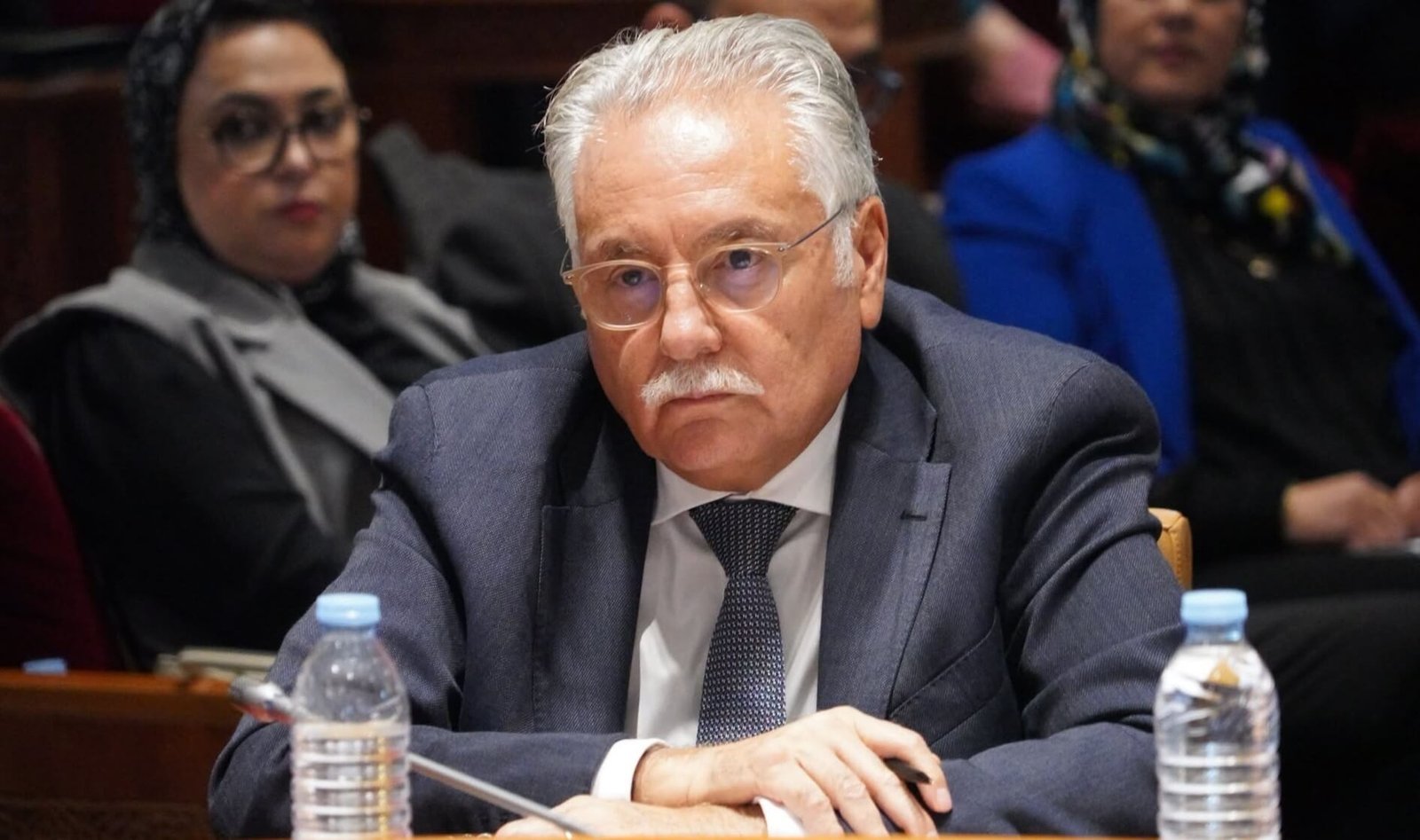
The figure disclosed by Mohamed Nabil Benabdallah, Minister of National Education, Preschool Education, Vocational Training and Skills Development, during the oral question session at the House of Representatives on Monday, 16 November 2026, goes well beyond an administrative assessment of the education system.
Around 265,000 students left school during the 2024-2025 academic year. The figure points to a continuing loss of a substantial number of young people from the education system, at a stage when schools are expected to provide not only academic instruction but also guidance, social support and opportunities for personal development.
The minister’s statement amounts to an official acknowledgement of the scale of the problem, despite successive reform programmes and government announcements aimed at improving public education and combating school dropout.
It also raises a wider question about the responsibility of other government departments expected to work alongside schools, particularly those in charge of youth and sport.
Preventing school dropout cannot depend exclusively on administrative and educational measures taken after a student has already left the classroom. It also requires a social, cultural and sporting environment capable of maintaining young people’s connection with their schools and giving them meaningful opportunities to participate.
A figure that extends beyond the education system
Published figures indicate that approximately 265,000 students left school in 2024-2025, compared with around 334,000 in 2021-2022.
This represents a decline in the number of students leaving school, but it is not, by itself, sufficient evidence of the effectiveness of government policy.
A meaningful assessment requires comparing these figures with total student enrolment, examining their distribution across educational levels, regions and urban and rural areas, and establishing what happens to young people after they leave school.
Figures published by the Ministry of National Education provide another perspective. During the 2024-2025 academic year, the community mobilisation campaign succeeded in reintegrating 78,221 students out of 93,245 children and young people identified through the “Child-to-Child” initiative.
These figures relate to a specific identification and reintegration operation. They should not be presented as evidence that all 265,000 students who left school were brought back into education.
The distinction matters. The number of beneficiaries of a particular programme does not necessarily represent the number of young people who have returned to education and remained there over the longer term.
The 2022-2026 education roadmap set a target of reducing school dropout by one-third. Its measures include educational monitoring, early identification of students at risk, social support and second-chance education programmes.
Assessing whether that target has been achieved requires a final review comparing results with the baseline situation. Counting activities and completed operations cannot replace measuring their actual impact on students’ continued participation in education.
Where does sport fit into the fight against school dropout?
The minister’s remarks invite a broader examination of government sports policy, which the government itself has presented as an educational and social development tool.
During his presentation to the House of Councillors on government policies in the field of sport, Head of Government Aziz Akhannouch cited figures showing a significant increase in participation in school sports activities: from 240,800 students in 2021 to 895,000 in 2023, and approximately 1.2 million in 2024. The number of sports activities offered reportedly increased from 20 to 50.
These figures deserve recognition, but they also raise a more fundamental question: what impact has this expansion had on keeping students in school?
How many students at risk of dropping out have benefited from regular sports participation? Have these programmes been directed towards schools and communities with the highest dropout rates?
School sport is about more than competition and talent identification. It can provide structure, encourage discipline, develop teamwork and strengthen students’ relationship with their educational institutions. It also gives teachers and educational staff additional opportunities to identify signs of disengagement, academic difficulty and declining motivation.
The Ministry of National Education has itself presented the development of school sport as a means of improving learning outcomes, supporting physical and psychological well-being and preventing violence within schools.
However, including these objectives in official policy documents is not a substitute for measuring results.
The challenge is to move beyond counting participants in sporting activities and examine whether these programmes are reaching the students most vulnerable to dropping out.
Do schools serving children from disadvantaged backgrounds have adequate sports facilities, qualified coaches and regular programmes? Or do sporting activities remain concentrated around occasional events and scheduled competitions?
There is a substantial difference between a school sports policy primarily designed to identify future champions and one that treats keeping students engaged in education as one of its central objectives.
The “Sport and Studies” model: rising participation, but what about its impact?
The integrated “Sport and Studies” pathways offer a practical example of how sporting development can be combined with continued education.
According to figures published by the ministry, these pathways had 8,834 beneficiaries during the 2025-2026 academic year, compared with only 267 in 2019-2020.
The programme combines sports training with academic studies. It provides an important opportunity for students with sporting potential to develop their abilities without sacrificing their educational future.
Yet the assessment of this experience should not be restricted to students already identified as promising athletes.
Sport can also play a role in the lives of young people facing academic difficulties, social hardship, isolation or a gradual loss of motivation.
These students need accessible sporting programmes close to their schools, supported by qualified professionals capable of making physical activity part of a continuous educational and social project.
The government talks about youth. Who is responsible for coordination?
The Ministry of National Education has direct responsibility for schools and the fight against dropout. However, the instruments needed to address the problem are distributed across several government departments and public institutions.
The departments responsible for youth, culture and sport have their own programmes covering supervision, training, recreational activities, infrastructure and facilities for young people.
In its 2026 policy priorities, the Ministry of Youth, Culture and Communication announced the continued rehabilitation and equipping of its institutions, the development of summer camp facilities, wider access to youth services and stronger measures for social and economic inclusion.
The 2026 Finance Bill also includes projects to rehabilitate youth infrastructure and establish and equip youth centres and women’s clubs.
The central issue is how effectively these programmes reach the groups most exposed to school dropout.
How many schools are actually connected to nearby youth centres? How many students at risk of leaving school have gained access to regular sporting and cultural activities through these programmes? What is the scale of partnerships between schools, sports associations and cultural organisations? Are beneficiaries monitored after the programmes come to an end?
These questions do not amount to a premature judgement on the performance of the departments concerned. They reflect a basic requirement of public policy: measuring the social and educational impact of public spending.
From announced programmes to accountability for results
The difficulties identified by the education minister are interconnected: weak reading, writing and mathematics skills, overcrowded classrooms, high repetition rates, shortages of teachers in certain subjects, problems with school textbooks, and inadequate school transport and meals in a number of rural areas.
These challenges demonstrate that tackling school dropout requires intervention at several levels.
Sport alone cannot resolve household poverty, long distances to schools or weaknesses in teaching. Youth centres cannot replace schools either.
However, bringing educational, social, sporting and cultural services together can improve the chances of keeping students within a structured and supportive environment.
The government department responsible for sport has programmes to develop school sports, while the departments overseeing youth policy have other tools for supervision, participation and community engagement.
The challenge is to transform these instruments into a coordinated public policy that prioritises the communities and groups most exposed to school dropout.
If the government announced in January 2026 that participation in school sports activities had reached 1.2 million students, the next step should be to publish more detailed indicators showing their geographical distribution, the regularity of participation, the facilities available, staffing levels and the extent to which schools with the highest dropout rates are benefiting.
Government reports should also assess whether sporting and cultural activities are actually helping reduce absenteeism, grade repetition and school dropout, rather than focusing exclusively on the number of participants in organised events.
Success in this area cannot be measured solely by the number of sports facilities built, activities organised or beneficiaries registered. It must also be assessed through changes in students’ everyday lives and educational trajectories.
Accountability extends beyond the Ministry of Education
Mohamed Nabil Benabdallah’s statement before Parliament brings public education back to the centre of political and institutional debate. But it also places responsibility on the government as a whole.
When hundreds of thousands of students leave school, an assessment of youth policies becomes essential, including programmes relating to sport, culture, summer camps and community-based activities.
The departments concerned should present their results, identify the resources they have mobilised and explain how their interventions complement the efforts of the Ministry of National Education.
The role of local authorities, sports federations and civil society organisations should also be included in this assessment, particularly in areas where access to sporting and cultural facilities remains limited.
Another important issue concerns the continuity of the reform process mentioned by the minister.
Framework Law 51.17 and the 2022-2026 roadmap establish broad policy directions. Their implementation, however, requires programmes that can be monitored, clearly identifiable financial allocations and annual indicators capable of distinguishing between achievements and persistent difficulties.
The figure presented to Parliament therefore calls for a comprehensive examination of government policy towards Moroccan students and young people: education, sport, culture, transport, accommodation and social support.
School dropout has multiple causes. Preventing it cannot be the responsibility of a single ministry.
The question now facing the government is one of measurable results: what has actually changed in the everyday lives of Moroccan students as a result of the programmes announced for schools, sport and youth?


