

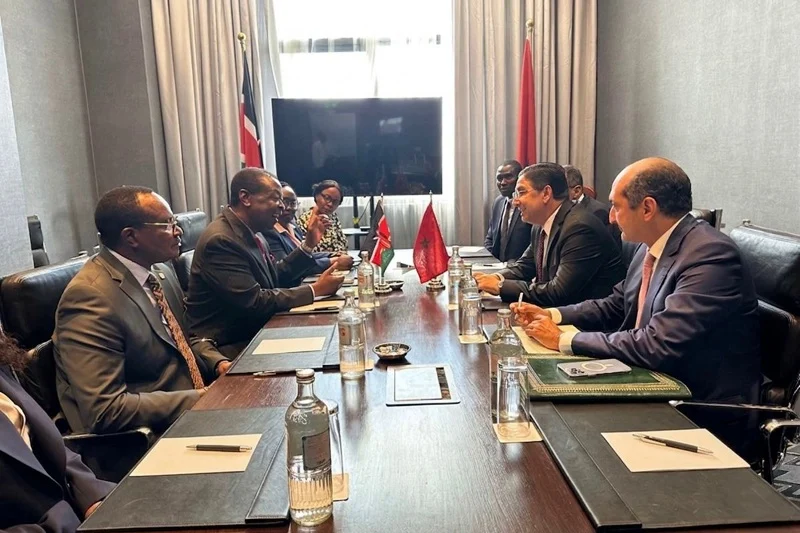
In a diplomatic sequence that may appear routine on the surface but actually reflects deeper geopolitical shifts, the Republic of Kenya has officially declared, from Nairobi, its support for Morocco’s autonomy plan regarding the Sahara issue. This stance goes beyond protocol language and signals a broader realignment of African positions on a dispute long characterized by diplomatic stagnation.
The announcement came during the first session of the Morocco–Kenya joint cooperation commission, co-chaired by Morocco’s Minister of Foreign Affairs, Nasser Bourita, and Kenya’s Prime Cabinet Secretary and foreign affairs head, Musalia Mudavadi. Beneath the institutional framework of bilateral dialogue, the Sahara issue emerged as a central pillar, highlighting an explicit political convergence between Rabat and Nairobi.
In the joint statement, Kenya described the autonomy initiative proposed by the Morocco as “the most credible and realistic solution” to the regional dispute. This wording is particularly significant, as it reflects a shift from traditional diplomatic neutrality toward an explicit endorsement of a specific political framework long promoted by Morocco within the United Nations system.
Moreover, Nairobi expressed its intention to work with countries sharing the same vision in order to strengthen the implementation of this plan. This proactive dimension turns Kenya’s position into a potential diplomatic driver for building a broader coalition in support of the autonomy proposal across Africa.
Within this context, the diplomatic momentum led by King Mohammed VI appears as a key structural factor, enabling Morocco to expand its African footprint through a strategy combining economic partnerships, South–South cooperation, and institutional reintegration within the African Union framework.
Kenya’s endorsement of the UN Security Council resolution is also noteworthy, as it anchors this position within international legitimacy and the UN-led political process. Nairobi further reaffirmed the exclusive role of the United Nations in facilitating a durable political settlement.
Beyond its declarative content, this development reflects a broader reconfiguration of African positions on the Sahara issue, where ideological alignments are increasingly giving way to pragmatic approaches focused on stability and regional development.
Ultimately, the joint statement transcends bilateral diplomacy: it forms part of an evolving diplomatic narrative in which support for Morocco’s autonomy plan becomes a marker of strategic alignment within a rapidly shifting geopolitical landscape.


